The implementation of the New сomputerized transit system in Moldova is a decisive step in the country's integration into the European customs area - the Customs Service
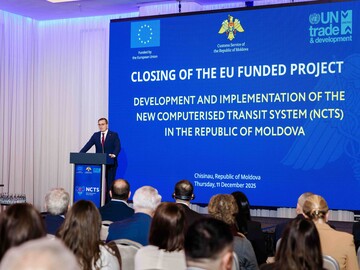
This was discussed during an event held by the Moldovan Customs Service to mark the completion of the EU project "Implementation of the New Computerized Transit System (NCTS) in Moldova" – a strategic project that marks an important step in the digitalization and modernization of the customs system. The event was attended by the Customs Service's management and team, representatives of the EU Delegation to Moldova, the Ministry of Finance, the Ministry of Economic Development and Digitalization, the Economic Council under the Prime Minister, the UN Office in Moldova, development partners, and business associations. The meeting served as the basis for a presentation of the project's results, the benefits created for the business environment, and its impact on cross-border trade. As noted, the New Computerised Transit System (NCTS) connects the national electronic system with the Single communications network of the European Commission, marking the first integration of Moldova into the trans-European information system. Opening the event, Customs Director Radu Vrabie emphasized the strategic importance of the project for Moldova, noting the ongoing support of the European Union and the technical expertise provided by Directorate General for Customs Law and Trade and UNCTAD. According to him, the implementation of the NCTS represents an objective envisaged by the Association Agreement between Moldova and the European Union and a decisive step in the process of integrating the Republic of Moldova into the European customs area. The project activities included the harmonization of the legal framework, the development and integration of an IT system, training of customs officers and business representatives, as well as an extended testing period at national level. The NCTS offers significant benefits to economic operators, such as simplified customs procedures, time and resource savings, and increased predictability of logistics operations. A landmark moment was Moldova’s accession to the Convention on a Joint Transit Procedure and the Convention on the Simplification of Formalities in Trade in Goods on 1 November 2025. This accession enables the NCTS to be used internationally and ensures the operation of a common transit regime under the same conditions as the 38 participating states, contributing to the integration of supply chains and increasing the competitiveness of the business environment. Currently, more than 500 common transit declarations have been registered in the NCTS, confirming the rapid transition to new procedures and the adaptation of the business environment to European standards. The Customs Service stated that it reaffirms its commitment to ensuring the functionality and sustainability of the NCTS, further compliance with EU customs legislation, and promoting the digital transformation of the customs system.// 11.12.2025 — InfoMarket.