News

Tarmo SILD: Energbank has been profitable ever since it came under the ownership of Iute GroupData about the Activity of Moldovan Commercial Banks on February 28, 2026The MDL mirrors the EUR volatility: Moldovan economy adjusts to new realityInflation “not by the book,” or Welcome to the crisis? The National Bank increases banks' share of equity capital in their operating activitiesIs the National Bank “financing” the state budget to the detriment of the economy? And what do the IMF and commercial banks have to do with it?Inflationary measures amid high inflation, or anticipation of the National Bank of Moldova's Stop-and-Go policyDr. Sándor Csány: Being the 4th largest, OTP in Moldova will grow both organically as well as through possible mergers and acquisitions It seems to be a place, but it is notScott HOCKLANDER: For me, the persistence of Moldovan citizens is not only a learned lesson, but also a great exampleSorin MASLO: "The year 2022 was a turning point for the "Cricova" Wine Combine, the turnover increased by almost 25%"Deposit rates are at their peak. Market conjuncture or Why banks need individuals’ depositsValeriu LAZĂR: "If the state does not support business today, tomorrow it will have no one to collect taxes from.Chisinau Airport as a reflection of statehoodMonetary measures against non-monetary inflationBanks as the fulcrum of the economy: they have increased profits and are preparing for the challenges of the 2H 2022The Ministry of Finance and investors in the State Securities market at the peak of placement volumesThe banking market: turmoil and increased demand. No panicIs Moldova ready for the economic consequences of the war in the neighboring country?Are we heading for hyperinflation? It all depends on the correct diagnosis and the prescribed treatmentWhat is happening in the Government Securities Market and what does the National Bank have to do with it?The wine industry is on the verge of a revolution: Is the industry-specific law bankrupting enterprises? The trap for the oil products marketLászló DIÓSI: Foreign investments come to Moldova due to banking system stabilityWhen there is no program with the IMF, we issue are government securities ...Nikolay BORISSOV: “Acquisition of Moldindconbank is the best procurement in the Moldovan market, albeit the most risky one”Oil Ping Pong GamesBanking 2020 - pandemic, profitableWeird 2020: humility, depression, rebellion, accepting a new realityThe Hunger Games of the foreign exchange marketHow to tame liquidity?Veaceslav IONITA: The government killed the business, but flirted with the populationPeople and Business: Natural and Unnatural SelectionAlexandru BURDEINII: Being ethical becomes vital in business nowadaysMoldova’s Key Macroeconomic IndicatorsPrices at filling stations

Moldova is drafting a law that will protect borrowers and establish clear and transparent rules for the secondary credit market, in accordance with EU standards

Moldova is drafting a law that will protect borrowers and establish clear and transparent rules for the secondary credit market, in accordance with EU standards

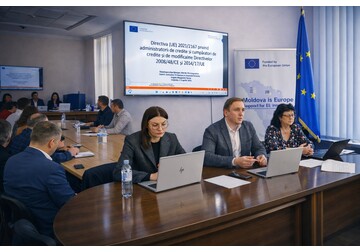
As noted by officials implementing the “Moldova is Europe: Support for EU Integration” project, Moldova is aligning its secondary credit market legislation with EU standards to create a sustainable, transparent, and investor-friendly financial system. As noted, Moldova is in the process of drafting a bill that will ensure borrower protection and introduce clear, transparent rules in the secondary credit market—in accordance with EU legislation and practice. The new legal framework will expand borrower protection measures from the moment a loan is granted, while also regulating debt collection and loan management processes. To support this process, 11 representatives from the National Financial Market Commission and the Ministry of Finance participated in a two-day training session focused on harmonizing Moldovan legislation with EU Directive 2021/2167 on the activities of loan servicing agents and loan purchasers. The event was organized as part of the EU- and Denmark-funded project “Moldova is Europe: Supporting EU Integration.” The training was mentored by Angela-Margareta Oprea, a project expert on consumer protection in the financial services sector. On the first day, the provisions of EU Directive 2021/2167 were examined in detail, and methods for its implementation by EU countries were analyzed, with particular attention paid to the institutional capacity of the National Financial Market Commission to monitor compliance with the new regulatory framework. The second day began with a review of the Moldovan draft law and the formulation of recommendations for its improvement. This was followed by an expanded meeting with 19 representatives of the private sector—banks, non-bank credit institutions, and debt collection companies—to present the new regulatory requirements and their impact on the business models of the respective organizations. As noted, harmonizing financial market legislation with EU standards is not merely a legal formality, but one of the fundamental elements in building a more stable, transparent, and investor-friendly financial system, which ultimately benefits consumers. // 09.04.2026 - InfoMarket


News on the subject