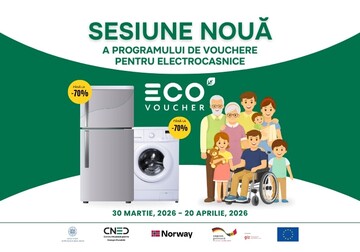
The EU will support the purchase of energy-efficient home appliances for an additional 3,000 families in Moldova as part of the new phase of the EcoVoucher program, launched on March 30 with a budget of €1 million
As announced by the Ministry of Energy and the National Center for Sustainable Energy, the EcoVoucher program offers households the opportunity to reduce electricity consumption and costs by replacing old appliances with new, energy-efficient ones. This initiative is part of the efforts by the government and the European Union to improve energy efficiency in the residential sector and promote more sustainable and responsible energy consumption. Thanks to the EcoVoucher program, vulnerable consumers will be able to save on their electricity bills by using more economical and energy-efficient equipment. “The EcoVoucher program has demonstrated tangible results in practice right from its first rounds. We see the program’s direct impact—citizens are taking energy efficiency and the real impact of energy consumption on the family budget into account at the point of purchase. The savings achieved since the program’s launch exceed initial expectations and confirm the positive impact of this mechanism on household budgets, which will continue into 2026,” stated Ion Muntean, Director of the National Center for Sustainable Energy. According to him, the current phase of the EcoVoucher program, with a total budget estimated at 1 million euros, is funded by the European Union as part of the “Energy Efficiency and Renewable Energy in Moldova” (E4M) project, implemented by GIZ. EU Ambassador to Moldova Iwona Piorko noted that “the European Union is proud to support initiatives that encourage Moldovan citizens to make responsible and sustainable choices in their daily lives.” “By facilitating access to modern and energy-efficient household appliances, the EcoVoucher program helps reduce energy consumption, lower household expenses, and cut carbon dioxide emissions, thereby supporting the creation of a greener and more sustainable future for Moldova. “Behind every voucher is a household that will consume less energy and pay lower bills,” she said. As noted, this year priority will be given to families with the most children and to people over 63 years of age. At the same time, a new category of recipients has been introduced: 10% of the total number of available vouchers will be allocated to people with severe disabilities, selected based on the specific needs of the household. “This program demonstrates that energy efficiency is most effective when it is simple and accessible. Together with our partners, we are developing solutions that reduce energy consumption, ease the burden on family budgets, and contribute to Moldova’s long-term energy sustainability,” said Viorel Albu, Program Implementation Manager at GIZ Moldova. Recipients will be able to use vouchers worth 6,000 lei, covering up to 70% of the cost of household appliances (but not exceeding the voucher’s value), to purchase refrigerators (including those with built-in freezers) and washing machines. Every household appliance purchased under the EcoVoucher program must meet energy efficiency criteria and European conformity standards (CE). To participate in the program, citizens must be registered in the “Energy Vulnerability” information system. They will be notified via SMS or email about the availability of vouchers, which will be accessible on the platform compensatii.gov.md. To receive a voucher, beneficiaries must trade in a used household appliance of the same type. Data from the National Center for Sustainable Energy show that 40,033 large household appliances have been replaced in Moldova since the program’s launch. Over their entire service life, the savings exceed 6.5 million kWh, equivalent to more than 24 million lei. It is estimated that the more than 40,000 units of equipment installed since the program’s inception will yield annual savings of approximately 8.15 million kWh, equivalent to roughly 30.1 million lei. For more detailed information about the home appliance voucher program, please visit the official website of the National Center for Sustainable Energy or call 0 8005 5005 (Green Line). The EcoVoucher program was developed by the Moldovan government with the support of the European Union. // 30.03.2026 — InfoMarket