The European Commission highly appreciated Moldova's progress in the customs sector and will continue to provide technical and financial assistance to implement reforms, modernize the customs administration, and promote European integration
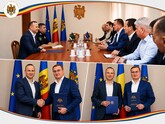
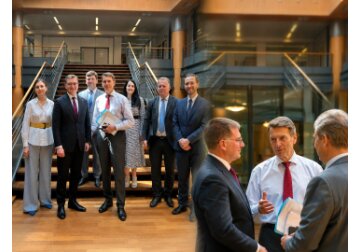
This was discussed during meetings between Customs Service Director Radu Vrabie and representatives of the European Commission on June 24 in Brussels, where Customs Service reforms were discussed. As part of the Customs Service delegation's participation in the 147th and 148th annual sessions of the World Customs Organization Council, Vrabie met with Matthias Petschke, Director of the Customs Division of the European Commission's Directorate-General for Taxation and Customs Union (DG TAXUD), and EU Co-Chair of the Moldova-EU Customs Subcommittee, as well as representatives of the Commission's Directorate-General for Enlargement and Neighborhood East (DG ENEST). Ambassador Daniela Morari, Head of the Moldovan Delegation to the European Union, also attended the meeting. Discussions focused on the Customs Service's progress in institutional modernization and its adaptation to EU legislation, as well as reform priorities and institutional development in the context of Moldova's accession process to the European Union. The importance of ongoing dialogue between the Customs Service and European institutions was reaffirmed, as was the role of the Moldova-EU Customs Subcommittee as the main platform for monitoring progress and coordinating reforms in the customs sector. Progress in implementing the recommendations formulated by the European Commission as part of the EU accession process was also reviewed, with a focus on harmonizing customs legislation with EU law, implementing the new Customs Code, developing and modernizing customs information systems, in particular, preparing for the implementation of Stage 6 of the NCTS (Opt-In), implementing a customs decision-making system, developing e-commerce management solutions, strengthening institutional integrity and anti-corruption policies, modernizing and reorganizing customs administration, and strengthening capacity to monitor and combat customs fraud. A separate topic of discussion was the process of institutional consolidation and reorganization of the Customs Service, including measures aimed at optimizing the organizational structure, developing administrative and operational capabilities, and improving preparedness to fulfill the specific responsibilities of a modern customs administration that complies with EU standards. The meeting also presented measures taken to strengthen institutional integrity and implement measures envisaged by the Anti-Corruption Policy in Customs for 2026–2029, aimed at preventing and combating corruption, managing integrity risks, and increasing the transparency and accountability of customs officials in line with European Commission recommendations and European standards of good governance. Particular attention was paid to the digital transformation of customs administration, the development of information systems compatible with the EU digital architecture, and the implementation of projects aimed at enhancing interoperability and streamlining customs procedures. The need to develop customs control infrastructure and strengthen non-destructive border control capacity was also discussed, including through the modernization of scanning equipment and the introduction of modern control technologies necessary for the effective and secure management of the future external border of the European Union. The CS Director emphasized that the implementation of the necessary reforms to adapt to EU standards and practices remains a priority for the institution in the context of Moldova's accession process to the European Union. "Modernization of customs administration and integration into the European customs system are among the Customs Service's strategic priorities. The European Commission's ongoing support allows us to accelerate reforms, develop modern systems, and strengthen border security for the benefit of citizens and businesses," said Radu Vrabie. Representatives of the European Commission highly appreciated Moldova's progress in the customs sector and reaffirmed their commitment to continuing the institutional dialogue, technical, and financial assistance necessary to implement reforms, modernize customs administration, and advance Moldova's accession process to the European Union. // 24.06.2026 — InfoMarket.