Representatives of the tourism and hotel industry stated that raising VAT to 20% could make holidays in Moldova more expensive and reduce the country's competitiveness as a tourist destination
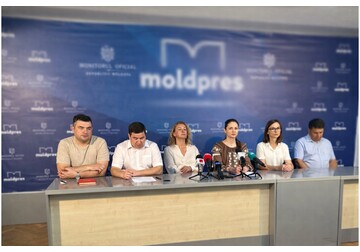
This opinion was voiced at a press conference on Tuesday by representatives of the National Association of Inbound and Domestic Tourism of Moldova (ANTRIM), the National Association of Restaurants, Recreation, and Entertainment Venues (MĂR), the National Association of Tourism Economic Agents of Moldova (ANAT), the Medical Tourism Association of Moldova (MHAM), and the Dionysos Union of Small Wine Producers. They noted that the tourism offer in Moldova will suffer, service prices may increase, and businesses in the tourism and hotel industry will face additional financial pressure if the standard 20% VAT rate is applied to catering and accommodation services. During the press conference, industry representatives emphasized that certain provisions of the draft fiscal policy for 2027 will directly impact the competitiveness of the tourism sector. Thus, the VAT increase will affect the entire tourism service chain: agencies, guesthouses, wineries, restaurants and hotels within tourist complexes, local producers, medical tourism, and related services. Nicolae Olarașu, a lobby and advocacy consultant at the National Association of Inbound and Domestic Tourism of Moldova (ANTRIM), noted that tourism operates as an ecosystem: if accommodation and catering prices rise, the price of a tourist package automatically increases. And if Moldova becomes more expensive, it will be much more difficult for it to compete with other destinations in the region. "Our tourism offer may cease to be competitive for foreign tourists, who constantly compare prices, service quality, and market conditions when choosing a vacation destination. Instead of supporting the development of a sector that benefits the economy and promotes Moldova abroad, we risk placing additional pressure on entrepreneurs and slowing the industry's growth," he lamented. In turn, Olga Calmîș, Executive Director of the MĂR Association, noted that the restaurant industry is still feeling the effects of the economic and inflationary shocks of recent years and has not returned to a level sufficient to absorb the new tax burden. According to her, increased taxation of food and beverages in the HoReCa segment will inevitably impact prices for the end consumer, affecting demand, competitiveness, and investment in the sector. "The experience of European countries shows that such measures do not lead to sustainable growth in budget revenues; on the contrary, they reduce taxable consumption, reduce company profitability, and contribute to the expansion of the shadow economy. Therefore, tax policy should be based on economic analysis and best European practices, rather than short-term budgetary goals," stated Olga Calmîș. Industry representatives say the impact of legislative changes will be particularly felt by small and medium-sized businesses, whose activities are seasonal and require constant investment to attract tourists and improve the quality of their services. Unlike other economic sectors, tourism and the hotel industry operate with low profitability and high fixed costs. In many cases, profitability is concentrated in a few months of the year, and any tax increase reduces operators' ability to invest in infrastructure modernization, digitalization, staff training, and the development of new tourism products. Elena Butacova, founder of the Hill&Valley agritourism complex, discussed how new legislative changes will impact small businesses. "When we started this business, which is not yet operating at full capacity, we projected that an event at the complex would cost 100,000 lei, depending on the number of guests and services provided, but including VAT, it came to 108,000 lei. Now, tourists will have to pay 120,000 lei for the same services, which is more than we planned. "When we started this business, we developed a business plan with which we applied for loans and financing programs, but now we have zero predictability due to the VAT increase, which puts us in a very difficult position. We risk either laying off staff or reducing salaries, and therefore deviating from the developed business plan with which we applied for all loans and financing programs," she noted. Industry representatives are paying attention to the social impact of these changes. The hotel industry employs approximately 27,000 people, mostly young people, and the new tax changes could lead to the layoff of approximately 5,000 employees. At the same time, according to estimates, tourism services could become approximately 30% more expensive, which will impact both domestic tourists and Moldova's attractiveness to foreign visitors. Representatives of the tourism and hotel industry confirmed their readiness to engage in constructive institutional dialogue with the authorities and demand that any changes to tax policy be preceded by a thorough economic assessment, conducted in consultation with the business community. They noted that a predictable and competitive tax base is a key prerequisite for developing tourism, attracting investment, and strengthening Moldova's image as a tourist destination in the European market. They emphasized that supporting the competitiveness of the hospitality industry is not an advantage granted to the economic sector, but an investment in the sustainable development of the national economy, job creation, and the country's international promotion. Economic expert Mihail Bolgan noted that the new tax policy affects many sectors. Based on their analysis, the experts clearly concluded that taxing a particular area or activity does not necessarily translate into an increase in budget revenues, as planned. Therefore, there is no direct correlation between a 10% tax increase and a 10% revenue increase. The HoReCa sector, thanks in part to the VAT reduction, has emerged from the "gray zone," and official data shows growth. "In March, we presented a study that also collected consumer data, showing that approximately 61% of the adult population visits HoReCa and spends up to 1,000 lei. The most popular HoReCa establishments are restaurants and cafes, which are especially frequented by young people. Therefore, the following changes will have an impact; visitors will come less frequently, order less, and choose cheaper products," noted Mihail Bolgan. He added that inbound tourism is particularly price-sensitive, and in this context, higher prices for accommodation, food, and tourism services could directly influence foreign tourists' decisions to choose Moldova. Tourism associations argue that any tax changes affecting tourism and the hotel industry should be discussed with industry operators and preceded by a clear analysis of the economic impact. Industry representatives call for dialogue with the authorities, a realistic transition period, and solutions that will not affect the sector's development. // 30.06.2026 — InfoMarket