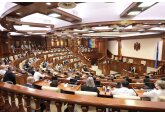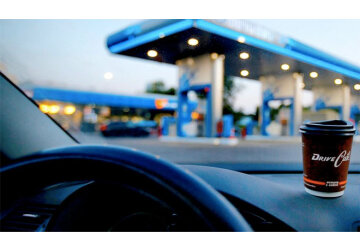
The parliament has registered a draft amendment to the Law on the Oil Products Market, which provides for a moratorium on the construction of new filling stations in Moldova and an increase in fines for sellers of oil products.
Radu Marian, a deputy from the PAS faction, said that the bill he registered on November 3 is intended to strengthen competition in the oil products market in Moldova. He noted that the huge jump in oil prices on the international market is also reflected in the prices for gasoline and diesel fuel in Moldova, and consumers are justly unhappy. “Even if we cannot influence international quotations, we can increase competition and efficiency in the market. Unfortunately, many oil companies, especially the largest ones, refuse to compete with prices below the ceiling set by NAER. This is in a situation where there are smaller companies that set prices 30-40 bans less than the maximum price, ”said Radu Marian. According to him, the developed bill provides for 4 measures: introduction of a 6-month moratorium on the construction of new filling stations; the abolition of the fixed fee for the import and wholesale trade license in the amount of 260 thousand lei per year; increasing up to 10 times the size of fines for oil companies for violation of legislation in this area; wholesale resale prohibition. The PAS deputy noted that an excessive number of gas stations leads to an increase in the costs of companies for their maintenance and an increase in retail prices for fuel. He stressed that Moldova ranks third in Europe among the countries with the lowest number of cars serviced at gas stations, yielding only to Greece and Latvia in this indicator, and the volume of fuel sold per gas station is several times lower in Moldova than in the countries of the region. The parliamentarian pointed out that in cities, especially in Chisinau, there are gas stations at every step, and there is no economic sense in this. According to him, the moratorium will be in effect for 6 months, and at this time the authorities will establish much stricter criteria for the construction of gas stations. The bill also proposes to abolish the fixed license fee for the import and wholesale of petroleum products in the amount of 260 thousand lei per year and replace it with a fee of 10 lei per ton of petroleum products. Radu Marian believes that this duty was introduced as a barrier to entry into the market for smaller importers and thus an obstacle to free competition in the market. The removal of the fixed duty is expected to be an important step towards the emergence of many new importers and will increase competition in the market. Another provision of the project is to increase the amount of fines for violation of industry legislation up to 10 times. “Today the fines range from 3,000 to 15,000 lei, and this is a symbolic amount in comparison with the income of hundreds of millions of lei received by the companies participating in the market, as well as in comparison with the potential harm that can be caused by violation of the rules of the game. The increase in fines will stimulate their discipline, ”the PAS deputy said. Commenting on another proposed innovation - the ban on the wholesale resale of petroleum products, he noted that an amendment adopted in 2017 by the parliament, initiated by the deputy Andronachi, allowed any market participant to buy petroleum products in the country for subsequent sale. This led to the fact that large companies strengthened their positions, and many small importers disappeared. At the same time, the number of licensed importers of petroleum products decreased from 37 in 2018 to 22 in 2020. Herewith, the amendments propose to return to the wording of the 2018 law so that wholesale sales are carried out only to end consumers. That is, farmers, transport companies, enterprises will still be able to buy products in bulk if they are the final consumers of oil products. The re-introduction of the wholesale resale ban will encourage more oil companies to import fuel from alternative sources and thus create a more dynamic competitive environment.// 03.11.2021 — InfoMarket