Moldova hopes to secure new EU funding to support agriculture, and starting in 2027, per-hectare payments will be introduced in certain priority sectors, with this mechanism gradually being extended to other crops
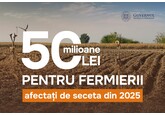
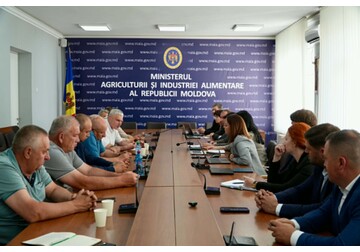
This was discussed during a meeting held by Minister of Agriculture and Food Industry Ludmila Catlabuga and Minister of Finance Andrian Gavrilita with members of Forta Fermierilor Association (Farmers’ Power Association). According to the Ministry of Agriculture, the discussions addressed requests made by the Association as well as measures currently being implemented or in the planning stages to support agricultural producers. The Ministry of Agriculture noted that attracting European funding to support the agricultural sector remains a constant item on the agenda of discussions with external partners. In the context of the future European financial program for 2028–2034, formulas are being analyzed through which Moldova can take advantage of expanded mechanisms to support agriculture. Starting May 11, 2026, applications were accepted for partial compensation of excise taxes on diesel fuel purchased by agricultural producers from March 1 to May 31. The government has allocated 110 million lei from the Reserve Fund for this purpose, and the amount of support per recipient can reach 200,000 lei. Since applications opened on May 11, the Agency for Intervention and Payments in Agriculture has received over 600 applications. Meanwhile, the Ministry of Agriculture and Food Industry is preparing a new support mechanism for the purchase of fertilizers and plant protection products. This instrument will be managed by the Agency for Intervention and Payments in Agriculture and will allow farmers to pay only 15% of the product cost at the time of purchase, with the remainder to be paid over 12 months. The mechanism is scheduled to launch in August. Concurrently, in April of this year, the Agricultural Lending Facility was expanded to include the “Agricultural Working Capital” component, which provides farmers with access to financing of up to 500,000 lei at a fixed interest rate of 5.1% per annum and a repayment term of up to 5 years. As of May 22, 41 enterprises had received 16.54 million lei in financing under this component. The government has also changed the VAT refund mechanism for agricultural producers. For tax periods from March through December 2026, farmers will be able to request refunds of up to 200,000 lei per month under simplified and more accessible terms for small and medium-sized farms. Applications may be submitted after filing the VAT return for the tax periods covered by the VAT refund program. VAT refunds are processed within 25 business days from the date of application submission. In addition, the Cabinet of Ministers recently allocated 50 million lei from the National Fund for Agriculture and Rural Development to support farmers affected by poor corn and sunflower harvests resulting from the drought and extreme heat in 2025. Starting May 25, farmers affected by the drought and extreme heat in 2025 can submit applications to AIPA for non-repayable financial assistance. The application period is open until June 22. Issues related to fiscal policy in agriculture, including the VAT rate, VAT refunds, and excise tax compensation on diesel fuel, are being analyzed by the Ministry of Finance in the context of broader fiscal policy, which must take into account the budget balance, the state’s financial capacity, existing commitments, and the need for uniform rules for the economic environment. Regarding direct payments per hectare, Moldova continues to harmonize its agricultural policy with European Union practices. Starting in 2027, area-based payments will be introduced in certain priority sectors, and this mechanism will be gradually extended to other crops. The parties agreed that discussions will continue in the near future, including to clarify certain aspects related to taxation in agriculture. // 28.05.2026 — InfoMarket.