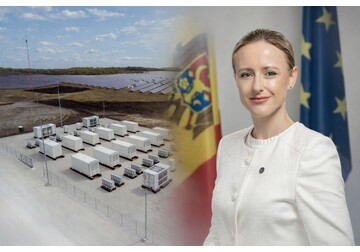
Moldova has significantly increased its renewable energy capacity and strengthened energy security as part of its energy transition - the Ministry of Energy
This was announced by State Secretary of the Ministry of Energy, Carolina Novaс, speaking at a virtual meeting of the CF-JIET (Collaborative Framework on Just and Inclusive Energy Transitions) platform, organized by the Secretariat of the International Renewable Energy Agency (IRENA), dedicated to promoting sustainable industrialization and developing inclusive value chains in the context of the energy transition. According to the Ministry of Energy, the meeting was part of a series of consultations and thematic exchanges held within the CF-JIET framework, which aim to deepen understanding of just energy transition governance mechanisms, including equitable planning, equitable distribution of benefits and costs, public participation and support for underrepresented groups, as well as identifying appropriate financing mechanisms and international cooperation. Discussions focused on the role of local value creation and (re)industrialization as central elements of the energy transition, linking clean energy development with job creation, the development of new industries, and the strengthening of domestic value chains. It was also emphasized that approaches vary depending on the country and level of development: industrialized countries focus on transforming existing structures, while developing countries strive for structural transformation and moving up the value chain. In this context, the need for coordinated policies at the national, regional, and international levels was emphasized to ensure a fair distribution of the benefits of the energy transition and to reduce existing imbalances in access to finance, technology, and markets. In her presentation, Carolina Novac emphasized that Moldova's energy transition represents an accelerated transformation, achieved in approximately four and a half years, during which the capacity of renewable energy sources has significantly increased, contributing to a reduction in energy dependence and strengthening the country's energy security. "Close collaboration with the private sector and understanding its needs are crucial to accelerating the energy transition, including through tools like the 373 program, which supports small and medium-sized enterprises' access to financing. At the same time, decisions must be based on data, and a clear and predictable legislative framework is essential to build investor confidence. Herewith, the development of energy storage systems remains essential for the effective integration of renewable energy sources and the stability of the energy system," stated the Secretary of State at the Ministry of Energy. // 06.05.2026 — InfoMarket