FEERM delivers first tangible results for people in Moldova
The Government Programme “Residential Energy Efficiency Fund of Moldova” (FEERM), managed by the National Centre for Sustainable Energy (CNED), is delivering tangible results across all three financing products: the renovation of apartment buildings, support for energy-vulnerable rural households, and the modernization of single-family houses through the Casa Verde programme.
The programme’s results were presented during a Press Club event organized by CNED in partnership with GIZ Moldova, bringing together representatives of development partners and the media.
“Every leu invested in energy efficiency can generate more than four lei in economic and social benefits through lower energy costs, job creation and support for the local economy. This is the principle behind FEERM – not temporary compensation, but structural investments with measurable long-term impact,” said Ion Muntean, Director of CNED.
Thorsten Greis, Project Manager of the “Energy Efficiency and Renewable Energies for Moldova” (E4M) project implemented by the German Agency for International Cooperation (GIZ), highlighted the contribution of international partners to the development and implementation of FEERM financing products.
“In 2024, we began working with CNED on the development of FEERM financing instruments. Since then, we have supported the successful implementation of the programme, helped advance Moldova towards European energy efficiency standards and contributed to the launch of new financing products. Two years later, we continue to work at the same pace. To ensure the programme’s sustainability, we are investing in IT systems and specialist training while also working together with CNED to develop new FEERM products,” said Thorsten Greis.
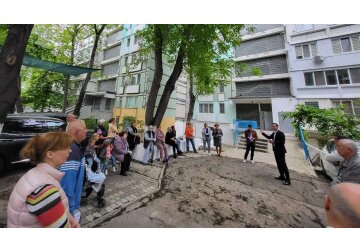
Energy Efficiency of Multi-Apartment Residential Buildings: First projects enter the implementation phase
Energy renovation of apartment buildings remains the most complex component of FEERM, requiring collective decisions by homeowners, extensive technical documentation and integrated renovation works.
By the end of 2025, 98 energy audits of apartment buildings had been completed across the country, 77 homeowners’ associations (APCs) had entered the implementation process, and 17 projects worth a total of MDL 74.2 million had been approved. The first four works contracts have been signed for buildings in Chișinău and Bălți, while three additional projects are currently in the contracting phase.
Under this product, APCs receive grants covering 70% of eligible renovation costs. Additional support through the Energy Vulnerability Reduction Fund (EVRF) may cover up to 90% of the contribution required from low-income residents.
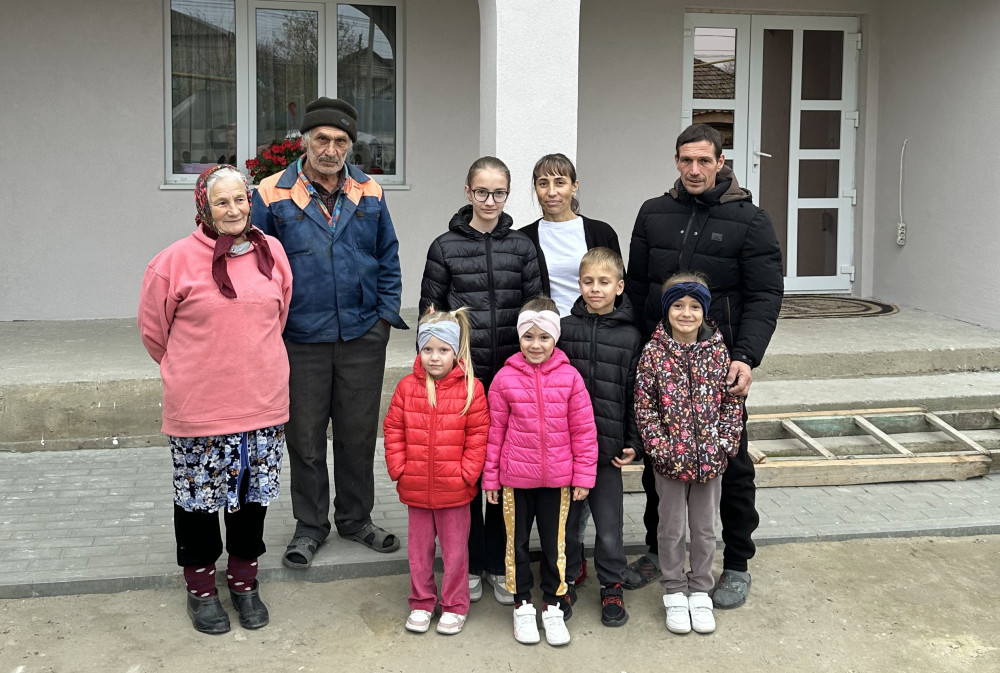
Energy Efficiency of Individual Rural Houses: First 42 households renovated
The product dedicated to rural households facing extreme energy vulnerability recorded the highest level of implementation progress in 2025. Grant disbursement reached approximately 90% of the annual budget allocated to this component.
FEERM grants cover up to 95% of renovation costs, while beneficiaries contribute only 5%, significantly reducing the financial burden on households with limited resources.
Out of 190 applications submitted, 163 were approved and 153 financing agreements were signed. Renovation works have already been completed in 42 houses, with a total value of MDL 12.8 million. As a result, beneficiaries’ homes have become more energy-efficient, comfortable and affordable to maintain.
Casa Verde: More than 1,700 applications received in the first year
Launched in July 2025, the Casa Verde financing product targets homeowners interested in investing in energy renovation and renewable energy solutions. Interest from beneficiaries was exceptionally high during the first two application rounds.
During its first year of operation, 1,745 applications were submitted through the feerm.md platform. Of these, 964 were approved under Component I – energy audits and technical documentation, while 528 applications were submitted under Component II – construction works. A total of 295 projects were approved and 275 financing agreements were signed, representing investments worth MDL 55 million.
Most beneficiaries opted for integrated modern solutions, including photovoltaic systems with battery storage and heat pumps.
Results and Challenges
Based on projects approved by the end of 2025, FEERM is expected to generate annual energy savings of 5.86 million kWh, equivalent to MDL 14.65 million in reduced energy bills for beneficiaries and a reduction of 1,438 tonnes of CO₂ emissions. Energy consumption at household level may be reduced by up to 69%.
The year 2026 marks the transition from operationalization to intensive investment implementation. CNED has set clear targets: renovation of at least eight apartment buildings, completion of works in around 160 vulnerable households, financing of more than 1,000 households through Casa Verde, and the launch of at least two national calls under this product.
The main challenge remains the limited capacity of the local technical market, including an insufficient number of specialized designers, certified energy auditors and construction companies with experience in energy renovation.
The full article is available on the CNED website.