News

The MDL mirrors the EUR volatility: Moldovan economy adjusts to new realityInflation “not by the book,” or Welcome to the crisis? Data about the Activity of Moldovan Commercial Banks on January 31, 2026The National Bank increases banks' share of equity capital in their operating activitiesIs the National Bank “financing” the state budget to the detriment of the economy? And what do the IMF and commercial banks have to do with it?Inflationary measures amid high inflation, or anticipation of the National Bank of Moldova's Stop-and-Go policyDr. Sándor Csány: Being the 4th largest, OTP in Moldova will grow both organically as well as through possible mergers and acquisitions It seems to be a place, but it is notScott HOCKLANDER: For me, the persistence of Moldovan citizens is not only a learned lesson, but also a great exampleSorin MASLO: "The year 2022 was a turning point for the "Cricova" Wine Combine, the turnover increased by almost 25%"Deposit rates are at their peak. Market conjuncture or Why banks need individuals’ depositsValeriu LAZĂR: "If the state does not support business today, tomorrow it will have no one to collect taxes from.Chisinau Airport as a reflection of statehoodMonetary measures against non-monetary inflationBanks as the fulcrum of the economy: they have increased profits and are preparing for the challenges of the 2H 2022The Ministry of Finance and investors in the State Securities market at the peak of placement volumesThe banking market: turmoil and increased demand. No panicIs Moldova ready for the economic consequences of the war in the neighboring country?Are we heading for hyperinflation? It all depends on the correct diagnosis and the prescribed treatmentWhat is happening in the Government Securities Market and what does the National Bank have to do with it?The wine industry is on the verge of a revolution: Is the industry-specific law bankrupting enterprises? The trap for the oil products marketLászló DIÓSI: Foreign investments come to Moldova due to banking system stabilityWhen there is no program with the IMF, we issue are government securities ...Nikolay BORISSOV: “Acquisition of Moldindconbank is the best procurement in the Moldovan market, albeit the most risky one”Oil Ping Pong GamesBanking 2020 - pandemic, profitableWeird 2020: humility, depression, rebellion, accepting a new realityThe Hunger Games of the foreign exchange marketHow to tame liquidity?Veaceslav IONITA: The government killed the business, but flirted with the populationPeople and Business: Natural and Unnatural SelectionAlexandru BURDEINII: Being ethical becomes vital in business nowadaysMoldova’s Key Macroeconomic IndicatorsPrices at filling stations

Moldova’s Customs Service is conducting field tests of a new real-time digital control mechanism

Moldova’s Customs Service is conducting field tests of a new real-time digital control mechanism

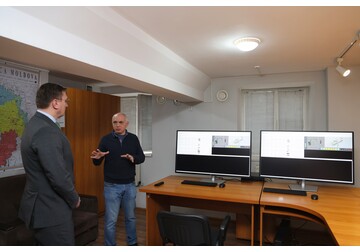
Customs Service Director Radu Vrabie reviewed the test results and the effectiveness of the new innovative mechanism, implemented on a pilot basis to modernize customs control. The system is being tested at the Tudor border customs post, recently equipped with a high-performance mobile scanner, and represents a concrete step toward the digitization and optimization of border control processes. The project includes the commissioning of two specialized stations at the Customs Service’s Video Surveillance Center, enabling real-time analysis of images obtained during the scanning of vehicles. Thus, in addition to the checks carried out at the checkpoint, the images are further reviewed by specialized operators who cross-reference the scan data with information available in institutional systems and with the results of risk analysis. This approach provides an additional level of security and accuracy in customs control, facilitating the faster detection of potential discrepancies and reducing risks associated with fraud and smuggling attempts. At the same time, this mechanism allows for a more rapid response in high-risk situations, including when discrepancies are detected between declared data and the actual cargo contents. In the future, the system will be rolled out to all customs posts equipped with scanners and integrated into a modern control concept based on the use of information technology, data analysis, and real-time monitoring. Customs officers involved in the process will conduct remote monitoring, simultaneously utilizing images from scans and video surveillance, as well as data generated by the agency’s information systems. Through this initiative, the Customs Service is strengthening an intelligent control model focused on efficiency, operational vigilance, and the promotion of legitimate and predictable trade. // 20.03.2026 — InfoMarket

News on the subject