‘Better safe than sorry’: Greece installs floating barrier to ward off toxic fish
Climate crisis and warming waters have attracted long-toothed pufferfish to new parts of the Mediterranean
rom his deckchair, his arms thrown above his head, his feet sliding back and forth in the sand, Pavlos Beleyiannis watches his grandchildren bathe in his favourite bay. It’s an idyllic scene, infused with a serenity that the newly retired truck driver attributes squarely to a sense of security.
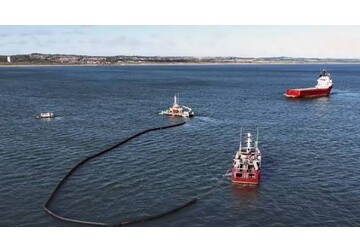
For the first time, a floating barrier has been installed across the bay. Ducking, splashing and larking about, the children have not ventured beyond it. “Thank god it’s there to protect them,” he says with evident relief. “There weren’t such dangers in these seas when I was a child.”
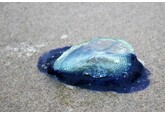
Until last summer, the perils that lurked beneath the Gulf of Euboea – waters that separate the island of Evia from the Greek mainland – were, it was thought, limited to purple jellyfish. Last year, the mauve stingers had pharmacists working overtime in Chalkida, the island’s bustling capital 80 miles (130km) north of Athens, after a surge of attacks on swimmers.
The arrival, thanks to the climate crisis, of toxic, long-toothed pufferfish – capable of chomping through bone, metal and wooden blocks – has posed a different threat: in an unprecedented step, the Greek Red Cross issued a public health warning in June advising citizens to seek emergency care if bitten by the fish because its “beak-like jaws” could cause severe wounds and heavy bleeding.
In no way should the species be consumed, it said, because of a potentially lethal neurotoxin, tetrodotoxin, contained in its organs and flesh. With no known antidote to counter the poison, the invasive species can kill not only predators – investing pufferfish with an unparalleled ascendancy in the food chain – but also any humans who eat it.
“Our duty and primary concern has to be the safety of our citizens,” says Antonis Spanos, Chalkida’s vice-mayor, who oversaw the installation of the floating barrier – the first in Greece – last month. “It’s better to be safe than sorry.”
At 40, the energetic Spanos belongs to a new breed of determinedly proactive local politician. He says authorities have spent months going through the process of securing funds and putting out tenders to ensure the most protective barrier could be installed, before the system was approved by the state general laboratory.
“Two and a half kilometres of this net will be set up in bays around the gulf to allow for a carefree summer,” he says. “Last year it was bad with the jellyfish but, as you say in English, we’ve killed two birds with one stone. Now if there are puffers, we’ll be ready for them too.”
Phones at the town hall had been ringing off the hook with elderly people calling to ask when the systems would be installed. “Just this morning a woman called in saying she’d only feel safe to go swimming with her grandchildren once it was there.”
Chalkida, it turns out, is not alone. This week Nikos Choulieris, 63, who has long run a diving school in the town, was out with his team in a fast-moving inflatable boat, anchoring yet more of the floating barriers to the seabed off beaches further up the gulf, as other municipalities followed suit.
The Guardian