A Deadly Cruise Ship Outbreak Exposes Travel’s Blind Spot
A hantavirus cluster on a remote South Atlantic voyage shows how infections can spread across borders before they’re even detected.
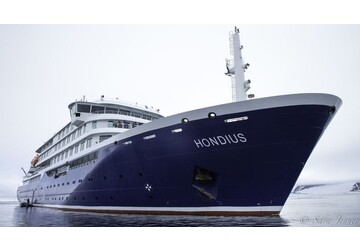
The chef on the expedition vessel Hondius filmed it all. Tuna steaks sizzling on a flat-top grill. Lobster pulled from volcanic reefs. A crew drawn from nine countries gathered around a table in Ushuaia, Argentina, raising glasses before setting off into the South Atlantic.
“Next stop: the deep blue,” Khabir Moraes wrote in a Facebook post.
Ten days later, people on that same ship began dying.
A hantavirus outbreak tied to the Dutch-flagged vessel has left three passengers dead and five others ill, with cases now spanning continents, including a patient in intensive care in South Africa and another being treated in Switzerland after leaving the voyage earlier. Almost 150 passengers and crew remain isolated on board as the ship sails toward the Canary Islands, where authorities are preparing to screen them and determine when they can disembark.
The outbreak is still being pieced together. But the setting — a small ship moving through some of the most remote, wildlife-rich parts of the planet — is already familiar to epidemiologists. It’s the kind of journey where infections can incubate silently, only to surface mid-voyage, far from hospitals and across multiple jurisdictions. That’s the blind spot: infections that start out of sight and surface too late to be contained in one place.
Expedition cruises promise access to places few people ever reach: Antarctica, sub-Antarctic islands, isolated communities scattered across the South Atlantic. They’ve become one of the fastest-growing corners of the travel industry, built on the appeal of proximity to wildlife and landscapes largely untouched by mass tourism. (The number of passengers landing on the Antarctic Peninsula reached almost 80,000 last season, up from about 54,000 before the pandemic, according to industry data.)
But those same features can complicate the way diseases are detected and contained. Passengers move through environments where animal-borne pathogens circulate. They spend days or weeks together in close quarters. And by the time symptoms appear, the ship may be thousands of miles from where exposure occurred.
“We don’t have a full picture yet, but we have some working assumptions,” Maria Van Kerkhove, the World Health Organization’s director for epidemic and pandemic preparedness and prevention, said at a May 5 briefing. Her leading theory is that the first patient, a 70-year-old from the Netherlands and the outbreak’s first fatality, was infected before boarding — likely during travel in South America — and then passed the virus to close contacts, including his 69-year-old wife, who also died.
“We do believe there may be some human-to-human transmission that’s happening among the really close contacts — the husband and wife, people who’ve shared cabins,” she said. That possibility is unusual, but not unprecedented. Tests have identified the Andes variant in some patients linked to the outbreak, the only strain known to spread between people in rare instances.
The Hondius left Ushuaia, at the southern tip of Argentina, on April 1 with about 150 passengers and crew from 23 countries. Its route traced a long arc north through the South Atlantic, stopping at some of the most remote islands on Earth.
On social media, life on board appeared idyllic. The crew shared images of elaborate meals, cooking classes and shore excursions. In one post, chef Moraes described a stop at Tristan da Cunha — often called the world’s most remote inhabited island — where fewer than 300 people live. In another, he held up a pair of freshly caught rock lobsters, still moving, praising the “clean and pristine surroundings” of the isolated waters. The ship also visited South Georgia, Nightingale Island and Saint Helena, where passengers stepped ashore after days at sea. Some travelers left the voyage along the way. Somewhere along that route, something went wrong.
The first known patient, the Dutch man, developed symptoms on April 6 and died five days later after his condition rapidly deteriorated. His body was later taken off the ship in Saint Helena. His wife, who accompanied the repatriation, fell ill soon after and died following a flight to South Africa, where testing confirmed hantavirus infection. Another passenger was evacuated in critical condition and remains in intensive care in Johannesburg. A female German passenger who fell ill on April 28 and later developed pneumonia, died on board on May 2.
A passenger who left the voyage in Saint Helena is now being treated in an isolation unit at University Hospital Zurich after testing positive for the Andes strain. His wife, who traveled with him, is self-isolating as a precaution. Three others were medically evacuated from the ship this week, including a doctor who had cared for ill passengers.
The illness can begin with flu-like symptoms before progressing within days to severe breathing difficulty. In its most serious form, hantavirus pulmonary syndrome can cause fluid to build up in the lungs, leading to respiratory failure and shock. There is no specific antiviral treatment or vaccine, and care is largely supportive.
Read More: What Is Hantavirus and How Did It Kill Cruise Ship Passengers?
Hantavirus is typically spread through contact with infected rodents or their droppings, often when contaminated particles are stirred into the air and inhaled. But there is no evidence of rodents on the vessel.
Infection may have occurred before passengers boarded, or during stops in remote areas where contact with wildlife is common. Symptoms of hantavirus infection can take weeks to appear, making the timing difficult to pin down. The Dutch couple may have contracted hantavirus from rodents when they visited a landfill during a bird-watching tour in Ushuaia before boarding, the Associated Press reported, citing two Argentine officials investigating the origins of the outbreak.
Investigators are working to trace possible exposure points, according to Dutch virologist Marion Koopmans. At the same time, the identification of the Andes strain has added to the possibility of limited person-to-person transmission among close contacts.
The outbreak has echoes of the early days of Covid-19, when cruise ships became symbols of how quickly a pathogen could move through a confined population. But this is not the same kind of event. Hantavirus is far less transmissible than SARS-CoV-2, and health officials say the risk to the broader public remains low. There is no evidence of sustained spread beyond those directly linked to the voyage.
Rather than rapid spread, the outbreak has exposed a different kind of danger: delayed detection. By the time the first case was recognized, the Hondius had already left Argentina, crossed international waters and visited multiple territories. Each step added another layer of complexity.
Health authorities in multiple countries are now involved in the response. Plans to evacuate patients require coordination between governments, airlines and international agencies. Decisions about where to dock the ship have become logistical and political as much as medical. “These are complex situations, with many organizations and countries involved,” said Koopmans, noting that coordinating under international health rules can take time.
On a long voyage, the timeline of infection doesn’t align neatly with geography. People can be exposed in one place, fall ill in another and receive treatment somewhere else entirely. The virus doesn’t need to spread widely to create disruption. It just needs to travel.
Cruise ships remain uniquely challenging environments for managing infectious disease: closed settings with shared air and facilities, limited medical capacity and long distances from advanced care. Expedition vessels add another layer of complexity, operating in remote regions where exposure to wildlife — and the pathogens they carry — is part of the draw.
The global nature of travel means that any outbreak is unlikely to stay contained to a single place. Passengers disperse. Symptoms emerge later. Cases surface in different health systems, sometimes days or weeks apart. That makes it harder to see the full picture in real time. The episode is a reminder that while the urgency of the Covid pandemic has faded, preparedness has not kept pace with the risks posed by global travel.
Back on board, passengers have been asked to remain in their cabins as much as possible. Meals are delivered to rooms. Access to shared spaces is restricted, with movement around the ship limited.
In a written statement, Boston-based travel blogger Jake Rosmarin said that aside from those who are ill, “everyone else on board is doing well and remains in good spirits.” For now, they are waiting — for evacuation flights, test results and clarity about what happens next.
The ship is slated to arrive at the Granadilla de Abona port in Tenerife early Sunday, where passengers are expected to be screened and eventually allowed to disembark. By then, the outbreak may be better understood. Or it may simply have moved on. That, in some ways, is the point. In an era of global travel, infections don’t need to spread widely to become complicated. They just need time — to incubate, to move, and to appear far from where they began.
bloomberg.com