News

The National Bank’s new policy: from lenient oversight to sanction standards?Data about the Activity of Moldovan Commercial Banks on April 30, 2026Tarmo SILD: Energbank has been profitable ever since it came under the ownership of Iute GroupThe MDL mirrors the EUR volatility: Moldovan economy adjusts to new realityInflation “not by the book,” or Welcome to the crisis? The National Bank increases banks' share of equity capital in their operating activitiesIs the National Bank “financing” the state budget to the detriment of the economy? And what do the IMF and commercial banks have to do with it?Inflationary measures amid high inflation, or anticipation of the National Bank of Moldova's Stop-and-Go policyDr. Sándor Csány: Being the 4th largest, OTP in Moldova will grow both organically as well as through possible mergers and acquisitions It seems to be a place, but it is notScott HOCKLANDER: For me, the persistence of Moldovan citizens is not only a learned lesson, but also a great exampleSorin MASLO: "The year 2022 was a turning point for the "Cricova" Wine Combine, the turnover increased by almost 25%"Deposit rates are at their peak. Market conjuncture or Why banks need individuals’ depositsValeriu LAZĂR: "If the state does not support business today, tomorrow it will have no one to collect taxes from.Chisinau Airport as a reflection of statehoodMonetary measures against non-monetary inflationBanks as the fulcrum of the economy: they have increased profits and are preparing for the challenges of the 2H 2022The Ministry of Finance and investors in the State Securities market at the peak of placement volumesThe banking market: turmoil and increased demand. No panicIs Moldova ready for the economic consequences of the war in the neighboring country?Are we heading for hyperinflation? It all depends on the correct diagnosis and the prescribed treatmentWhat is happening in the Government Securities Market and what does the National Bank have to do with it?The wine industry is on the verge of a revolution: Is the industry-specific law bankrupting enterprises? The trap for the oil products marketLászló DIÓSI: Foreign investments come to Moldova due to banking system stabilityWhen there is no program with the IMF, we issue are government securities ...Nikolay BORISSOV: “Acquisition of Moldindconbank is the best procurement in the Moldovan market, albeit the most risky one”Oil Ping Pong GamesBanking 2020 - pandemic, profitableWeird 2020: humility, depression, rebellion, accepting a new realityThe Hunger Games of the foreign exchange marketHow to tame liquidity?Veaceslav IONITA: The government killed the business, but flirted with the populationPeople and Business: Natural and Unnatural SelectionAlexandru BURDEINII: Being ethical becomes vital in business nowadaysMoldova’s Key Macroeconomic IndicatorsPrices at filling stations

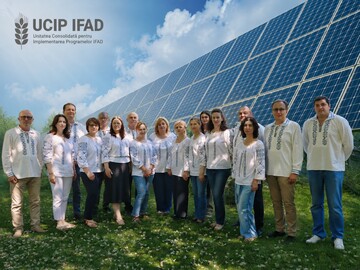
With IFAD support, Moldova’s entrepreneurs can obtain loans of up to 2 million lei on favorable terms to purchase and install photovoltaic systems for electricity generation

With IFAD support, Moldova’s entrepreneurs can obtain loans of up to 2 million lei on favorable terms to purchase and install photovoltaic systems for electricity generation

As noted by the Ministry of Agriculture and Food Industry and the IFAD Programmes Consolidated Implementation Unit (UCIP IFAD), the benefits of obtaining such loans include: VAT exemption with the right to deduction; exemption from customs duties and excise taxes on equipment imported under the project; favorable financing terms. A business plan is not required. As remarked, one of the most recent recipients of loans from the International Fund for Agricultural Development (IFAD) for the purchase and installation of photovoltaic systems for electricity generation was Andrei Seighit, an entrepreneur from the village of Rosu in the Cahul District and owner of a modern mill producing flour, oil, and animal feed under the Aurul Naturii brand. Faced with constantly rising electricity prices and the flour milling industry’s heavy reliance on energy consumption, the entrepreneur sought a sustainable solution to maintain his competitiveness in the market. The decision was a strategic one: to invest in renewable energy sources. Thanks to a 1.3 million lei loan from IFAD, he installed a 160 kW photovoltaic power plant. The results were immediate: the investment has helped optimize production processes, reduce carbon dioxide emissions, and increase the business’s sustainability. “Using photovoltaic panels, we generate the electricity needed to process agricultural products. We save about 400,000 lei per year, and the payback period for the investment is about 5 years,” the entrepreneur noted. “This investment demonstrates that the transition to ‘green’ energy is not just an option for the future, but a real solution for rural businesses today,” UCIP IFAD emphasizes. // 01.07.2026 — InfoMarket

News on the subject