


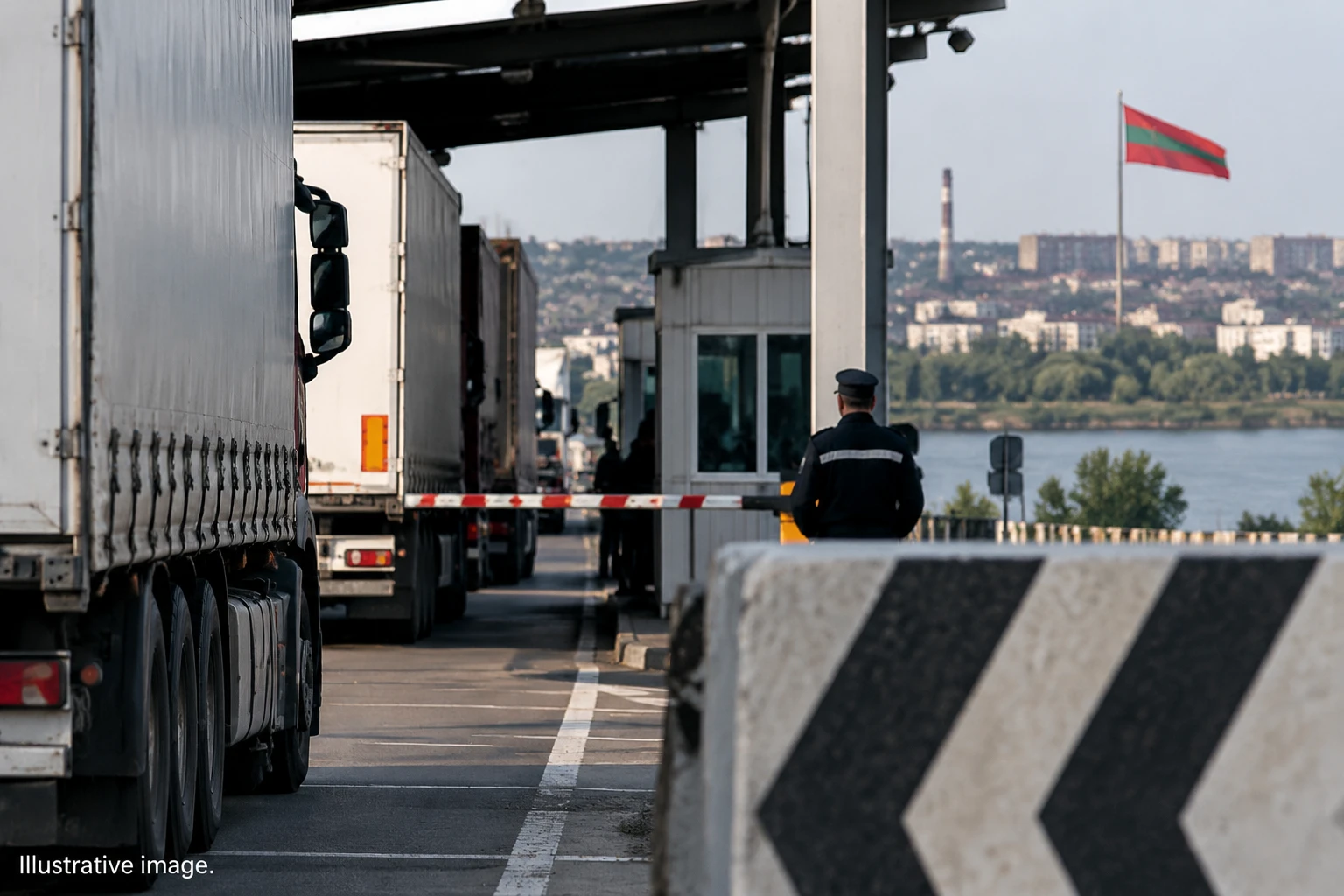
Transnistrian businesses are gradually losing their special treatment regarding the import of goods. After companies in the region began paying customs duties on a general basis starting in 2024, the next step will be the introduction of VAT and excise taxes. The Ministry of Finance proposes to begin the process on September 1, 2026, expand it in January and April of the following year, and by 2030 fully extend Moldova's general tax regime to goods imported by economic operators in the region.
The change will not take effect all at once. Currently, goods that Transnistrian companies import as part of direct foreign trade transactions and that remain within the region can be cleared without VAT or excise taxes. The new draft bill maintains this exemption for most goods but begins to gradually narrow the list of exceptions.
The first phase is proposed to begin on September 1. VAT and, where provided for by the Tax Code, excise taxes will be levied on imports of caviar, alcoholic and tobacco products, nicotine-containing goods, perfumes, fireworks, furs, precious stones and jewelry, certain categories of precious metals and ores, vehicles, telephones, and computers.
Starting January 1, 2027, it is proposed to extend the regime to sweetened and flavored non-alcoholic beverages, ores and concentrates, slag and ash, ferrous and non-ferrous metals and products made from them, kaolin and other types of clay, petroleum products, and oils. Starting April 1, the regime is set to be extended to natural gas and electricity.
The last two categories are particularly important. In the first phase, the Ministry of Finance deliberately selected goods it considers less sensitive for the population: excise-taxable products, luxury goods, automobiles, and electronics. Energy resources have been deferred to a later date precisely to allow for a gradual transition. In the explanatory note, the authorities explicitly describe the draft as part of Transnistria's integration into Moldova's unified economic, customs, and tax space.
In other words, this is no longer merely about another set of taxes, but rather a systematic shift in the very model of the state's relationship with Transnistrian businesses.
This process began earlier. Starting January 1, 2024, companies on the left bank have been paying customs duties according to the same general principles as other economic operators in Moldova. In 2025, Transnistrian enterprises paid approximately 166.7 million lei in customs duties. By the end of the first half of 2026, the State Register listed 2,492 economic agents from the left bank and from Bender: 461 were permanently registered, while another 2,031 were temporarily registered.
Now, the unification process is shifting from customs duties to domestic indirect taxes. The economic logic is clear: a company registered on one bank of the Dniester should not receive an advantage when importing solely because of its place of registration. It is precisely these differences in the tax regime that the Ministry of Finance cites as a source of potential distortion of competition, tax arbitrage, and the artificial redirection of trade flows.
But the reform is still missing one important figure—its cost.
During the coordination of the document, the Ministry of Economic Development and Digitalization requested that the justification be supplemented with a calculation of expected VAT and excise tax revenues and that the financial impact on the state budget be determined. The Ministry of Finance acknowledged that it is impossible to make a reliable estimate at this stage: revenues will depend on the actual volume and structure of imports, changes in trade flows, and the extent to which companies comply with the new rules. Therefore, the document refers only to a gradual positive effect on the budget without specifying a concrete amount.
This is an important limitation. It is not yet possible to say how much additional revenue the state will receive, nor to what extent the costs for individual enterprises or prices on the left bank will change. The Ministry of Finance itself acknowledges the possibility that the reform could affect the cost of certain goods, which is why it proposes spreading the transition over time.
However, the direction has already been clearly defined. By 2030, the authorities aim to achieve full application of the general tax regime to all goods imported by Transnistrian companies, under conditions equivalent to those in effect for businesses in the rest of the country.
Thus, the significance of the project lies not in the tax on caviar, cars, or cell phones effective September 1. Moldova is beginning to remove one of the remaining economic barriers between the two banks. The first categories of goods have been chosen carefully; gas and electricity have been deferred to the next phase, and the overall transition has been extended until 2030. At the same time, the government has already defined the final model, although it has not yet been able to calculate the financial cost of this unification. /17.08.2026 - InfoMarket.