


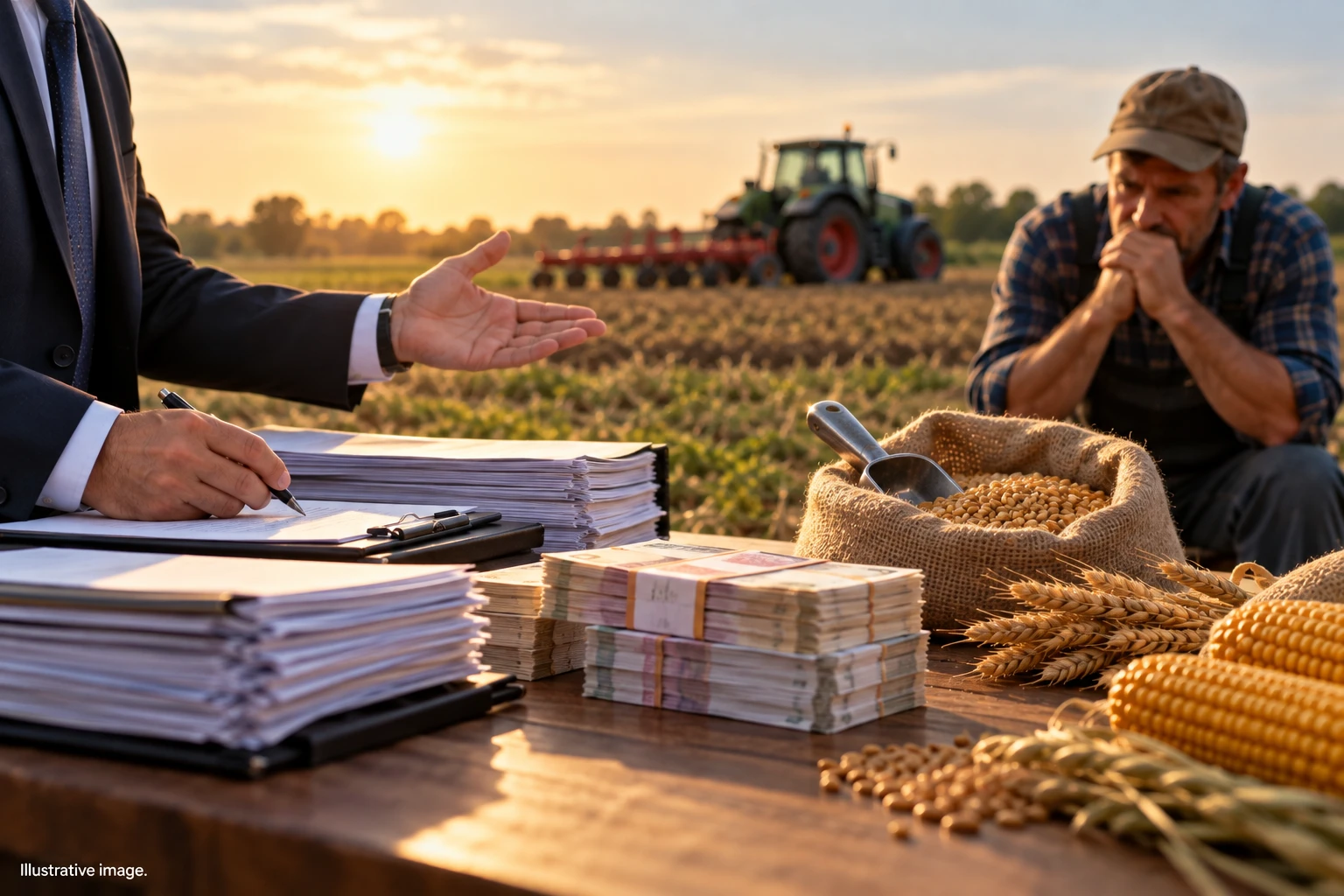
Moldovan farmers are demanding that the government expedite the payment of subsidies for 2024–2025, which industry representatives estimate at nearly 2 billion lei. This issue was discussed at a meeting of the Economic Council under the Prime Minister. The scale of the problem is comparable to the annual amount of state support: in 2025, agricultural producers received 1.87 billion lei, and the subsidy fund for 2026 totals about 2.3 billion lei.
According to estimates by the Moldova Fruct association, the total amounts to 1.94 billion lei across 6,345 applications. However, this does not mean that the entire amount constitutes a confirmed debt owed by the state: some applications may still be under review, and for approved payments, the deadlines for transferring funds may not yet have arrived.
This problem did not arise just now. Back in February 2026, the Ministry of Agriculture reported that, as of the end of 2024, 3,130 applications for post-investment subsidies totaling 1.7 billion lei had been submitted. Of these, 2,200 applications totaling 886 million lei had been paid out by that time, while the rest were still under review. Payments were scheduled to be completed by the end of June. Regarding the 2025 applications, the ministry had then indicated 1.4 billion lei in post-investment subsidies and an additional 555 million lei in supplementary payments.
A key feature of post-investment subsidies is that farmers first invest their own or borrowed funds in machinery, equipment, construction, and farm modernization, and then receive compensation for a portion of those expenses. When payments are delayed, the funds remain tied up in the project, whereas bank loans must be serviced regardless of when government support is received. This increases the need for working capital and limits opportunities for new investments.
This situation is particularly challenging for small farms. According to data from the Ministry of Agriculture, in 2025, microfarms accounted for 66% of applications and 43% of the allocated support, while small farms accounted for another 21% of applications and about 29% of the funds. Together with medium-sized farms, they accounted for more than 96% of applications. For small producers, delays can be particularly painful due to limited financial reserves.
In early October, the Ministry of Agriculture and the Agency for Agricultural Interventions and Payments (AIPA) announced the reallocation of unused funds, which should allow for the resumption of additional payments for approximately 3,700 applications from 2025. During the week of October 5–9, AIPA authorized 220.33 million lei, of which 193.69 million lei are earmarked for additional payments on 1,400 applications from last year. However, authorization does not mean that the funds have actually been transferred.
At the same time, Moldova has begun implementing the Strategic Agricultural Policy Program for 2026–2030. As of October 1, applications are being accepted for the first priority areas, including support for young farmers and small family farms. Of the 2.3 billion lei allocated for the support fund this year, approximately 628.8 million lei are tied to Moldova's Growth Plan and have a specific purpose.
This raises questions about the financial consistency of government policy. The government is launching new investment incentive programs even though the accounting for previous programs has not yet been finalized. Meanwhile, in 2025, AIPA fully utilized the 1.871 billion lei allocated in the budget. However, 100% execution of the annual budget does not mean that all requests from previous periods have been fulfilled.
For businesses, it is not only the amount of government support that matters, but also the predictability of receiving it. Farmers plan their investments based on the program's terms and the expected timing of compensation. If these deadlines are constantly postponed, subsidies cease to be a reliable element of financial planning.
A solution could be a public payment schedule broken down by year, support mechanism, and stage of application review. This would make it possible to determine the actual extent of the government's obligations and provide agricultural producers with clear timelines for receiving funds. // 13.10.2026 - InfoMarket.