

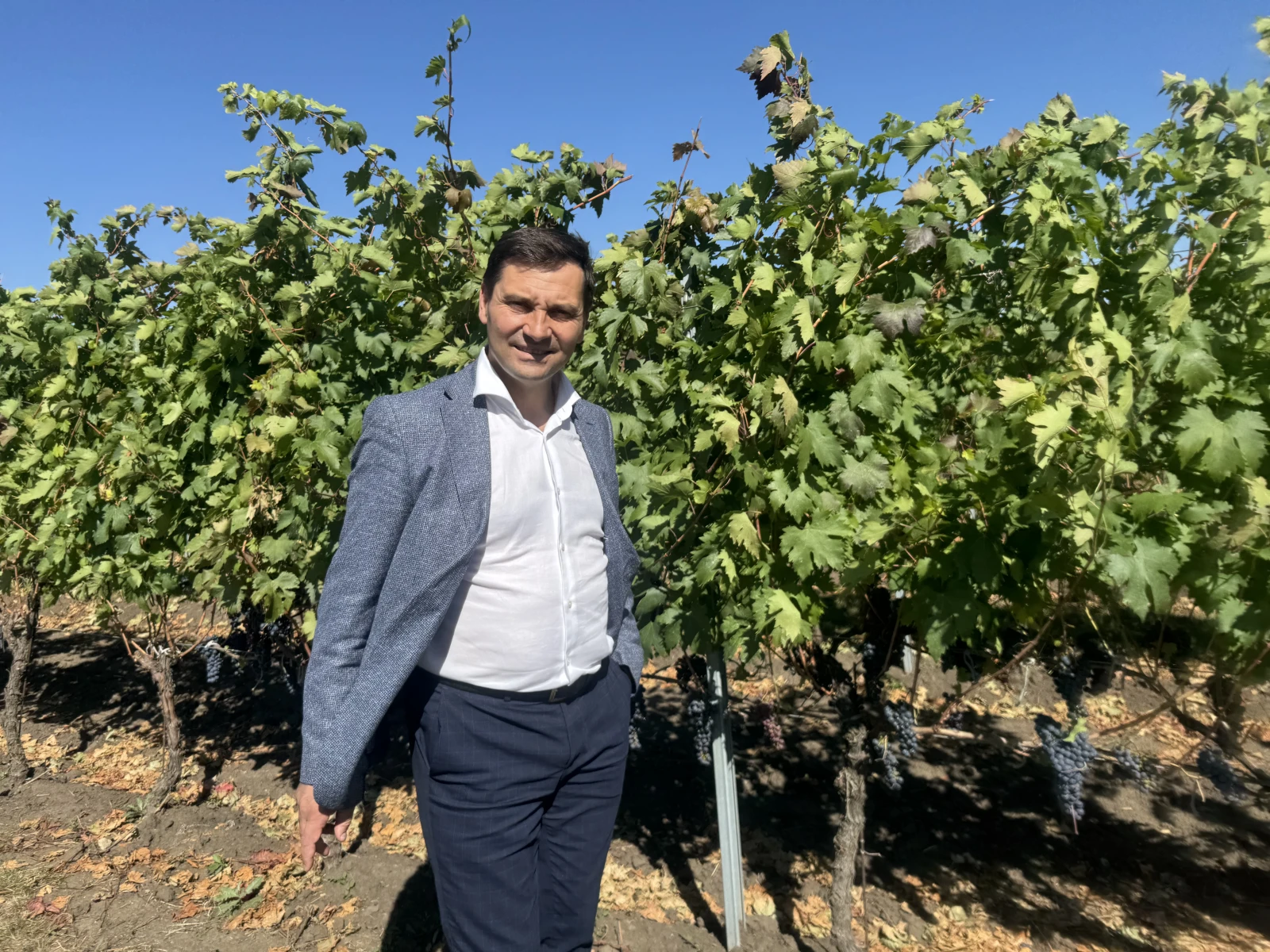
On the first weekend of October, Moldova is celebrating its 25th National Wine Day. To mark this anniversary, the InfoMarket Agency conducted an interview with the CEO of the winery, which was granted the status of a National Treasure back in 2003—a winery that serves as the flagship of Moldovan winemaking. Moreover, having celebrated its anniversary on September 11, Cricova has entered its 75th anniversary year. We began our interview with Sorin MASLO by discussing finances.
InfoMarket: In 2025, Cricova's revenue totaled 372.8 million lei, compared to 377.6 million in 2024—a decrease of just 1.3%. At the same time, net profit fell from 31.4 million to 25 million lei, or by 20.4%. What explains this decline in financial performance?
Sorin MASLO: The decline in profit was the result of several factors. First and foremost, costs rose for what is most important to us—grapes: 2024–2025 were dry years, and raw materials became more expensive. At the same time, our products are not essential goods, so we cannot raise the final price in proportion to the increase in costs. In addition, there is fierce competition in the market—both from local companies and from imported products. We chose a strategy to maintain our shelf space and only partially offset the rise in costs by raising prices. As a result, this has impacted our profitability.
InfoMarket: What currently has the greatest impact on production costs: raw materials, energy, packaging, or labor?
Sorin MASLO: Virtually everything has an impact, but first and foremost raw materials, glass, and labor. Rising energy prices have driven up the cost of glass, while the drought has increased the cost of wine ingredients. The national minimum wage has also increased, so we've adjusted the wages of our employees accordingly, including those working in agriculture.
InfoMarket: Does the company have a lot of equipment left over from the Soviet era that needs to be modernized?
Sorin MASLO: Everything related to primary and secondary production is already state-of-the-art. To a certain extent, the sector was "helped" in this regard by the first embargo imposed by the Russian Federation: at that time, we completely reoriented our markets and modernized the plant's technology. Over the past 2–3 years, we've also been continuously investing in re-equipment: we've installed eight stainless-steel tanks for the secondary fermentation of sparkling wines, new tanks for wine storage and aging, and purchased oak barrels.
InfoMarket: And you've increased your workforce by 10% over the past year?
Sorin MASLO: Primarily because we established a new agricultural enterprise with 200 hectares in Stăuceni. In the early years of plantation development, a significant portion of the work—weeding, staking, and other tasks—is done by hand. Therefore, the main increase in staff numbers occurred in the agricultural sector. Additional needs also arose on the production line.
InfoMarket: Do you have a shortage of process engineers, winemaking specialists, or agronomists?
Sorin MASLO: The shortage exists mainly in technical fields: drivers, maintenance technicians, and welders. It's very difficult to compete with the private sector for these specialists, especially with the construction and international transportation industries.
InfoMarket: In recent years, the Moldovan labor market has been increasingly filled by foreign workers. Are you considering this option?
Sorin MASLO: Just a few days ago, we discussed with colleagues the possibility of hiring several foreign drivers. Many of them already know the streets of Chișinău well. This is a reality we must get used to.
InfoMarket: There have been quite a few questions lately regarding wage levels at state-owned enterprises. What are the salaries like at your company?
Sorin MASLO: It's important that employees receive a decent salary so they don't have to think about taking on a second job—such as driving a taxi—after their regular work hours. Over the past year, our average salary has risen to 13,200 lei per month. However, the vast majority of our employees work in the agricultural sector, where wages are lower. In the engineering sector, salaries range from 16,000 to 28,000 lei. As much as possible, we intend to continue boosting the motivation of our specialists so that it isn't limited to the fact that they work for a well-known company.
InfoMarket: What financial results do you expect this year? Can you make a forecast, since the harvest has already begun?
Sorin MASLO: Despite a significant increase in expenses, we expect to maintain last year's profitability. It's important for us to maintain our product's shelf space, develop new export markets, and successfully carry out the grape harvest. A better harvest will allow us to partially offset last year's high costs.
InfoMarket: This year, Cricova paid 8.1 million lei in dividends to the state out of 25 million lei in profits for 2025. In your opinion, where should the balance lie between paying dividends to the state and reinvesting profits in the company's development?
Sorin MASLO: The company's development is very important, but as a state-owned company, we also have a social mission. We provide jobs for more than 500 employees and fulfill our tax obligations; last year, our payments to the state under this category totaled nearly 55 million lei. But we also need to grow. That's why I consider a balance where 25% of profits go toward dividends and 75% toward development to be fair.
InfoMarket: Let's talk about sales and exports. How many bottles do you sell per year, and how are your sales markets distributed? In an interview with us three years ago, you spoke of your intention to expand your presence in Germany, the United Kingdom, Scandinavia, and Cyprus.
Sorin MASLO: We produce and sell approximately 10–10.5 million bottles; over the past two years, our products have been sold in more than 40 countries. About half is sold domestically, and approximately 5 million bottles are exported. Of these, 3.1–3.2 million—or about 60% of exports—go to the European Union. Romania leads the way with about 2 million bottles, followed by Germany with 0.5 million, then Greece, Italy, Spain, and Sweden.
Our plans are not only being realized but, in some areas, are even exceeding expectations. For example, in Germany we are already selling about 0.5 million bottles—all of which are high-quality products and, accordingly, command higher prices.
At present, we are among the top 5 exporters in the wine sector, which is a success because just 5 years ago we were ranked 8th or 9th.
Not only is the volume of exports growing, but our export markets are also expanding. We have high hopes for the African market: Nigeria and Côte d'Ivoire. And, of course, the key market is the U.S. market. Even despite the challenges posed by the imposition of tariffs, together with our distributor we have absorbed these costs and continue to grow in volume in the U.S. market (0.5 million bottles).
At the same time, Romania remains our largest export market. We are well known and appreciated there, and Romanian consumers make up a significant portion of the visitors to our tourist complex.
InfoMarket: In Romania, you face serious competition from southern Moldova. How do you manage to compete, so to speak, with other well-known Moldovan producers in foreign markets?
Sorin MASLO: It's easier for us to promote our products in foreign markets collectively, under the umbrella brand "Wine of Moldova" and with the support of events organized by the National Bureau of Grapes and Wine. Even if one Moldovan company already holds a strong position in a specific market, it's easier for other producers to enter that market in their own segments by leveraging the overall brand recognition of Wine of Moldova.
InfoMarket: How will Moldova's accession to the European Union affect your company?
Sorin MASLO: I think it will have a positive impact. Moldova will become better known and more open, and the flow of tourists will increase. Currently, some foreigners are hesitant to visit due to the armed conflict in the region. More tourists also mean additional promotion of our products once they return home.
InfoMarket: You mentioned plans to expand your own vineyards. The plan was to plant up to 70 hectares in Stavcheni by the end of 2025. Were you able to do that?
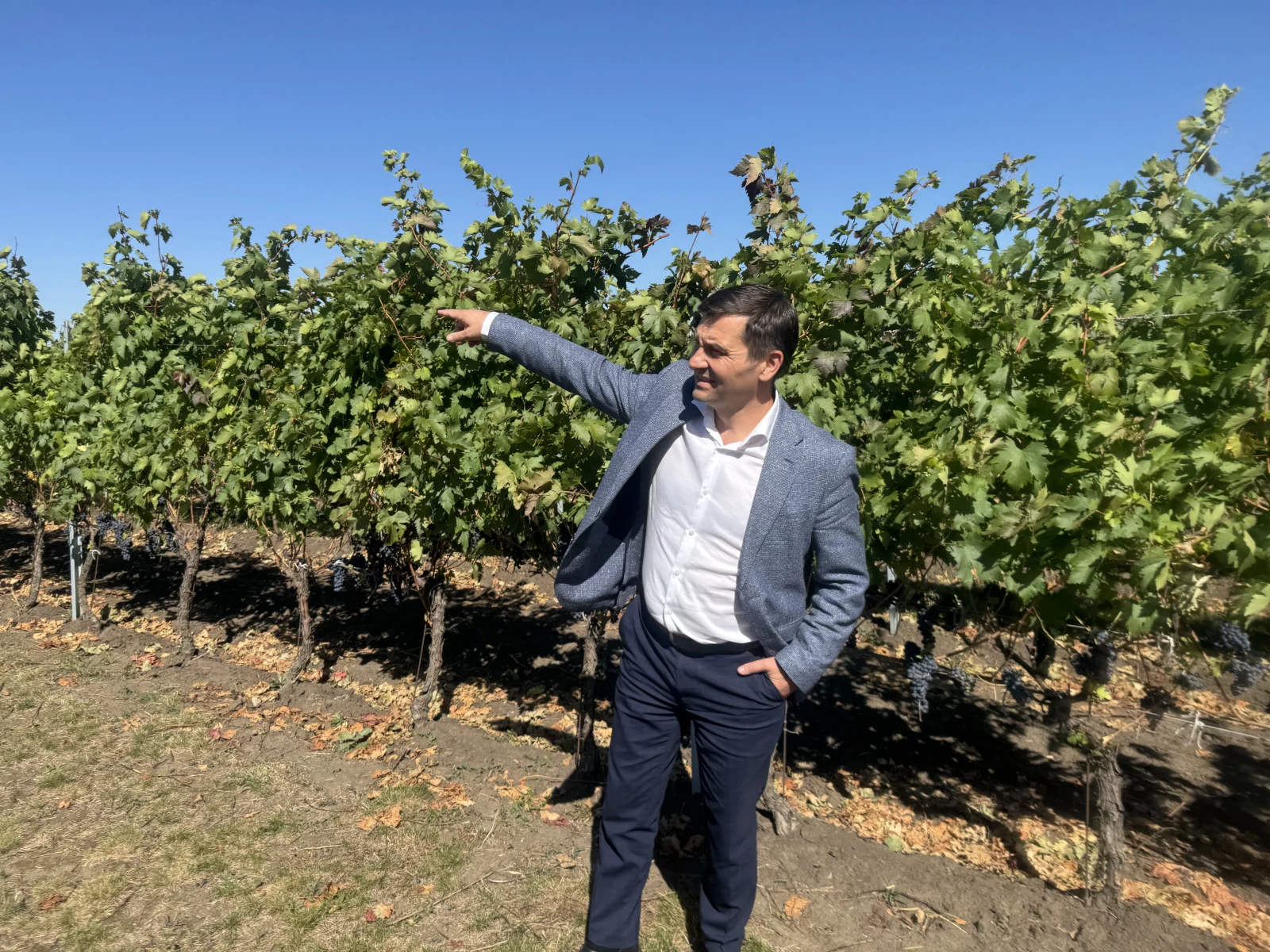
Sorin MASLO: Even more than that. Over the past three years, we've been consistently investing in new vineyards, as we believe that, under current conditions, high-quality grapes are the foundation for producing high-quality wine. Of the 630 hectares of vineyards we managed at that time, some were already outdated and in need of renewal. Starting in 2024, we planted 50 hectares; in 2025, 110 hectares; and another 50 hectares in 2026.
The new vineyards are state-of-the-art and serve as an excellent example of how to utilize public land and return it to agricultural use. They are planted using a modern trellis system, are currently cultivated exclusively using organic methods (BIO), and are designed for mechanized harvesting. We already have two harvesters and are in talks to purchase a third for the plantations in Stăuceni. In total, we plan to expand the area of our own vineyards to 1,000 hectares. It's important to note, however, that new vineyards begin producing a harvest in their fourth year.
InfoMarket: And how much did you invest in planting new vineyards between 2024 and 2026?
Sorin MASLO: Over the past three years, we estimate the total to be more than 60 million lei. This includes the vineyards, support structures, soil preparation, and the agricultural equipment we've purchased.
InfoMarket: Of the total volume of grapes you process, how much comes from your own vineyards and how much is purchased?
Sorin MASLO: It depends on the harvest. In the last two years, 2024 and 2025, the harvest was very low, so we purchased more—about 60% of the volume of grapes we needed. This, of course, was reflected in our costs. This year's harvest looks better, so I hope the share of purchased grapes will be lower, which will also affect our cost structure.
InfoMarket: Every year, the Grape and Wine Office publishes data on significant wine inventories held by companies that carry over from one year to the next, As of July 31, 2026, these stocks totaled about 15.7 million decaliters: approximately 14.2 million decaliters of wine were stored in bulk and about 1.5 million decaliters were bottled. Does Cricova have a lot of these carryover stocks?
Sorin MASLO: We have virtually no such carryover inventory. We retain a certain volume for blending new wines so that their composition and characteristics remain stable and consumers do not notice significant variations in taste and aroma from year to year. In addition, every producer manages its inventory of wines that are aging or at specific stages of the production cycle. Since we are not yet a major producer of our own grapes, it is not cost-effective for us to store large volumes of wine that carry over from year to year.
InfoMarket: In 2025, the Cricova and Mileștii Mici underground wineries were included on the UNESCO World Heritage Tentative List. What stage are preparations for the full nomination currently at, and when, in your estimation, might it be submitted for consideration by the World Heritage Committee?
Sorin MASLO: Several preparatory meetings regarding the UNESCO dossier have already taken place over the course of the year. There is a specific action plan in place, and a state commission organized under the Ministry of Culture is actively working on it. A government resolution is currently under discussion that would temporarily exempt our company from paying dividends so that we can allocate those funds to preparing the dossier. One of the first steps is scanning the cellars using special technology. This is a costly undertaking: we're talking about more than 200,000 euros.
InfoMarket: What benefits will Cricova gain if the site is added to the UNESCO World Heritage List?
Sorin MASLO: First and foremost, it will have a very strong impact on the image of both the company and the country. Inclusion on the UNESCO list will significantly enhance Cricova's international status as a tourist destination.
InfoMarket: Speaking of Cricova as a tourist destination, what percentage of revenue comes from this activity?
Sorin MASLO: Not very large yet: about 3% of total revenue. But we plan to build a hotel with a conference center, which will allow us to increase revenue from tourism services. Currently, we offer guided tours, tastings, and a restaurant for events, but we cannot provide a full range of services.
The building will be constructed near the entrance to the cellars. We are currently in the process of obtaining approval for the feasibility study (Feasibility Study). We announced a competitive bid and received two proposals. The hotel is expected to be 3–4 stories tall and have up to 50 rooms. The total investment is estimated at 5 to 8 million euros, but the final amount—as well as the optimal use of the site—will be determined by the Feasibility Study. I think we'll have a preliminary design by the beginning of next year.
InfoMarket: Your products fall into three categories: sparkling, still, and premium—the Vintage and Premium lines. Which of these are your top priority?
Sorin MASLO: It is important for us to grow in the premium ranges, where quality and added value are higher. At the same time, the global market is showing growing demand for sparkling wines, which is particularly important for Cricova as one of the leading producers of sparkling wine and a producer of sparkling wines made using the traditional method (méthode traditionnelle).
InfoMarket: Can you share a few figures or metrics that you'd like to see at Cricova by 2030?
Sorin MASLO: Of course. One million bottles of classic sparkling wine per year—currently 600,000; 150,000 tourists—currently about 100,000; and 1,000 hectares of modern, productive vineyards, at least 250 hectares of which are irrigated.
Today we have 650 hectares of vineyards, of which 200–300 hectares need to be uprooted and replaced, and another 200 hectares of new vineyards that aren't yet producing a harvest. When I speak of modern vineyards, I am referring to hectares planted with 3,300 to 3,600 vines; the older plots have 1,300 to 1,500 vines, which is one of the reasons they need to be replaced.
1,000 hectares of modern, productive vineyards of average quality would fully meet our plant's needs. I hope we'll be able to carry out these plans by 2030. // 28.09.2026 – InfoMarket.