Business demands that all goods from third countries be subject to VAT and customs duties, and that foreign marketplaces be required to register and pay taxes.
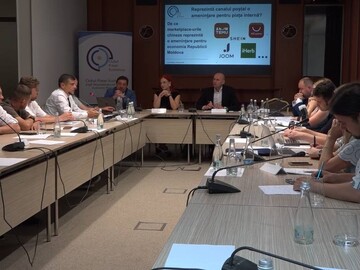
These proposals were voiced on July 22 at a meeting of the Economic Press Club, which discussed the problems of cross-border trade through marketplaces and the negative impact of this phenomenon on the Moldovan economy. Economic agents stated that the current conditions of trade and market access and the lack of taxation of parcels worth less than 150 euros create unequal conditions for local and international players. This negatively affects local businesses and also leads to losses for the state budget. The head of the press club, Alexandru Burdeini, presented official data, according to which about 10 million parcels with goods worth about 30 euros each were imported to Moldova in 2024. Only through Nova Poshta, 3 million postal items with clothes, shoes, cosmetics, electronics and household appliances entered the country, most of the parcels were ordered by buyers from Moldova on well-known marketplaces - Temu, Joom, Aliexpress, iHerb, Shein, MakeUp, etc. Accordingly, the turnover of the foreign parcels market is estimated at about 300 million euros. According to Alexandru Burdeinii, marketplaces (both Chinese and American) do not pay import duties and VAT on the delivered goods, which reduces the final cost of their goods in Moldova by 30-35%. According to him, free import of this product led to the fact that the state budget did not receive more than 1.3 billion lei in the form of VAT, customs duties and income tax. During the discussions, it was noted that in the EU countries, the dominance of imports through the postal channel began to be addressed several years ago. Currently, any parcel from outside the EU is subject to VAT, regardless of its value. The IOSS (Import One-Stop Shop) system has been introduced - online sellers (including platforms such as AliExpress, Temu and Shein) are required to pay VAT. The EU also has the ICS2 pre-notification system: each parcel must be accompanied by accurate digital information about the contents, value and sender. During the discussions, business representatives noted that platforms such as AliExpress and Temu not only create unfair competition, but also violate the rules in force in Moldova in the field of waste management, certification, food and non-food safety, etc. They propose to tax all parcels, regardless of value, in order to ensure fair competition between local traders and international platforms that do not pay taxes. Herewith, representatives of the Ministry of Finance, the Customs Service and the State Tax Service stated that the international postal and e-commerce sector is in the focus of increased attention. The Head of the General Directorate for Tax and Customs Policy of the Ministry of Finance, Corina Alexa, said that the dynamics of cross-border trade via postal items has been monitored and analyzed for over 2 years. For example, in the first half of 2025 alone, the number of parcels increased by 20%, and budget revenues from customs clearance of parcels worth over 150 lei increased by 15%. The institutions conduct periodic monitoring and analyze the measures already implemented at the EU level, including considering the possibility of applying a similar policy in Moldova. Corina Alexa specified that a measure is planned to be launched in the fall that will gradually reduce the maximum exemption from payment from 150 euros, and the possibility of taxing parcels, regardless of their value, is also being considered. State representatives also drew attention to the lack of a legal basis for the implementation of some of the measures proposed by businesses. Meanwhile, they assured that a package of amendments related to this sector is being prepared in the tax and budget policy for 2026, the draft of which will be considered somewhat later than usual this year, after the formation of the new parliament. // 22.07.2025 — InfoMarket.