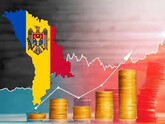
The Ministry of Economic Development and Digitalization lowered its 2025 GDP growth forecast from 2% to 1.3% and presented three economic development scenarios for the next three years
The updated macroeconomic forecast, published by the Ministry of Economic Development and Digitalization on December 3, notes that the downward revision is primarily due to the trade balance deficit, driven by a decline in goods exports and an increase in imports, particularly energy. However, a gradual recovery is expected by the end of the year, supported by a relatively higher harvest of key agricultural crops (wheat, barley, and corn). This could mitigate the decline in exports by increasing supplies of agricultural and food products, and also reduce the rate of import growth. It is noted that data for the first half of the year also shows some positive changes. For example, consumption increased by 6.3% in the first quarter (above the initial forecast) due to rising household incomes and improved access to credit. At the same time, private investment by economic agents increased by 26.8% in the first quarter of the year and by 25% in the second quarter, reflecting business confidence in the government's support policies, such as the introduction of a zero tax rate on reinvested profits and favorable lending conditions in the first half of the year. In the medium term, the Ministry, together with macroeconomic experts, is proposing three economic development scenarios. Under the baseline scenario, annual GDP growth could range from 1.5% to 2.0% under gradual reforms and a stable international environment. Under the baseline scenario, average annual inflation is expected to rise by 4.7% in 2026 and by 5% over the next two years. Exports will grow by 5.7% next year and by 2.6%-2.7% over the following two years, while imports could grow by 3.7%-4% per year over the next three years. Under the baseline scenario, industrial output could grow by 4.1% in 2026, 9.4%, and 15.2% in 2027-2028. The agricultural sector is expected to grow by 1%-1.5% per year, while investment in long-term tangible assets is expected to increase by 2-3% in 2026-2028. Wages could grow by 10.5% in 2026 and less rapidly in the following two years. The moderate scenario assumes that partial implementation of the EU Growth Plan reforms and investment projects could lead to a gradual acceleration of the economy, with the expected growth rate ranging from 2.7% in 2026 to 3.6% in 2028. The optimistic scenario assumes the full implementation of the EU Growth Plan, with GDP growth of 3.1% in 2026, 3.8% in 2027, and 4.3% in 2028. In this case, average annual inflation is projected at 4.6%-5%, exports will grow by 8.9%-10.9%, and imports by 10.1%-13.4%. Under the optimistic scenario, industrial production will grow by 3.8% to 5.5% per year, while agricultural production will grow by 1% to 2.5%. In this case, higher growth rates of investment in long-term financial assets are expected (by 18-23% per year). The average salary may increase from 15,600 lei projected for 2025 to 17,500 in 2026 and to 22,400 in 2028. However, the Ministry of Economy clarifies that these positive prospects are still subject to risks that could negatively impact the trajectory of economic growth. These include: an escalation of the war in Ukraine, rising geopolitical tensions globally, a possible recession in the economies of Moldova's main trading partners, the emergence of new energy shocks, domestic political instability, and adverse weather conditions. The dynamics of these factors will play a significant role in shaping economic performance in the coming period. // 03.12.2025 – InfoMarket.