


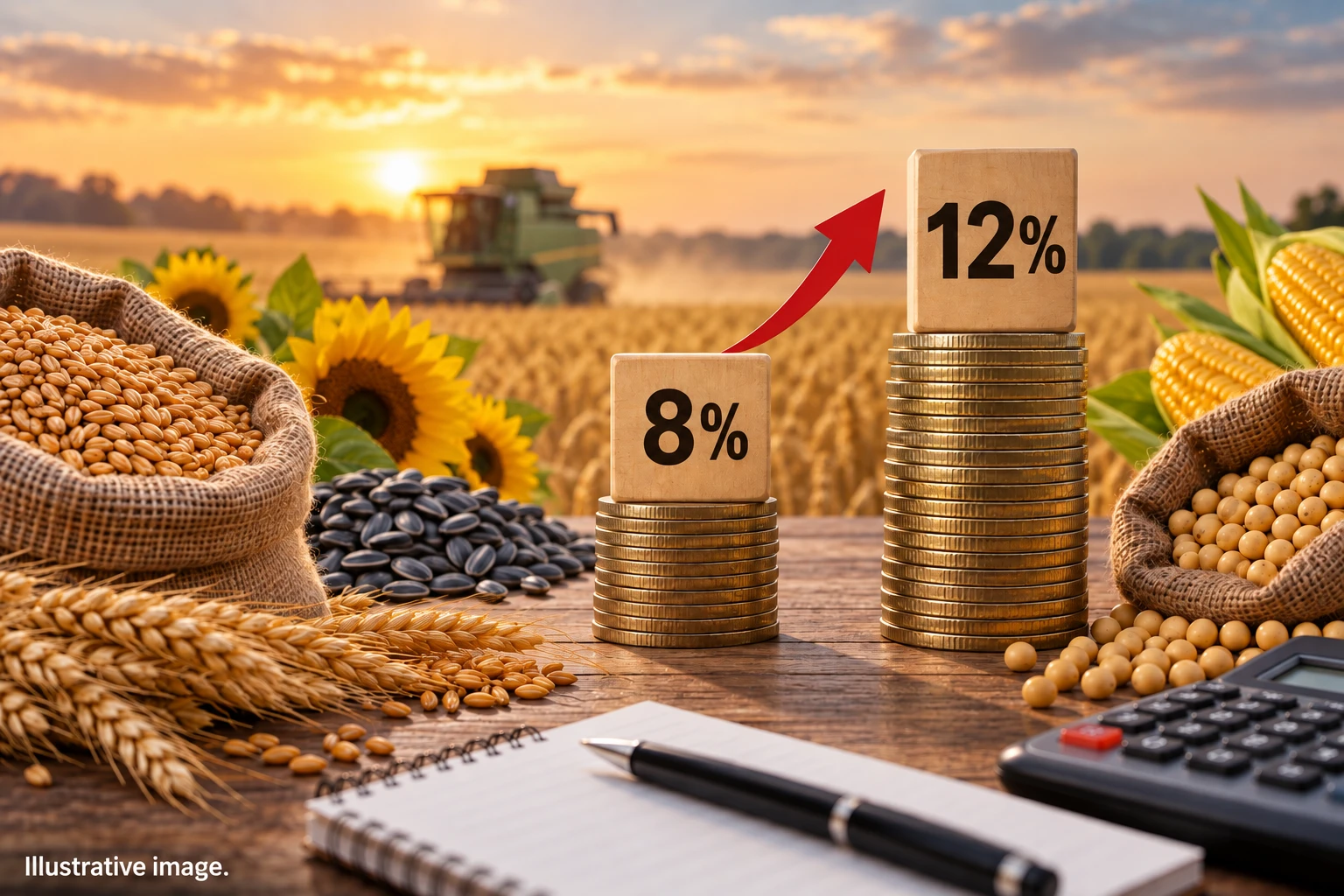
The increase in the VAT rate on grains and oilseeds from 8% to 12% has become one of the most controversial aspects of the 2027 tax policy. The "Farmers' Power" Association claims that this will increase the tax burden by approximately 500 lei per hectare, or 750 million lei for the entire sector. However, this figure is based on the association's own calculations, the methodology for which has not been publicly disclosed.
On September 8, the government approved the tax policy for 2027, which provides for the transition of certain crop, livestock, and horticultural products to a 12% VAT rate. For a number of socially significant goods, including bread, milk, certain vegetables, and fresh fruit, the 8% rate will remain in effect.
For grains and major oilseeds, the rate will increase by 4 percentage points, or 50% compared to the current rate. "Farmers' Power" warns that the increase could worsen the situation for farms already facing a shortage of working capital.
However, the arithmetic behind the stated estimate raises questions. If 750 million lei is divided by 500 lei per hectare, the result is 1.5 million hectares. According to the National Bureau of Statistics, the total planted area for the 2026 harvest is 1,591,700 hectares, of which cereals and legumes account for 902,700 hectares, or 56.7%. In other words, the calculation assumes an area comparable to nearly the entire cultivated area of the country.
Without information on which crops, yields, prices, and sales volumes were factored into the estimate, it is impossible to verify its accuracy.
Furthermore, VAT cannot be considered a direct tax on sales. The taxpayer charges it upon the sale of products but simultaneously accounts for the VAT paid when purchasing goods and services for its operations. The difference between the tax charged and the amount eligible for deduction is remitted to the budget.
Therefore, an increase in the rate from 8% to 12% does not in itself mean that the manufacturer loses 4% of the value of all products sold. The actual outcome depends on the cost structure, input VAT, distribution channels, the tax status of buyers, and the terms of sale.
What matters is how the VAT increase will affect the purchase price. If the price of grain excluding VAT remains the same, the buyer will pay the additional 4 percentage points, while the cost of production for the farmer will remain unchanged. However, if a trader or processor is not willing to increase the total purchase amount, the higher VAT will effectively be deducted from the price of the grain: the producer will receive less for their produce.
A nominal increase in the rate may therefore affect farms in different ways. For large producers with a stable cash flow, the consequences may be manageable. For small farms that depend on a few buyers and face a lack of liquidity, the change may have a more significant impact.
However, the government has not published a separate estimate of budget revenues specifically from the VAT increase on grains and oilseeds. The total positive direct effect of the entire tax policy for 2027 is estimated at approximately 5.1 billion lei, of which about 1.6 billion is expected to come from VAT changes, 2.7 billion from excise tax increases, and another approximately 820 million lei from changes to income tax and the vice tax.
No calculations have yet been published regarding how much additional revenue the government expects to generate specifically from grains and oilseeds, nor how the rate increase will ultimately be distributed among producers and the subsequent links in the supply chain. Therefore, the stated 750 million lei remains, for now, an estimate by the "Power of Farmers" Association. // 10.09.2026 – InfoMarket.