


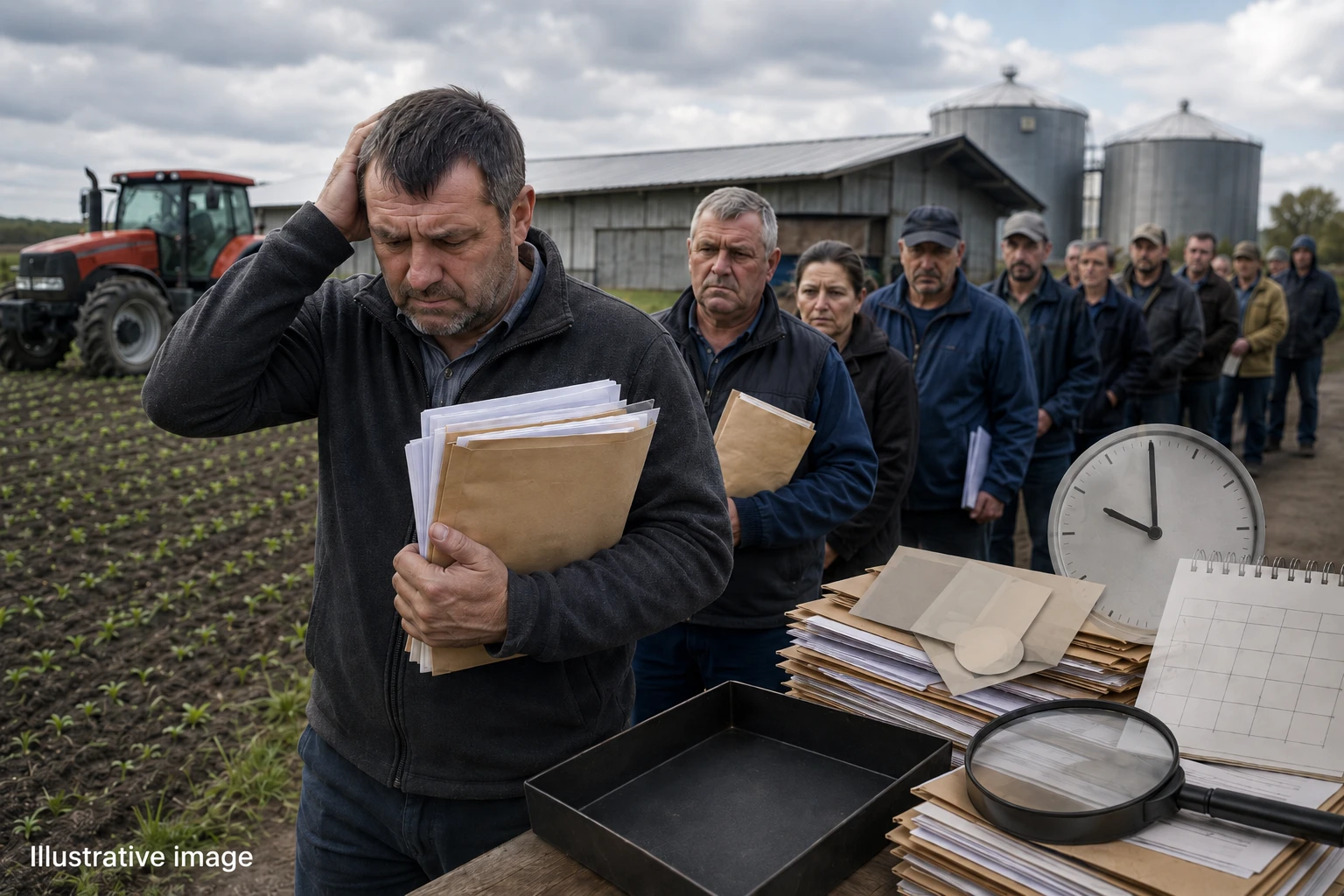
Moldova’s agricultural subsidy system has accumulated liabilities equivalent to nearly two annual budgets of the relevant fund. As of November 1, 2025, the debt owed to agricultural producers had reached 3.03 billion lei. This is no longer a temporary delay in payments, but a structural gap between promised government support and the budget’s actual capacity.
In 2023–2024, the Agency for Agricultural Interventions and Payments managed 3.1 billion lei, as well as 250 million lei allocated to compensate for damage caused by natural disasters. During this period, 15,874 subsidy applications were submitted. About 97% of them were deemed eligible—totaling 3.4 billion lei, more than four times the available funding.
Thus, the government accepted and approved applications without having the funds available in advance to pay for them. Old obligations carried over into subsequent periods and reduced the capacity to finance new investments. As a result, the subsidy ceased to be a predictable support tool and turned into a situation where farmers were left waiting for payments with no clear timeline.
The Audit Chamber’s audit also revealed problems with the quality of fund management. Funds were allocated without clear performance indicators or a comprehensive assessment of the socioeconomic impact. In 14 of the 17 applications for advance subsidies that were audited, deviations from internal procedures were found. In the cases of nine farmers involving 7 million lei, progress reports were missing, yet the funding requests were approved for payment. Cases of double funding for certain investments were also documented.
These problems are exacerbated by a shortage of staff. AIPA employs 93 people, while its approved staffing level is 160. In 19 of the 22 cases reviewed, the established 60-day deadline for processing post-investment payments was exceeded, with delays ranging from 87 to 385 days.
Farmers’ organizations are already demanding that the 2026 budget be adjusted, that the agricultural fund be replenished, that historical debts be paid off, and that new financing programs be launched only after these steps have been taken. These demands show that the problem lies not only in the size of the fund but also in the model itself: the government incurs obligations faster than it is able to fulfill them.
Without limiting the volume of applications accepted to the available budgetary resources, the debt will recur annually. And without evaluating the results, it is impossible to understand which subsidies actually increase productivity, exports, and the sustainability of farms, and which simply distribute money.
Government support for agriculture makes sense only when it is predictable. A subsidy that has been approved but not paid out does not help a farmer invest. It merely shifts the financial burden from the state budget to the farm. //July 20, 2026 – InfoMarket.