Moldova’s economy continues to grow, albeit at a slower pace than previously expected, and following a sharp rise in oil and gas prices due to the conflict in the Middle East, inflation has risen again, reaching 6.8% in April 2026 and exceeding the upper limit of the target range – the World Bank
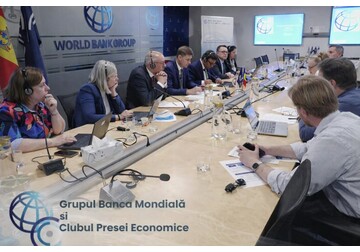
This was reported by World Bank representatives on Tuesday as they presented the revised Moldova Economic Update (Spring 2026) during a meeting of the Economic Press Club. They noted that, building on the achievements of 2025, industrial production in January–February 2026 grew by 3.1% year-on-year. The sector’s growth was driven primarily by a recovery in the production of food, oil, textiles, metal products, and automobiles—segments that are largely export-oriented. Real retail trade also increased by 10.8% year-on-year, driven by easing price pressures and a recovery in economic activity. Goods exports rose by approximately 27% by February, driven by increased sales of agricultural products and food, as shipments to the EU surged. Imports rose by 13% over the same period, narrowing the trade deficit. Additionally, agricultural production increased by 8.6% in the first quarter of 2026. Combined with favorable weather conditions, this points to the prospect of a bountiful harvest this year. Inflation remained high in 2025, driven by persistent supply-side pressures and continued strong domestic demand. On average, it stood at 7.8%—below previous peaks but above the NBM’s target range—reflecting only a partial normalization of price dynamics. Although headline inflation declined toward the end of the year, key inflationary pressures remained significant. The main drivers were energy and food prices. Energy inflation resulted from regulated tariff adjustments following Moldova’s transition to EU-aligned market-based electricity prices, as well as the cessation of Russian gas transit through Ukraine, which led to increased costs for households and businesses. At the same time, adverse weather conditions limited the supply of agricultural products in the first half of the year, keeping food prices high and exacerbating overall inflation. Following the outbreak of the conflict in the Middle East and the ensuing oil and gas price shock, inflation in Moldova rose again in 2026. In April 2026, inflation reached 6.8%, exceeding the upper limit of the target range. Prices for non-food goods accelerated (7.1% compared to 1.9% in February) due to significant increases in the prices of fuel, footwear, construction materials, and medicines. Meanwhile, food price inflation declined (6.3% compared to 6.9%), and service prices also slowed (6.9% compared to 7%), despite increases in costs for water supply and sewerage, electricity, passenger transport, and food services. In response to renewed inflationary pressures, the National Bank of Moldova tightened monetary policy in early 2026. The policy tightening in May 2026 raised the base rate to 6.5%, matching the level of the first quarter of 2025. Starting in the third quarter of 2025, the NBM began a cautious easing, and in the fourth quarter of 2025, the easing was reinforced by a reduction in reserve requirements (also last implemented in February) and a cut in the base rate to 5%. However, the consequences of the conflict in the Middle East—in particular, rising energy and commodity prices and the resulting inflationary pressures—led to a temporary policy shift. The National Bank responded by raising the base rate in early May, thereby tightening monetary conditions to limit spillover effects. Although the money supply remained stable, slowing for most of 2025 before recovering by the end of the year, excess liquidity was significantly lower than at the beginning of 2025. // 26.05.2026 – InfoMarket.