The Moldovan government and the IMF have reached an agreement at the expert level on a new cooperation program for the next three years
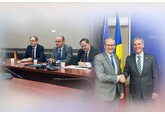
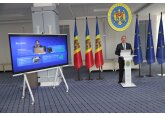
Prime Minister Alexandru Munteanu announced this at the Cabinet meeting on Wednesday. According to him, a final meeting was held this morning with experts from the IMF Mission, which had been in the country for two weeks. Alexandru Munteanu noted that Moldova and the IMF “are on the same page regarding the direction of the country’s economy.” He emphasized that certain technical discrepancies had been resolved, and there is now a shared understanding regarding the reforms, their pace, and the priorities for the coming period. The Prime Minister noted that agreement on the new cooperation program for the next three years has been reached at the level of the IMF Mission experts, and this was the result of significant efforts. For Moldova, this is a clear signal that the government has a team of professionals who know what they are doing, are moving in the right direction, and are maintaining a good pace, even when external circumstances remain very challenging. Alexandru Munteanu noted that the next step should be the approval of the agreement between the Moldovan government and the IMF Executive Board. The IMF’s statement on the results of its Mission’s visit to Moldova is expected to be released on Wednesday afternoon. The Prime Minister expressed gratitude to his colleagues from the Ministry of Finance, the National Bank, the Ministry of Economic Development and Digitalization, the Ministry of Energy, the Ministry of Labor and Social Protection, the Ministry of Justice, and other agencies for their hard work and professional cooperation. As previously reported, an IMF expert group led by Alina Iancu worked in Chisinau from May 7 to 20. The Fund’s Mission held discussions with the authorities in response to a request for a new agreement under the Policy Coordination Instrument. IMF experts analyzed recent economic developments, updated their assessment of macroeconomic prospects and risks, and discussed policy and reform priorities with the authorities and other key stakeholders. The Policy Coordination Instrument is a non-financial instrument available to all IMF member countries. It allows for closer dialogue with countries and ensures IMF support for economic policy measures. This enables countries to demonstrate their commitment to reforms and mobilize financing from other sources. As previously reported, the Moldovan authorities are negotiating a new three-year cooperation program with the IMF that does not include a financial component. The decision to opt for a non-financial instrument reflects the improvement in Moldova’s macroeconomic situation, which no longer justifies the need for urgent financing. The new program with the IMF is expected to support Moldova’s European integration efforts, strengthen investor confidence, and mobilize investment in the Moldovan economy. It should be noted that Moldova’s previous cooperation program with the IMF was approved by the Fund’s Executive Board in December 2021. It was implemented under two IMF instruments—the Extended Credit Facility (ECF) and the Extended Fund Facility (EFF)—and was designed to last 40 months, through 2025. Initially, the funding amounted to approximately $400 million; however, following the outbreak of the war in Ukraine and the energy crisis in the region, the amount was increased. In December 2022, the IMF approved its expansion, and the total amount of resources available to Moldova reached approximately $800 million. However, by the time both programs expired in October 2025, Moldova had not received a portion of the funding—approximately $165 million. Nevertheless, the programs played an important role in maintaining the country’s macroeconomic stability during a period of serious external shocks. The existence of an agreement with the IMF is traditionally viewed by international partners as a sign of confidence in the country’s economic policy and helps attract additional financial assistance from other international financial institutions and donors. // 20.05.2026 — InfoMarket