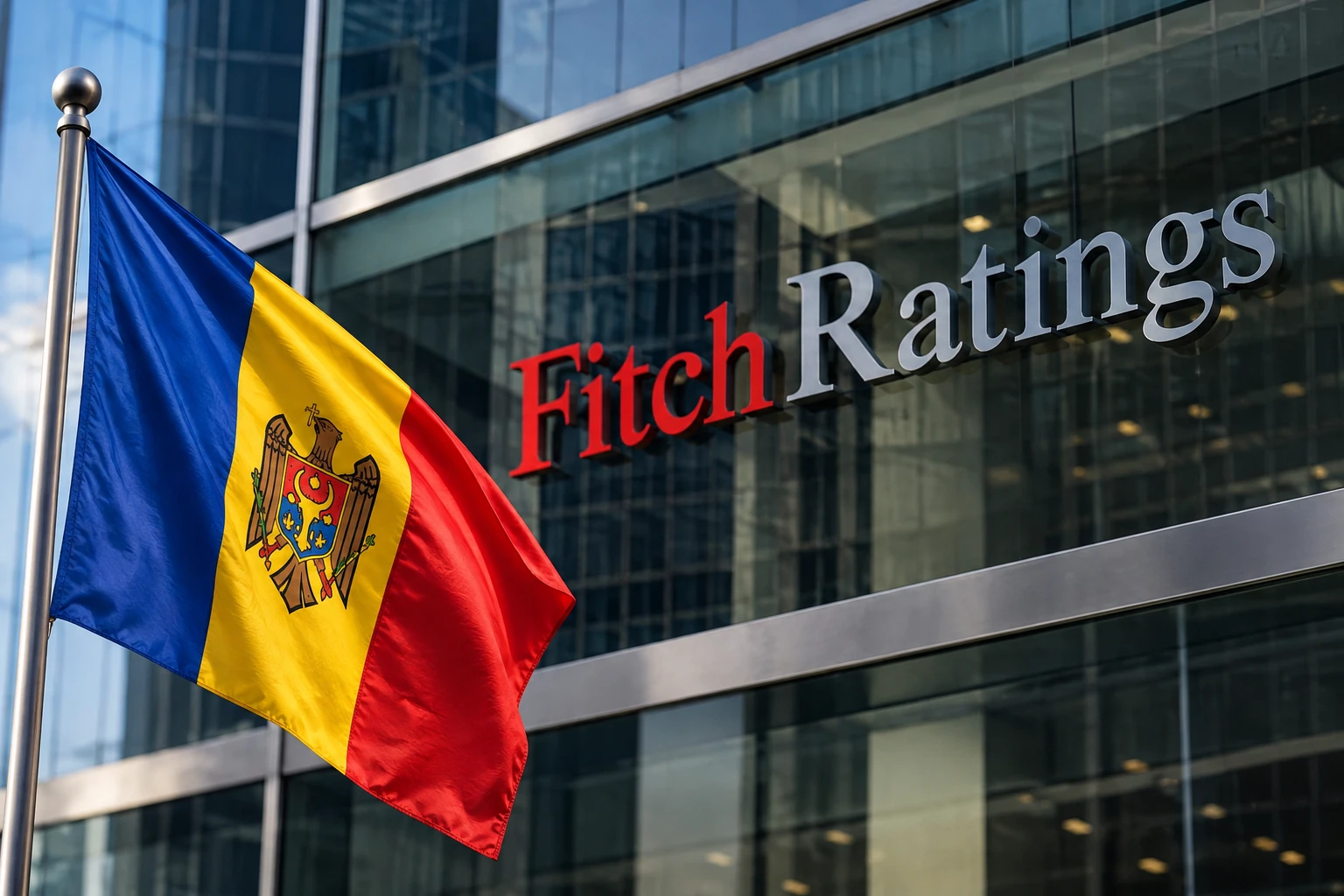
According to the agency's rating commentary, Moldova's B+ rating reflects moderate public debt with a manageable repayment schedule, stable external financial assistance, high GDP per capita compared to peer countries, and a track record of policies that have ensured macroeconomic and financial stability amid a series of shocks. Geopolitical risks related to the war in Ukraine and the unresolved Transnistrian conflict, foreign interference in domestic politics, a large current account deficit, and rising net external debt remain constraining factors. The agency notes that Moldova's pro-European government continues to receive official financial and technical assistance. The country has gained access to 488.5 million euros (2.6% of GDP) under the €1.9 billion Reform and Growth Facility, and an additional €191.5 million (1% of GDP) is expected to be disbursed by the end of 2026. According to the agency's estimates, in 2025 Moldova met 93% of its reform-related milestones. "Commitment to reforms remains high, but the ability to meet all milestones by the end of 2027 will be constrained by administrative and technical capacity. In May 2026, Moldova agreed with the IMF on a 36-month Policy Coordination Instrument, which should give the reforms additional momentum," Fitch Ratings analysts emphasize. At the same time, Moldova's current account deficit in 2025 stood at 19.7% of GDP, making it the second-largest among the sovereigns rated by Fitch. The agency expects the figure to average 18.2% of GDP in 2026–2028, which is 7.5 times higher than the projected median for Category B countries. Net external debt could rise to 28.5% of GDP by 2028, compared with a median of 16.1%, while international reserves will cover, on average, about five months of current external payments. The Agency notes that Moldova is significantly exposed to the impact of higher prices for imported energy resources, which led to inflation exceeding the upper limit of the central bank's inflation tolerance range of 5% ±1.5 percentage points from the target in the first half of 2026. The National Bank has tightened monetary policy; nevertheless, Fitch forecasts average inflation in Moldova of 6.2% for 2026–2028. The budget deficit in 2026 is projected at 5.7% of GDP; however, the agency expects it to gradually decline to 3.8% of GDP by 2028, partly due to a stimulative tax policy. Public debt, which stood at 38.1% of GDP at the end of 2025, could rise to 43.3% of GDP by 2028, remaining below the projected median of 54.8% for Category B countries. Seasonally adjusted real GDP growth slowed in the first quarter of 2026 to 0.5% year-over-year, following a 1.2% contraction compared to the previous quarter, as the construction and information and communications technology sectors posted sharp declines. Given the ongoing impact of high inflation on domestic demand and risks to external demand, primarily in the EU, Fitch has lowered its 2026 economic growth forecast for Moldova to 1.7% from the previously expected 2.9%. In 2027–2028, an increase in government investment—primarily driven by the Reform and Growth Facility—as well as comparatively lower inflation and rising real wages should support a gradual acceleration of economic growth toward its potential rate of about 3.8%. The agency notes Moldova's high geopolitical risks, including its dependence on the course of the war in Ukraine. Meanwhile, the status of Transnistria remains unresolved. It is also noted that Moldova has made progress in the EU accession process by opening 2 of 6 "negotiation clusters," which group key policy areas under EU legislation; however, the formal "alignment" between Moldova and Ukraine in this process, as well as administrative capacity issues, pose a risk of delays in achieving the goal of EU accession in 2028–2030. The agency notes that a sustained reduction in geopolitical and external risks, a decrease in the current account deficit, growth in foreign direct investment, and improved economic growth prospects—while maintaining macroeconomic stability—could contribute to a rating upgrade. // 24.08.2026 — InfoMarket.
Fitch affirmed Moldova's rating and lowered its GDP growth forecast for 2026
The international rating agency Fitch Ratings has affirmed Moldova's rating at B+ with a stable outlook and lowered its GDP growth forecast for 2026 to 1.7%