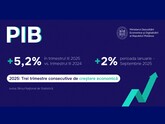
The IMF has raised its 2025 GDP growth forecast for Moldova by 1 percentage point, from 1.7% to 2.7%, and by 0.1 percentage point, from 2.2% to 2.3%, for 2026
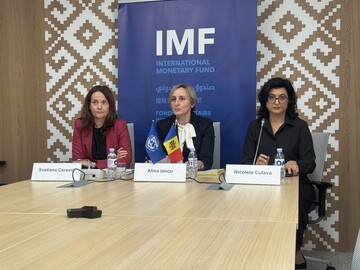
This follows from the final statement of the International Monetary Fund missio, which held consultations with the Moldovan authorities from December 4 to 17 under Article 4 of the IMF Agreement. As IMF Mission Chief Alina Iancu noted, after several years of slow economic activity caused by the aftermath of the war in Ukraine and repeated energy shocks, Moldova's economic growth is gradually recovering. Furthermore, EU accession and the EU Growth Plan provide a unique opportunity to boost productivity, stimulate long-term growth, and improve living standards. According to IMF experts, seizing this opportunity requires bold reforms to address structural weaknesses, as well as effective macroeconomic management and policy development to support reforms while ensuring macroeconomic stability. IMF experts note domestic demand-driven economic growth in Moldova and widening external imbalances amid heightened uncertainty. Economic activity in the country has picked up, and inflation continues to decline. After weak performance in 2024, real GDP growth resumed in late 2024 and is projected to reach 2.7% this year, supported by a better-than-expected harvest and strong consumption and investment. Significant EU financing helped protect households and businesses from the recent energy shock. Inflation has been steadily declining since peaking earlier this year due to the energy shock and is expected to return to the National Bank of Moldova's target range of 5% (±1.5%) by the end of the year. Inflation is expected to amount to 6.5% at the end of 2025, 4.9% at the end of 2026, 5% at the end of 2027, and 5% at the end of 2028. The current account deficit of the balance of payments has widened to approximately 20% of GDP this year due to high demand for imported goods, electricity imports, and weak exports of goods, indicating a decrease in competitiveness. IMF experts believe that Moldova’s economic growth will be supported by an increase in investment and stabilization of exports. IMF staff forecast real GDP growth of 2.3% in 2026, supported by dynamics caused by a good harvest this year and domestic demand. In 2026, Moldova’s GDP is expected to grow by 2.3%, in 2027 – by 3.5%, and in 2028 – by 3.7%. Moldova's economic growth is expected to reach 3.7% in 2028, reflecting higher public and private investment and productivity-enhancing structural reforms under the EU Growth Plan. The current account deficit will remain high in the near term and narrow only gradually over the medium term, amid declining import demand. However, the forecast remains subject to significant uncertainty. Downside risks prevail, primarily related to a potential intensification of the negative impact of the war in Ukraine and other geopolitical developments, as well as delays in the implementation of reforms under the Growth Plan and the misuse of allocated funds. On the other hand, accelerated reform implementation and potentially more favorable geopolitical developments could positively impact the economic growth outlook. As previously reported, the IMF's October World Economic Outlook (WEO) revised up its GDP growth forecast for Moldova in 2025 by 1.1 percentage points - from 0.6% to 1.7%. At the same time, IMF experts have lowered their forecast for Moldova's economic growth in 2026 by 0.3 percentage points - from 2.5% to 2.2%, and by the end of the next five-year period (2030), they predict our country's GDP growth will be 3.5% instead of the previous 5%. // 17.12.2025 – InfoMarket.