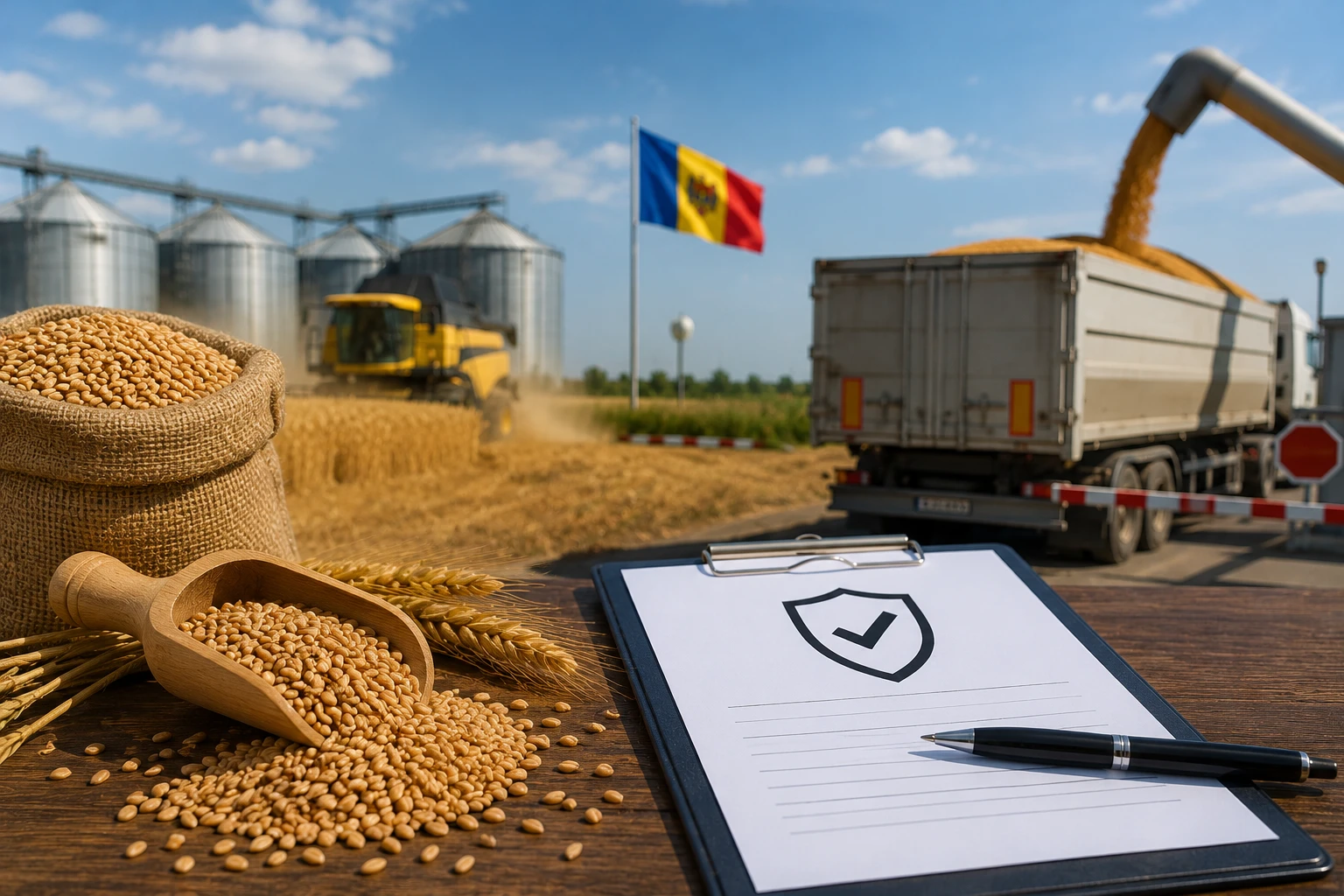
Prime Minister Vasile Tofan announced this, noting that he would propose implementing this measure at the next Cabinet meeting. The head of the Cabinet noted that some decisions are easy to make, while others—whichever option is chosen—entail certain costs, and licensing grain imports is one such decision. Vasile Tofan emphasized that at the next government meeting, he will recommend introducing a licensing regime for grain imports, although he believes the state should intervene in the market as little as possible. "By introducing licensing, we are trying to protect Moldovan grain producers and exporters. But this protection also comes at a cost: it could lead to higher prices for raw materials in the milling, baking, and livestock sectors, as well as in the oil and fat industry. And if these sectors lose their competitiveness, we risk importing more flour, meat, milk, or oil—products with higher added value—instead of producing them here in Moldova," Prime Minister emphasized. He noted that there are "80/20" decisions, in which the arguments in favor of one option are irrefutable. The most difficult decisions are "50/50" ones, where one must weigh legitimate but conflicting interests and choose the solution that entails the least risk to the economy as a whole. "This is one such decision," Vasile Tofan emphasized. At the same time, he said, there are reasons for optimism regarding our farmers. Initial data on this year's harvest look promising. As for rapeseed, which is harvested earlier, yields were good in many regions, and prices are higher than last year. "The external market situation may also work in our favor: in Europe, the outlook for some crops has deteriorated sharply, especially in the case of corn, whose harvest is currently estimated to be nearly 20% below the average for the past five years. The reduction in European supply should support regional grain prices," stated Prime Minister. According to him, this does not mean that the authorities are ignoring farmers' concerns. Agriculture operates with low profits, high risks, and within a regional market affected by war and logistical disruptions. Under such conditions, even the risk of additional pressure on prices must be taken very seriously. Vasile Tofan noted that the measures and the specific licensing mechanism will be discussed at the next government meeting on August 26. A similar mechanism was used in 2024–2025, which had a positive impact on local grain producers. As Prime Minister emphasized, the plan is to introduce a temporary grain import licensing regime until October 31 under exceptional circumstances. "At the same time, we must work on what is important in the long term: reducing logistics costs, improving market access, developing storage and processing capacities, facilitating access to financing, and enhancing the competitiveness of agriculture. Protecting farmers is important. It is equally important not to inadvertently weaken other sectors of the economy that depend on grain," said Vasile Tofan. // 24.08.2026 — InfoMarket.
Moldova will introduce grain import licensing to protect local farmers
Moldova plans to introduce a licensing system for grain imports through October 31 to protect domestic agricultural producers