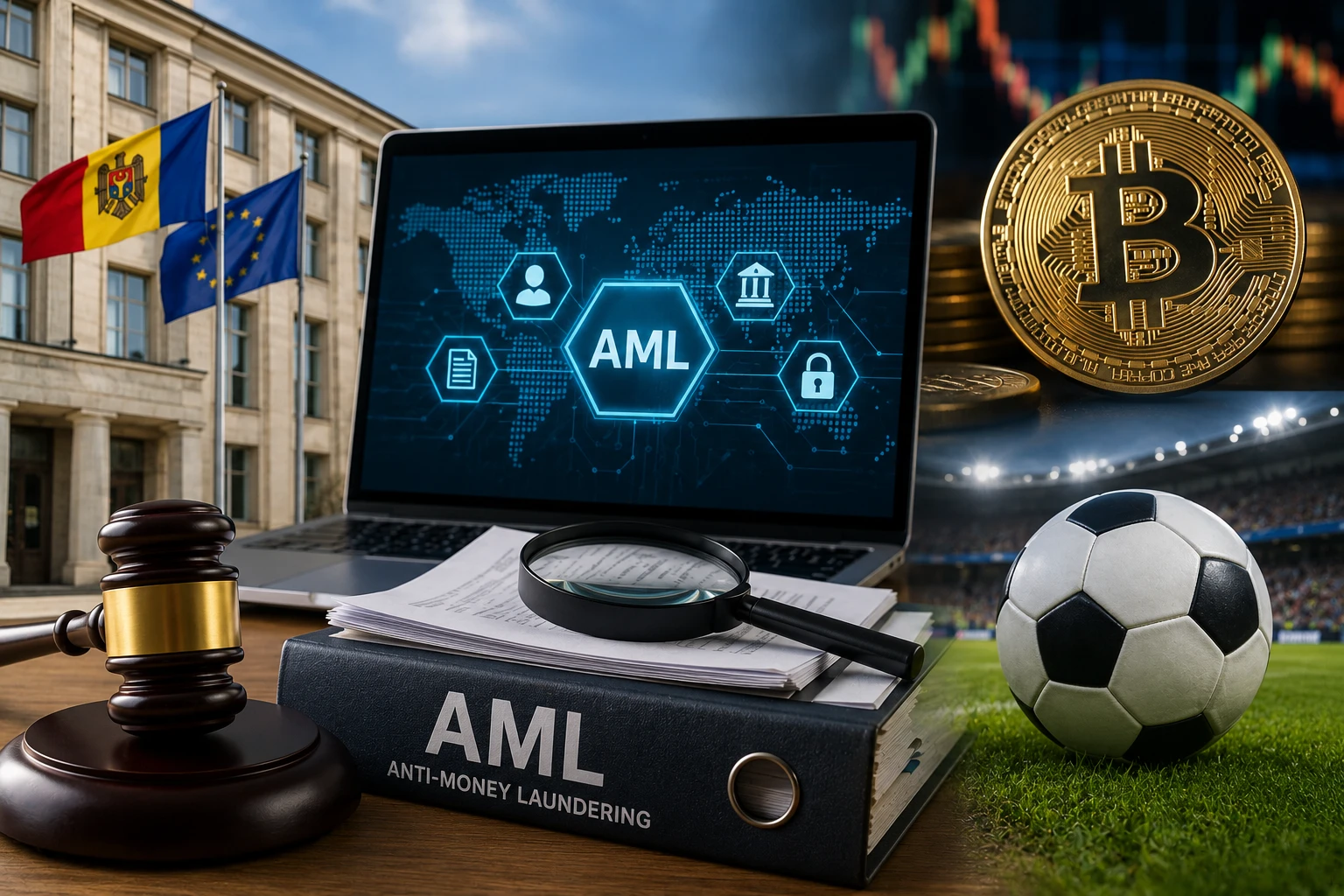
The Service for the Prevention and Combating of Money Laundering (SPCSB) has drafted two bills that expand the list of entities subject to regulation and increase penalties for money laundering violations. The proposal calls for including crypto-asset service providers, crowdfunding platforms, and intermediaries; professional soccer clubs and agents; operators of investment-based immigration programs; dealers in cultural artifacts and high-value goods for transactions of 10,000 euros or more, as well as real estate agents for leases valued at 10,000 euros or more per month. Banks, financial institutions, auditors, accountants, tax advisors, attorneys, notaries, bailiffs, mediators, and other existing reporting entities will retain this status, but their obligations will be revised. All reporting entities will be required to register with the SPCSB registry, implement internal risk assessment procedures, verify customers and beneficial owners, monitor transactions, and report suspicious transactions, cash payments, and money transfers. The draft law provides for the creation of central registries of beneficial owners, bank accounts, payment accounts, cryptocurrency accounts, and safe deposit boxes. These will be administered by the Public Services Agency and the State Tax Service of Moldova. Information on beneficial owners must be updated and submitted within 28 days after a change in ownership or control. The requirements will also apply to certain foreign legal entities and legal arrangements operating in Moldova. The Anti-Money Laundering and Counter-Terrorist Financing Service (AML/CTF) will also be able to suspend suspicious transactions, operations involving bank, payment, and cryptocurrency accounts, as well as access to certain assets or business relationships for up to 5 business days to conduct an analysis. In addition to the SPCSB, the National Bank and the National Commission for the Financial Market will also oversee compliance with the law. Self-regulatory professional organizations will lose their supervisory powers in this area but will continue to participate in risk assessment, data collection, and professional training. The bill provides for the exchange of information with the relevant EU anti-money laundering body, the European Anti-Fraud Office, and the European Public Prosecutor's Office. The second bill establishes a risk-based procedure for conducting scheduled, unscheduled, and thematic inspections, criteria for determining the amount of penalties, and rules for publishing decisions on sanctions. The maximum fine for credit and financial institutions may amount to 10 million euros or 10% of their total annual turnover, and for individuals holding executive positions in such institutions, up to 5 million euros. Both draft laws were reviewed at a meeting of the State Secretaries on August 26 and are awaiting approval by parliament. // 01.09.2026 — InfoMarket.
Moldova Will Include Crypto Companies and Soccer Clubs in Its Anti-Money-Laundering System
In Moldova, crypto companies and soccer clubs will be included in the anti-money laundering system; fines could reach 10 million euros