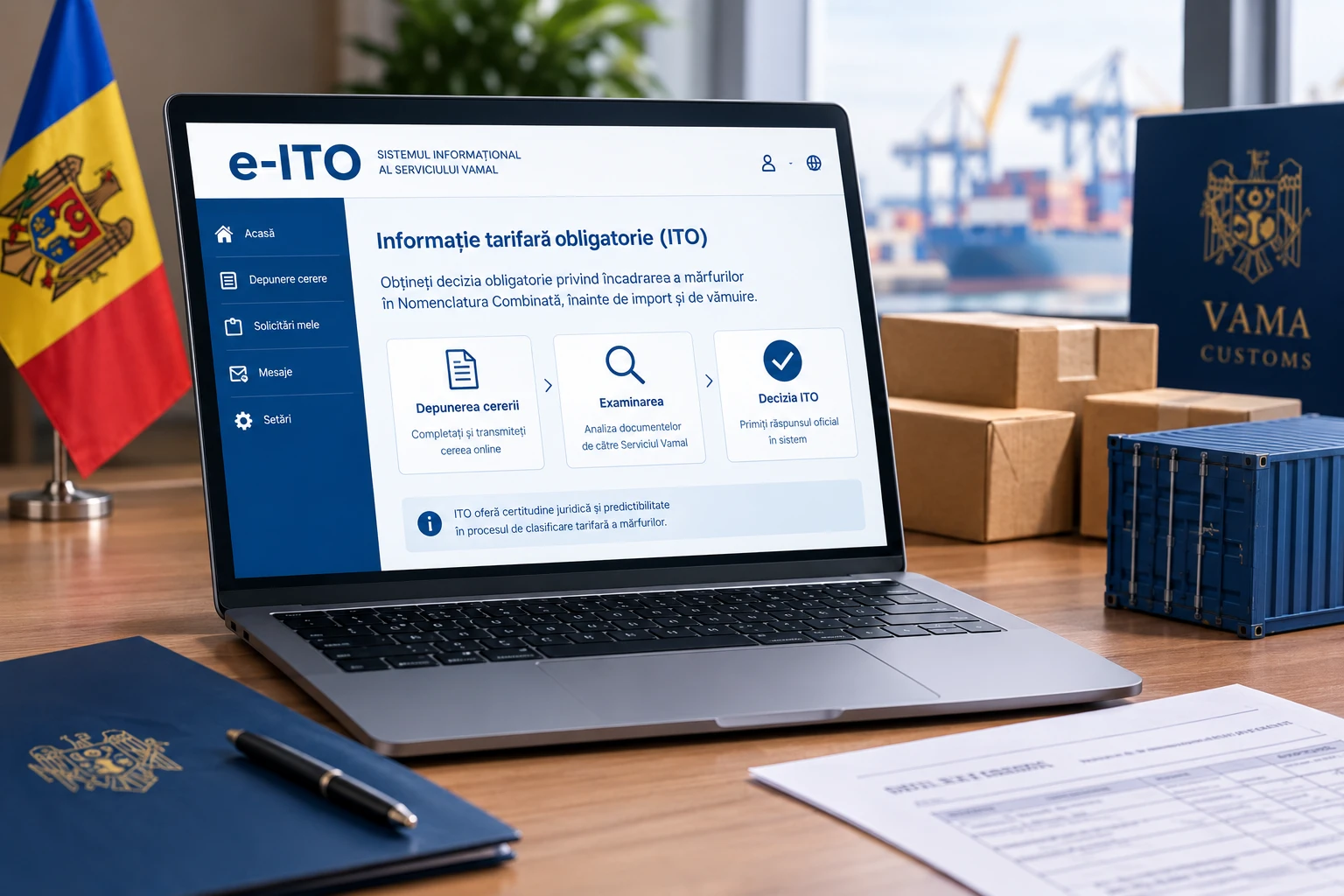
In accordance with the provisions of the Customs Service regulations published in Monitorul Oficial (the Official Journal of Moldova), this refers to a mechanism that allows a company to obtain a binding ruling from the Customs Service regarding the Combined Nomenclature code applicable to a good even before the good is imported and cleared through customs. The applicable customs duty rate, as well as other measures in effect for the import or export of a specific good, depend on the correct tariff classification. Unlike a standard interpretation issued by the Customs Service, an ITO decision is binding. According to the Customs Code, it is binding on the Customs Service with respect to goods whose customs clearance takes place after the decision enters into force, and on the holder of the decision from the moment of receipt of the notification. The decision is valid for 3 years. An application for an ITO must pertain to specific goods with identical or similar characteristics, the differences between which do not affect their tariff classification. Customs may reject an application if the same applicant has already filed an application for the same goods or if the application is not related to the intended use of the decision during customs clearance. The new Regulation transfers interactions regarding such rulings to the e-ITO electronic system: the submission and processing of applications, the exchange of necessary information with the Customs Service, and the issuance of the tariff classification ruling itself must all be carried out through this system. Thus, an importer will be able to secure the Customs Service's official position on a commodity code in advance and use it in subsequent customs operations, which should reduce the risk of classification disputes at the time of importation. Until now, the procedure for issuing binding tariff information has been governed by technical regulations approved in December 2023. The introduction of e-ITO marks the next stage in the digitization of this mechanism and brings it closer to the EU's Binding Tariff Information electronic system. // 28.08.2026 – InfoMarket.
Moldova has approved a new procedure for submitting applications and issuing decisions via e-ITO
Moldova has approved a new procedure for submitting applications and issuing decisions regarding mandatory tariff information (ITO) through the specialized e-ITO information system