Average annual inflation is expected to be 5% in 2026 and 4.5% in 2027 - the NBM
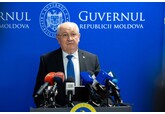
This forecast is contained in this year's first Inflation Report, presented by the National Bank of Moldova (NBM) on February 13. Compared to the previous Inflation Report, the current inflation forecast has been revised upward until the end of this year (+0.7 p.p.) and downward (-0.1 p.p.) in 2027, especially for the second and third quarters. The annual inflation rate will decline in the first quarter of 2026, after which it will remain relatively stable until the end of this year (within the range of 4.9-5.1%), and will decline slightly at the beginning of next year (4.7%), then stabilize in the last three quarters of 2027 (at 4.4%). Starting in Q1 2026, the annual inflation rate will return to the range of deviations from the inflation target and will remain close to the target until the end of the forecast period. The maximum annual inflation rate in the forecast period will be 5.1% in Q3 2026, and the minimum will be 4.4% in Q2 2027. Average annual inflation is expected to be 5% in 2026 and 4.5% in 2027. Annual inflation dynamics will be determined by the positive contribution of food prices and core inflation and, to a lesser extent, by the dynamics of regulated prices and fuel prices starting in Q2 2026. Fuel prices in Q1 2026 will have a slightly negative contribution to the annual inflation rate. Aggregate demand will be negative throughout the forecast period, mainly due to tight real monetary conditions until the Q3 2027 and, to a lesser extent, a negative tax impulse in the second half of 2026 and early 2027. Real monetary conditions will have a restrictive effect on aggregate demand throughout the forecast period, except for the last quarter, when they will become stimulative. The NBM emphasizes that forecasts regarding the impact of external factors at the beginning of the year are influenced by geopolitical uncertainty. Although the global economy is expected to continue to grow gradually, its potential will be overshadowed by the consequences of geopolitical events on the international stage. “The war in Ukraine is entering its fourth year, with no progress in the negotiations; tensions in the Middle East have shifted from Palestine to Iran; trade tariffs are increasingly becoming the norm rather than the exception. Despite gradual growth, European economies will be affected by mutual trade tariffs with the US, budget deficit problems, and political tensions surrounding Greenland. With inflation in the eurozone reaching its 2% target, the European Central Bank is expected to pause in its interest rate changes. The US Federal Reserve's (Fed) interest rate trajectory remains uncertain in the context of pressure from the US President on the Fed. In 2026, the US dollar is expected to weaken less than in 2025 as the initial effect of trade tariffs dissipates. Oil prices will continue to be influenced by OPEC+'s policy of returning previously restricted production capacity to the market. European natural gas prices will be negatively affected by the urgent need to replenish stocks in Europe, although weak demand from Asian countries may reduce pressure on international market prices. In the absence of extraordinary circumstances, global food prices are expected to develop in a balanced manner,” the NBM notes. Economic growth in the euro area is expected to be weak: 1.1% in 2026 and 1.7% in 2027, with inflation at 1.8% and 1.9%, respectively. The EUR-USD exchange rate is forecast at 1.18 for both years. The price of Brent crude oil will fall to $62.6 per barrel in 2026 and to $62.2 in 2027 (previous forecast: $68.7 and $61.8, respectively). Natural gas on world markets will fall in price in 2026 to $289.1 per 1,000 cubic meters and to $260.5 per 1,000 cubic meters in 2027. International food prices are expected to decrease by 0.1% in 2026 and increase by 1.9% in 2027 // 13.02.2026 – InfoMarket.