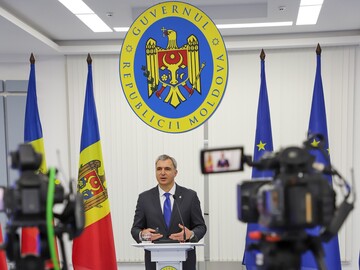
Moldova's economy grew by 2.7% in the first 11 months of 2025, exceeding previous forecasts, and 2026 will be a year of accelerated reforms and investments - the Minister of Economy
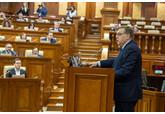
Minister of Economic Development and Digitalization Eugen Osmochescu announced this at a press conference on Friday, presenting the results of his Ministry's activities over the last three months (November 2025 – January 2026). According to preliminary data, the national economy grew by approximately 2.7% in the first 11 months of 2025, exceeding the initial forecasts of international partners. The Minister noted that the growth was driven by positive dynamics in agriculture, construction, IT, trade, energy, social services, and the financial sector. The main indicator of economic consolidation was a 22% increase in investment, which became the main driver of growth, as well as an almost 5% increase in industrial production. Programs implemented through the Organization for Entrepreneurship Development (ODA) played a significant role in supporting the business environment. During this period, 3,163 companies were provided with approximately 699.4 million lei in grants and tax incentives, with most of the funds going towards the modernization of production facilities. Thanks to 12 recipients of state aid alone, investments amounting to approximately 1.1 billion lei were attracted to the economy in three months. These measures directly contributed to the creation of 64,000 new jobs in 2025, with the number of employed people reaching 856,000. Eugen Osmochescu recalled that in the field of debureaucratization and digitalization, the Ministry launched a large-scale process of reforming licensing acts. The deregulation package, adopted in December 2025, covered 12 sectors and 206 types of economic activity and provided for the cancellation or revision of more than 100 permits. The expected effect for businesses is annual savings of around 264 million lei, with tangible results starting in 2026. This year, the Ministry plans to accelerate negotiations on EU accession and integration into the Single Market; radically simplify relations between entrepreneurs and the state; attract foreign, local, and diaspora investments in Moldova's strategic development. According to Eugen Osmochescu, these priorities are closely linked to Moldova's European course, which provides the necessary foundation for sustainable reforms, reliable investments, and long-term economic development. “European integration means transparency, predictability, and investment security. The government has clear priorities and concrete results, and 2026 will be a year of growth and creation,” the Minister said. He confirmed that the Ministry will continue to implement structural reforms and policies aimed at sustainable economic growth, in close coordination with national authorities and development partners, and that the goals set for 2026 reflect the government's strategic direction to strengthen the national economy, stimulate investment, and take advantage of the opportunities provided by Moldova's European course. It should be recalled that in its latest edition of the Global Economic Prospects for January 2026, the World Bank raised its GDP growth forecast for Moldova in 2025 from 0.9% to 2.9% and for 2026 from 2.4% to 2.7%. Earlier, the IMF raised its GDP growth forecast for Moldova in 2025 from 1.7% to 2.7% and for 2026 from 2.2% to 2.3%. The EBRD lowered its GDP growth forecast for Moldova in 2025 from 1.8% to 1.5%, but kept its economic growth forecast for the country in 2026 at 3.8%. The European Commission raised its GDP growth forecast for Moldova in 2025 from 0.9% to 1.6%, in 2026 from 2.8% to 2.6%, and expects economic growth of 3.7% in 2027. The UN forecasts Moldova's GDP growth at 2.5% in 2026 and 2.9% in 2027. According to UN experts, Moldova's economy grew by 1.5% in 2025. // 06.02.2026 — InfoMarket