

Moldova's Ministry of Energy will conduct an inventory of petroleum product storage capacity
The Ministry of Energy will conduct a nationwide inventory and assessment of petroleum product storage capacity in Moldova
The Ministry of Energy will conduct a nationwide inventory and assessment of petroleum product storage capacity in Moldova

The Economic Council under the Prime Minister of Moldova has launched a free online tool called Monitorul Oficial Analizat (MOA), which helps users better track and understand regulatory acts


In Moldova, the coefficient used to determine the base price for cigarettes and cigarillos will increase from 1.46 to 1.57 in 2027
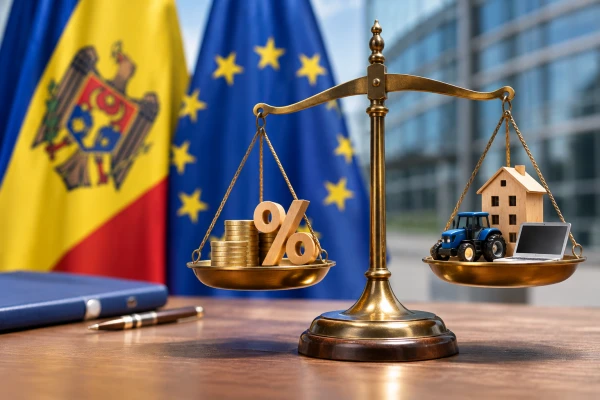
Moldova is discussing with the EU transition periods for a number of tax rules that may affect certain transactions, tax breaks for the agricultural sector, excise taxes, and special regimes for specific economic zones. The Ministry of Finance emphasizes that this involves a gradual adaptation of the tax system to European standards, taking into account the impact of the reforms on businesses and citizens.
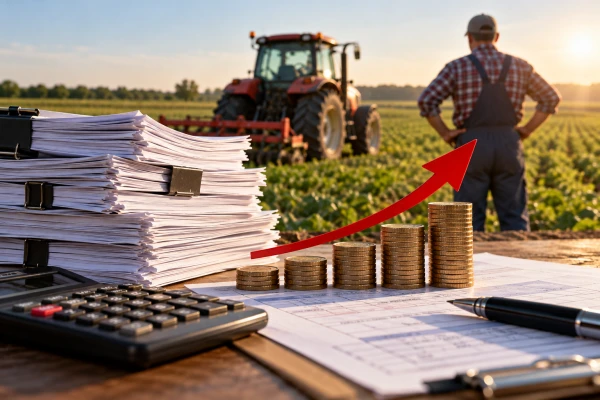
The income tax rate for peasant (farmer) households will rise from 7% to 12% in 2027
Moldova is preparing changes to its customs regulations that are intended to streamline procedures and make cross-border operations safer and more transparent. Authorities expect that alignment with European rules will affect both business operations and controls at external borders, as well as pave the way for a more digital and automated system.

Moldova is changing the rules for market access for agricultural and forestry equipment: mandatory type approval and oversight of compliance with safety requirements are being introduced for tractors, trailers, and a number of other machines. The new regulations also provide for the recognition of certain permits issued abroad and a simplified procedure for some types of equipment; however, the launch of the system will require additional budgetary expenditures and a transition period.

Moldova will launch its second wave of business deregulation in 2026: businesses can submit their proposals

Moldova intends to accelerate the digitization of public services, with a focus on modernizing tax administration, automating processes, and utilizing data. Government officials and business leaders discussed which digital solutions could bring the system closer to European Union standards and transform how taxpayers interact with the government.
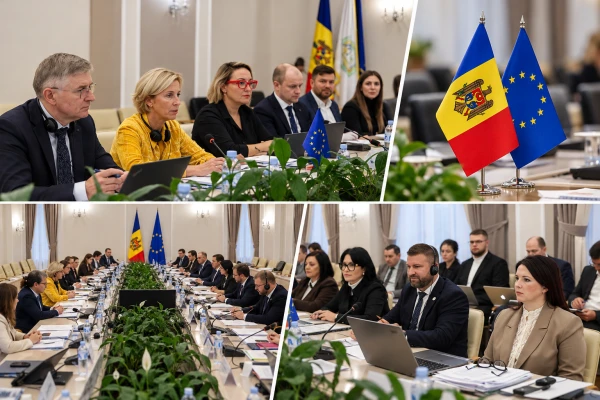
Moldova is accelerating the alignment of its sanitary and phytosanitary legislation with EU requirements in order to make progress in negotiations on one of the key chapters and prepare for future inspections by European regulators. At the most recent meeting of the relevant subcommittee, the parties discussed progress, priorities, and the future timeline for reforms, on which depends local producers' access to the EU market.

Moldova is preparing to tighten regulations against fraud involving bank cards and other non-cash payment methods: the authorities aim to expand investigative tools and establish specific liability for a range of related actions. The initiative addresses not only the theft or use of payment instruments themselves, but also the preparation of such crimes, which could significantly change the approach to combating financial fraud.

The Ministry of Economic Development and Digitalization will hold preliminary consultations on updating the National Program for EU Accession for 2025–2029, during which participants plan to discuss key areas for legislative harmonization and further steps to advance the country's progress in the negotiation process. Representatives from government agencies, the business community, the expert community, and the civil sector will take part in the discussion.
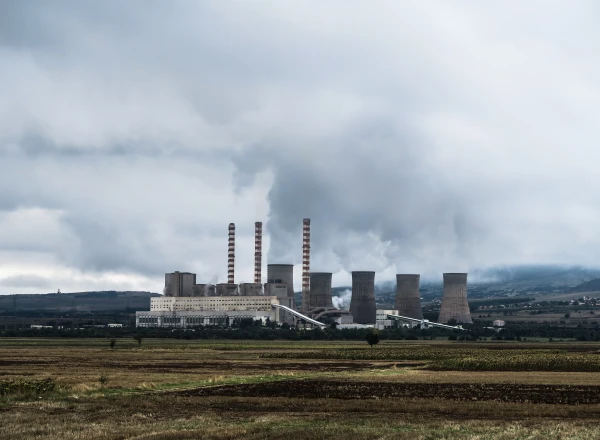
Moldova is preparing a new law on thermal energy and cogeneration for public discussion, which is intended to update the industry's operating rules and bring them in line with EU standards. The bill will address the planning of heat supply development, efficiency requirements for systems, and conditions for heat producers, suppliers, and consumers.
Loading…