


Moldova will develop a digital transformation program for the capital market in 2027
Moldova Plans to Develop a Digital Transformation Program for the Capital Market in 2027 — CNPF
Moldova Plans to Develop a Digital Transformation Program for the Capital Market in 2027 — CNPF

The National Bank of Moldova intends to expand its cooperation with an international platform that helps financial authorities in the region adopt modern approaches and exchange best practices. The focus is on adapting European standards, training personnel, and leveraging accumulated experience to drive further reforms in the banking sector.

The central banks of Moldova and Belgium discussed expanding cooperation and further aligning financial regulation with European standards. The talks focused on progress in reforming the banking sector, strengthening the central bank's independence, and the initial results of the country's integration into the European payment infrastructure.

The National Bank of Moldova has once again raised its benchmark interest rate, bringing it to its highest level in the past three and a half years. The decision reflects a noticeable tightening of monetary policy: this article examines how the rate has changed in recent months and what levels the regulator has set in the past.
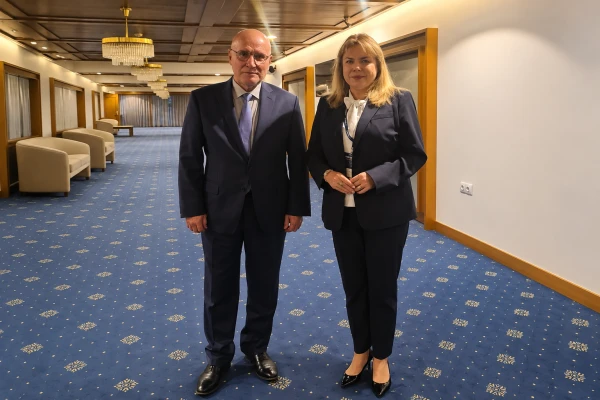
The central banks of Moldova and Bulgaria have agreed to expand their cooperation as Chișinău moves toward aligning with European financial standards. The talks focused on reforms, the modernization of payment infrastructure, and Bulgaria's practical experience in the process of European integration, which could be useful for the Moldovan regulator's next steps.

The National Securities and Stock Market Commission (CNPF) and the European Bank for Reconstruction and Development (EBRD) continue to collaborate to bring the capital market into line with European Union standards

Moldova continues to align its financial legislation with EU standards, with a focus on protecting customers of banks, insurance companies, and investment firms. The authorities are already drafting new regulations designed to make the terms of financial products more transparent and strengthen market oversight.

The National Bank has released a draft of new regulations for public consultation that significantly change the approach to digital resilience in the financial sector. The document will address IT risk management, incident response, system testing, and oversight of third-party providers, and the requirements are scheduled to be implemented in phases starting in 2029.

The EU-supported Economic Growth Plan for Moldova aims to stimulate investment, increase productivity, and accelerate reforms, and the funds allocated by the EU must be channeled efficiently into the real sector of the economy while maintaining financial stability—NBM

Starting October 1, financial service providers will be required to respond to consumer complaints within 15 business days

Moldova is preparing a phased easing of foreign exchange regulations: certain transactions and settlements will be permitted without regulatory approval under broader conditions, and restrictions will be gradually eased over the coming years. At the same time, opportunities for residents and currency exchange offices are being expanded, while the National Bank will gain additional control tools and will be able to block transactions if risks are identified.
The National Bank of Moldova has once again raised its benchmark rate, bringing it to its highest level in more than three years. The decision reflects a significant tightening of monetary conditions amid a series of adjustments over the past few months.
Loading…