

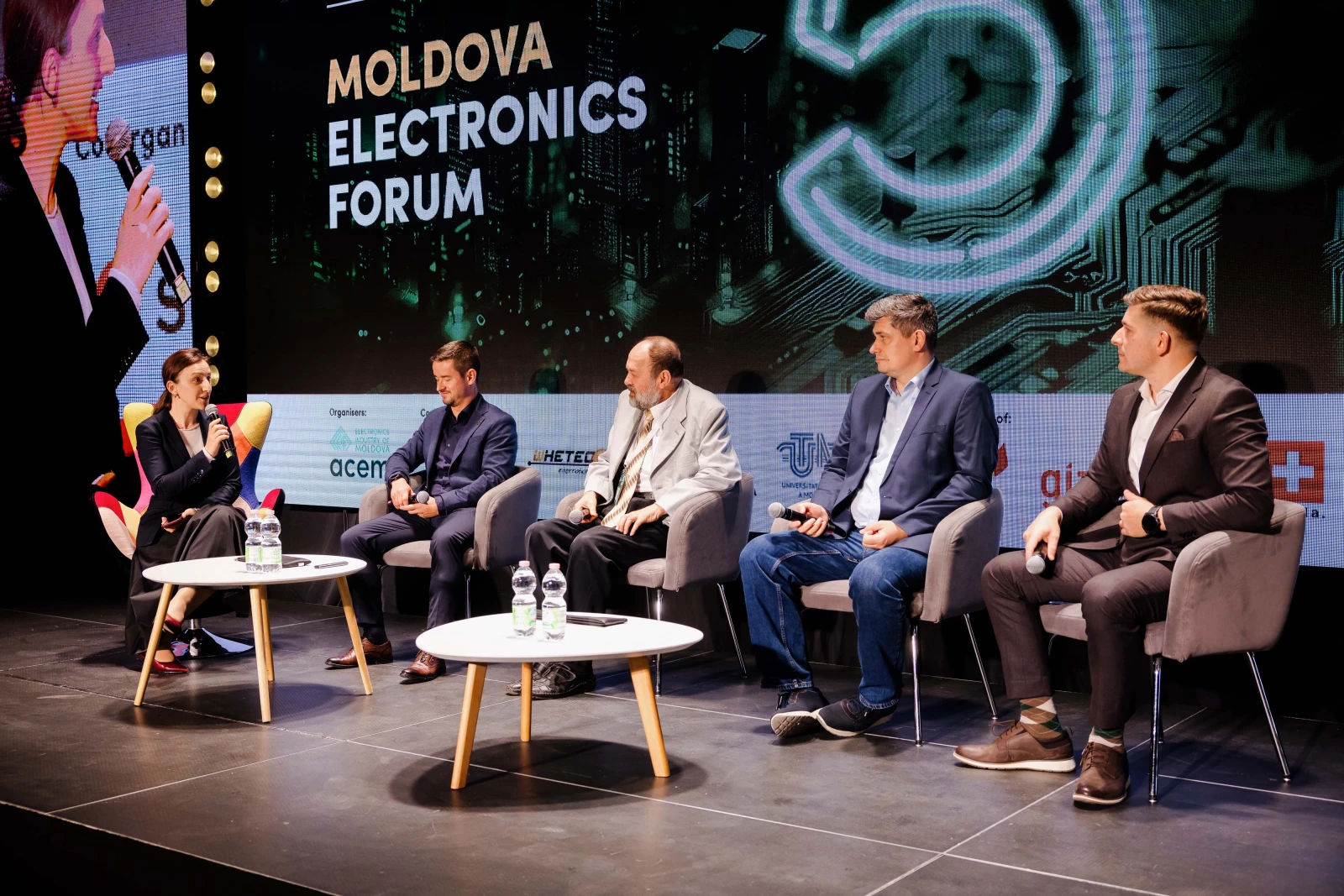
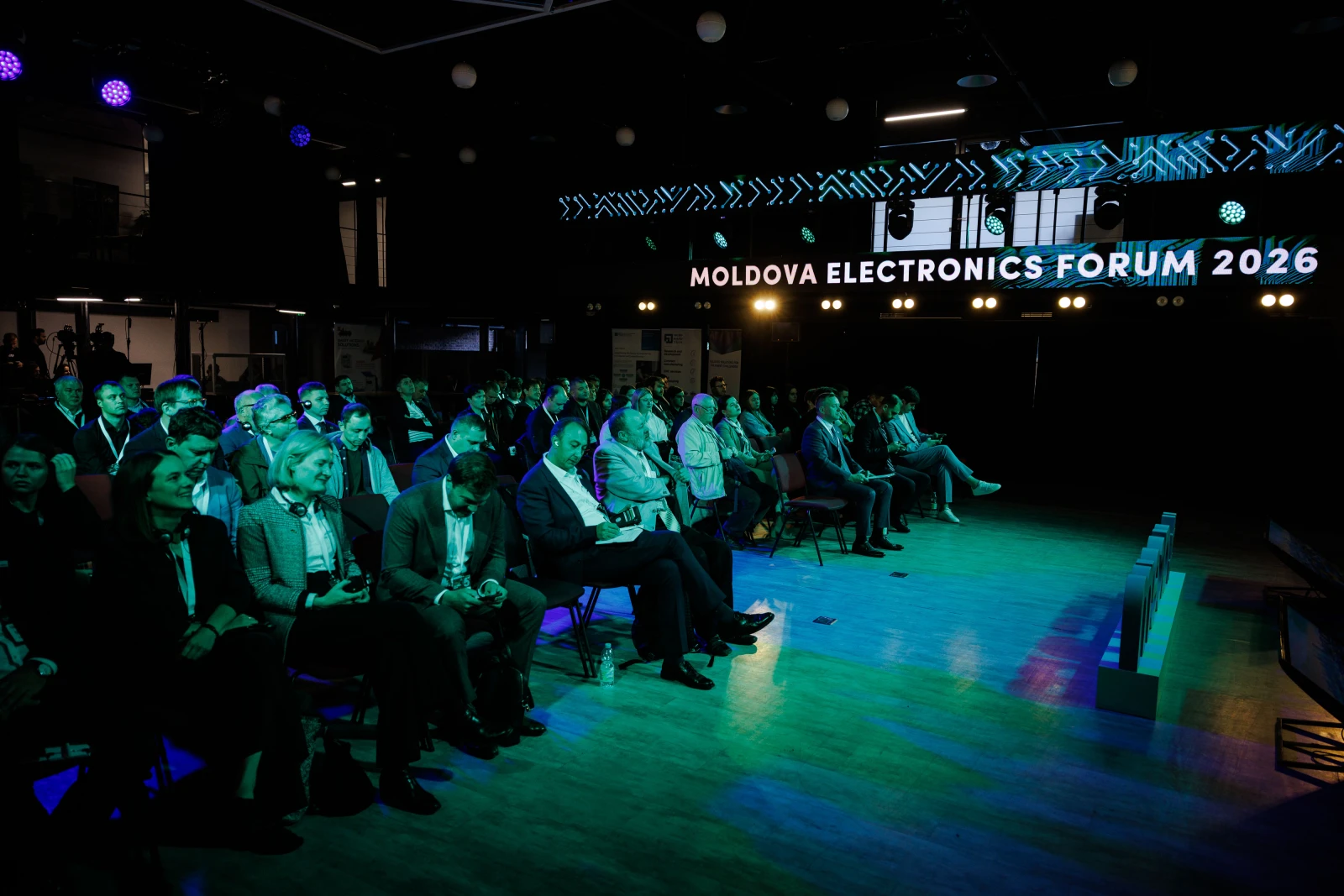
On 1 October 2026, the fifth edition of the Moldova Electronics Forum (MEF 2026) brought together at Tekwill more than 100 representatives of electronics companies, public institutions, academia, industry organisations and international partners. The event was held as part of Moldova Business Week 2026.
This year's forum focused on the wider application in the Republic of Moldova of expertise and solutions developed by the electronics industry, increasing the competitiveness of products manufactured in the country, and integrating companies into European value chains.
These priorities reflect the current stage of development of the electronics industry in the Republic of Moldova, as the sector's competitiveness increasingly depends on companies' ability to adopt new technologies, meet European market requirements and create products with higher added value. In this context, cooperation between businesses, public institutions and the education system is essential to unlocking further growth opportunities for the industry.
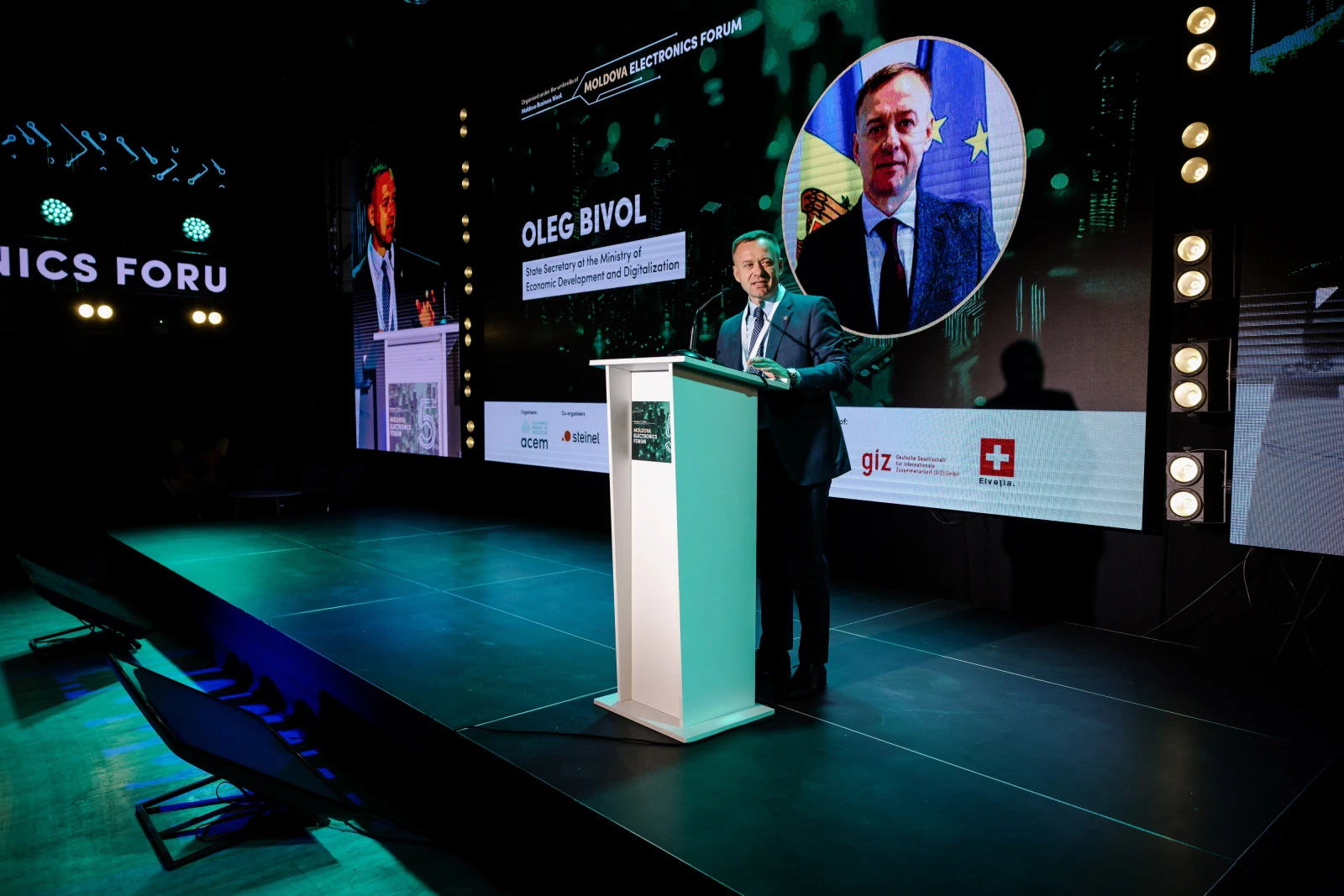
Presenting the authorities' perspective, Oleg Bivol, State Secretary at the Ministry of Economic Development and Digitalisation, emphasised: "The electronics industry is not merely a component of the economy, but a sector with strong potential for innovation and development, as well as an important ecosystem for the industrial future of the Republic of Moldova. Its inclusion among the six priority sectors of the Industrial Development Programme 2024-2028 reflects our shared ambition to move towards a new stage of innovation, scaling and internationalisation. We will continue the dialogue with the business community, academia and international partners to identify policies and support instruments that will contribute to a competitive economy and to products and technologies capable of entering the EU single market."
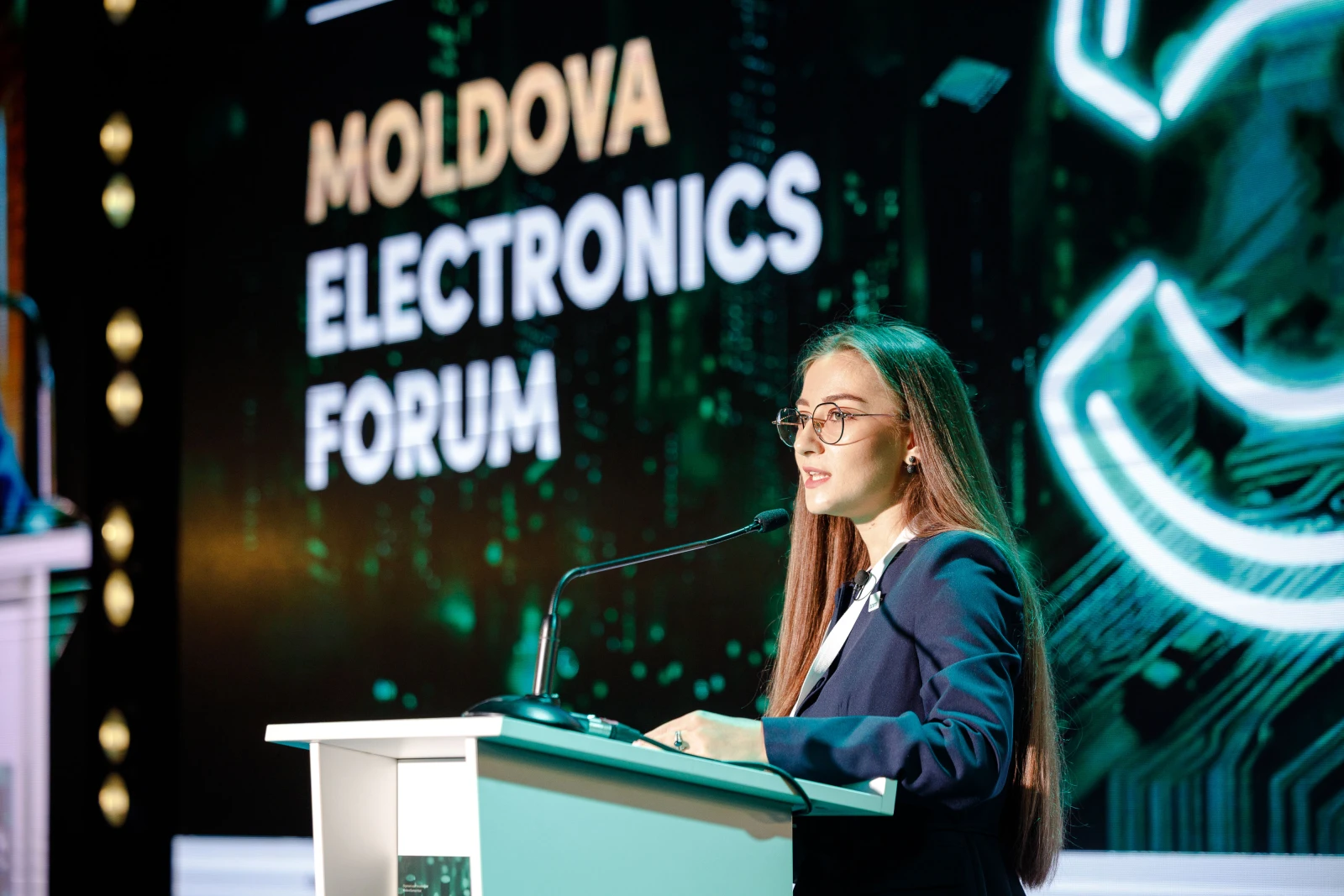
In her opening remarks, ACEM Executive Director Elena Maevski spoke about the evolution of the Moldova Electronics Forum and how companies in the sector have adapted to economic and technological changes. She also highlighted the role of people, education and dialogue between industry and government in building a more competitive sector.
"Moldova Electronics Forum is not only about electronics. It is about how we build an industry that can remain resilient, adapt and grow. It is about moving from simply participating in international value chains to creating more added value here, in the Republic of Moldova," said Elena Maevski, Executive Director of the Association of Electronics Companies in Moldova.
The forum's focus on practical solutions was also reflected in the Smart People. Smart City. Smart Country. panel. Participants noted that digital transformation is not limited to smartphones, vehicles or smart household appliances. Technology can also be integrated into the management of cities and communities to improve transport, safety, environmental monitoring and public services.
During the panel discussion, Constantin Cojocari, Mayor of Edinet Municipality, shared an example of how the smart city concept is being implemented in a small city such as Edinet. The pilot project introduced eight buses and equipped 18 stops with electronic systems, information displays and cashless payment solutions. The city also uses technology to monitor temperature, humidity and air pollution, improve urban safety, enable remote meter reading and manage municipal infrastructure. The project included educational programmes for preschool and secondary-school students, based on the understanding that a smart city depends not only on technology, but also on the people who use it.
The discussion on the use of technology in local communities was followed by a session dedicated to standardisation and the integration of the Republic of Moldova into European value chains. The session featured Christian Marian, member of the German Technical Council and permanent delegate to CENELEC; Nadejda Diaconu, Head of the Development and Cooperation Department at the Institute for Standardisation of Moldova; and Anatolie Guzun, Head of the Product Evaluation and Conformity Department at the National Regulatory Agency for Electronic Communications and Information Technology. Participants discussed Moldova's transition from simply adopting European standards to contributing directly to their development after obtaining full membership in CEN and CENELEC. This status will expand opportunities for companies and industry organisations to participate in the European standardisation system and help shape the requirements that will define access to and operation in the EU market.
Continuing the discussion on access to the European market, the next panel examined ways to increase the competitiveness of products manufactured in the Republic of Moldova. Representatives of electronics companies discussed the main challenges they had encountered when entering the EU market. Particular attention was given to compliance with standards, certification and the selection of compliant components. These requirements need to be considered from the product design stage.
Another topic was the adaptation of product portfolios and target markets to new conditions while retaining engineering teams and research and development activities in the Republic of Moldova. The solutions created by these teams can subsequently be scaled, adapted for new customers and introduced to other markets.
The topics addressed at the 2026 edition reinforced the role of Moldova Electronics Forum as a platform for dialogue between the electronics industry, public institutions, academia and international partners. The forum has been held since 2022, and its agenda has evolved alongside the industry, moving from presenting the sector's potential to discussing practical solutions, competitiveness, European integration and the application of technologies developed in the Republic of Moldova.
About ACEM
The Association of Electronics Companies in Moldova is a non-profit organisation established in May 2019 to represent its members in their interaction with national authorities, facilitate the exchange of best practices, and enhance the competitiveness and development of the electronics industry through sustainable partnerships among private companies, public institutions, and national and international organisations.
The event was organised with the support of the Strong Businesses and Communities for Moldova project, funded by the German Federal Ministry for Economic Cooperation and Development (BMZ) and the Government of Switzerland and implemented by GIZ Moldova.