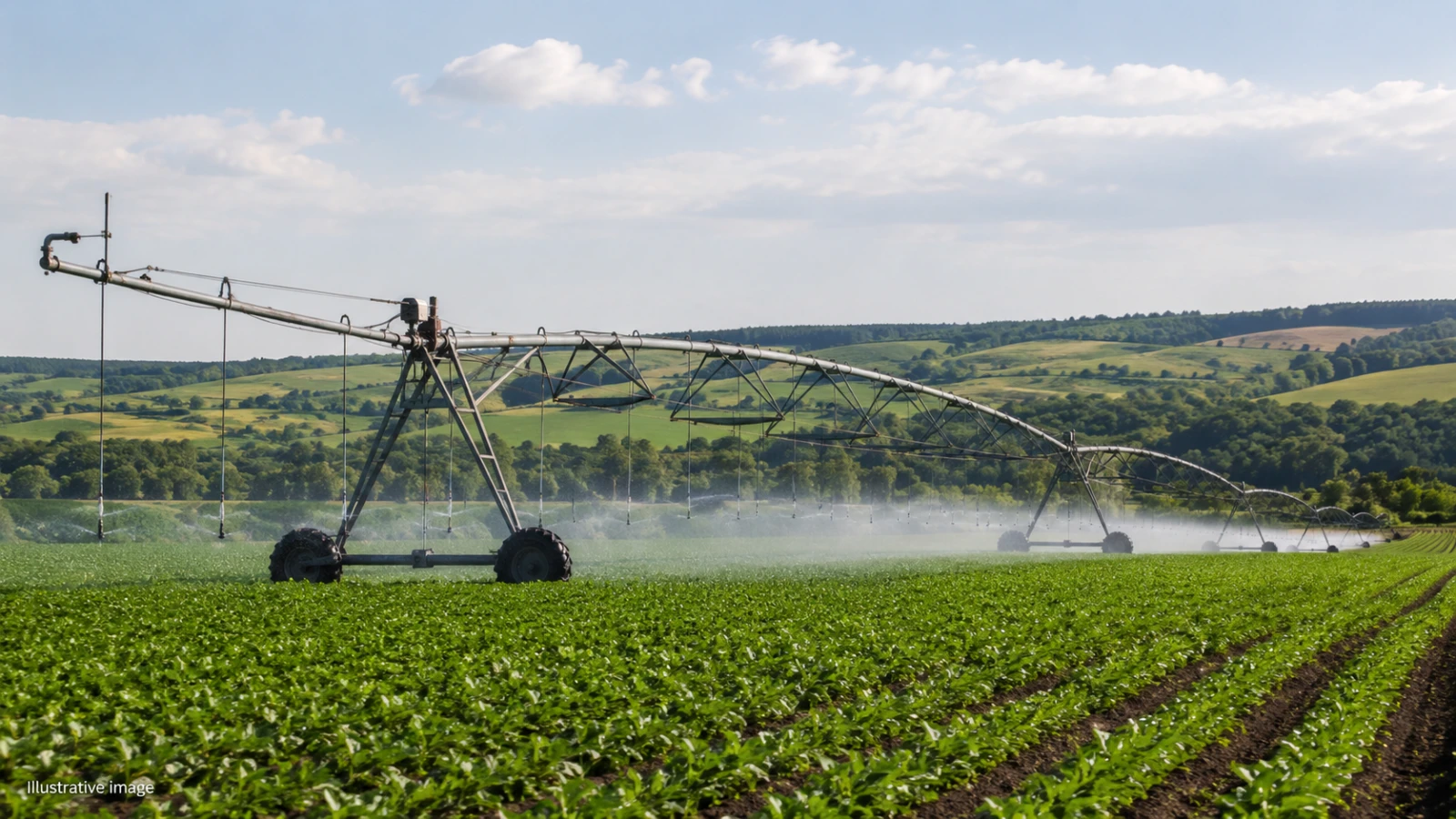
According to the IFAD United Implementation Group (IFAD UCIP), the system was built in the village of Peliney in the Kagul District. The new system will provide access to irrigation water for 25 farmers, who will be able to irrigate more than 60 hectares of farmland, thereby helping to increase productivity, diversify crops, and strengthen the resilience of local agriculture to climate change. The first phase of the project was implemented in 2023 as part of the IFAD VII program, when four farmers received a grant of approximately 3 million lei to build an electric pumping station, a pressure pipeline, a water distribution network stretching over 5 km, and the electrical infrastructure necessary for the system’s operation. Subsequently, as part of the IFAD VIII program, 25 local farmers joined forces to expand the infrastructure, receiving financial assistance of 7.18 million lei. At this stage, a 15,000 cubic meter reservoir was built, and the necessary infrastructure for expanding the irrigation system was established. The catchment basin allows water to be collected during periods of high availability and used during the dry season, ensuring efficient water resource management and reducing the burden on watercourses during periods of water scarcity. The project also includes a pumping and fertigation station, a water supply and distribution network, and a high-voltage power grid. At the same time, the system is equipped with a photovoltaic power plant designed to power the pumping stations, which reduces consumption of conventional energy, lowers operating costs, and promotes the use of renewable energy sources in agriculture. Yuri Ushurelu, Director of IFAD’s UCIP, noted that the investment demonstrates the effectiveness of the partnership between government agencies, farmers, and development partners. Thanks to the participation of local authorities, farmers’ contributions to co-financing, and access to financial products offered through IFAD programs, modern infrastructure has been established that will promote sustainable agricultural development and enhance the competitiveness of agricultural producers. Tudor Luca, mayor of the Pelinei commune, emphasized the impact of the investments on the community’s development. According to him, farmers in the area will be able to manage water resources much more effectively by adapting irrigation to crop needs and climatic conditions. At the same time, this project has strengthened cooperation between local authorities and farmers, laying the groundwork for the community’s sustainable development. The model implemented in Pelinei is being replicated in other regions of the country. As part of the IFAD VIII project, six rural public infrastructure facilities were built or rehabilitated, contributing to improved access to water for irrigation, agricultural land, and the sustainable development of rural communities. Currently, nine additional projects to develop irrigation infrastructure are being implemented, which will expand farmers’ access to modern and efficient water management systems. // July 22, 2026 – InfoMarket.
A new, state-of-the-art irrigation system has been launched in Moldova with support from IFAD
With support from IFAD, another modern irrigation system has been built and put into operation in Moldova; the investment exceeded 10 million lei