Moldova to implement Directive 2006/123/EC of the European Parliament and Council on services in the internal market
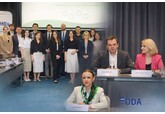
This was discussed during a roundtable organized by the Economic Council under the Prime Minister with representatives of business associations and the business community. The meeting focused on strengthening institutional cooperation in the process of informing, familiarizing, and preparing Moldovan enterprises for the rules and opportunities related to the free movement of services within the EU internal market. The meeting was chaired by Mariana Rufa, Executive Director of the European Business Association of Moldova. It was attended by business associations interested in the implementation of Directive 2006/123/EC on services in the internal market. The event was organized at the initiative of the Ministry of Economic Development and Digitalization. During the discussions, the Ministry presented the actions taken to date and the planned steps for the transposition and implementation of the Directive on services in the internal market, while international experts from the National Board of Trade Sweden explained the areas covered by the Directive and its expected impact on the business environment and the economy. For entrepreneurs, the free movement of services within the EU means that any entrepreneur or company from one Member State can provide services in another EU country, either temporarily or permanently, without discrimination and, in most cases, without the obligation to open a local branch. For Moldovan service providers, this means direct access to a much larger market with clear rules and equal treatment compared to local companies, which can reduce entry costs and speed up the process of securing cross-border contracts. Directive 2006/123/EC establishes the legal framework supporting this access: it requires Member States to identify and remove unnecessary administrative barriers, simplify procedures for businesses, eliminate discriminatory or disproportionate requirements, and continuously review regulations affecting service providers. In practice, the implementation of the Directive means more transparent and faster procedures for interacting with government agencies, simplified document recognition, and a more predictable environment for entering EU markets. // 29.05.2026 InfoMarket