Moldova must become a more competitive economy, more attractive to investment, and better integrated with European standards - Alexandru Munteanu
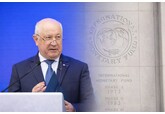
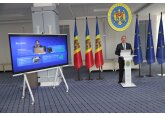
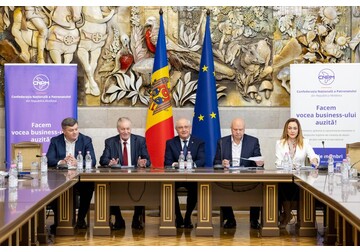
The Prime Minister made this statement while speaking at an event held to mark the 30th anniversary of the founding of the National Confederation of Employers of Moldova. In his speech, the head of government noted that three decades of activity represent more than just institutional continuity, emphasizing that this period reflects the resilience, adaptation, and ability of the business environment to thrive in challenging economic conditions. Alexandru Munteanu emphasized that over the past three decades, the National Confederation of Employers of Moldova has represented the voice of entrepreneurs and fostered stronger dialogue between the state and the business community. "And this matters. Because behind every investment, every job, and every company that remains on the market are people who choose to believe in Moldova and build here," the Prime Minister stated. He emphasized that Moldovan entrepreneurs have endured significant challenges in recent years, yet the economy has remained vibrant thanks to businesspeople who invested, preserved jobs, and continued to grow their companies. In this context, the Prime Minister reaffirmed the government's commitment to strengthening partnerships with the business community and promoting a more focused dialogue focused on effective solutions. According to him, the government's priorities include reducing bureaucracy, accelerating administrative processes, digitalizing public services, and ensuring clear and predictable regulations for entrepreneurs and investors. "We want Moldova to become a more competitive economy, more attractive to investment, and better integrated with European standards. But this goal cannot be achieved without a strong business environment," Alexandru Munteanu noted. The National Commission for Employers' Rights (NCRM) has been operating since 1996 and represents the interests of the business community in dialogue with public authorities, trade unions, and other social partners. The organization brings together federations, employer associations, and enterprises representing approximately 3,000 companies from key sectors of the national economy. // 21.05.2026 — InfoMarket