The IMF reached a staff-level agreement with Moldova on a new 36-month program under the Policy Coordination Instrument (PCI), without financing, and lowered its 2026 GDP growth forecast to 1.5%
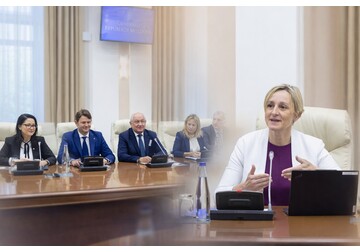
The International Monetary Fund announced this, noting that, in particular, an IMF mission led by Alina Iancu held a series of consultation meetings with the Moldovan authorities in Chisinau from May 7 to 20 in response to a request for a new 36-month program for Moldova under the Policy Coordination Instrument (PCI). Following the mission, Iancu reported that the Moldovan authorities and IMF staff had reached staff-level agreement on policies and reforms under the new 36-month PCI program. According to her, the previous IMF-supported program helped maintain stability amid Russia's war against Ukraine and recurring energy crises. The new PCI program is unfinanced and is designed to support consistent economic policies, underscoring the authorities' continued commitment to macroeconomic and financial stability and sustainable growth. The staff agreement is subject to approval by the IMF Executive Board. Alina Iancu noted that while Moldova's economy recovered in 2025 despite the energy crisis early last year, a new energy shock is constraining economic activity and increasing inflationary pressures in 2026. Real GDP grew by 2.4% last year, driven by robust domestic demand and a significant recovery in agricultural activity. Headline inflation averaged 7.8% in 2025 and returned to the National Bank of Moldova's target range of 5±1.5 percent at the beginning of 2026, as pressure from food and energy prices eased. However, a new energy shock caused by the war in the Middle East is reducing growth and accelerating inflation. Growth is expected to slow to 1.5% this year, as higher energy costs and weakening external demand weigh on consumption, investment, and exports. In 2026, average inflation is projected to reach 8.1%, and the current account deficit is projected to widen to 22.1% of GDP. Moldova's outlook is largely dependent on the duration and intensity of the war in the Middle East and the war in Ukraine. Persistently high energy costs could lead to prolonged inflationary pressures, while disruptions in fertilizer and fuel markets could negatively impact agricultural production. High uncertainty and tightening global financial conditions could also put pressure on investment, remittances, and external demand. These shocks could further weaken growth and exacerbate external imbalances. Fiscal policy under the program will be based on a realistic medium-term fiscal consolidation plan. The authorities intend to reduce the budget deficit to 3.5% of GDP by 2029, while simultaneously creating sufficient fiscal space to support capital investment, wage reform, and social spending. This goal will be achieved through large-scale reforms to strengthen the tax system, with a particular emphasis on expanding the VAT base, simplifying income taxes, and improving tax administration. As Alina Iancu noted, public financial management reforms will focus on strengthening medium-term budget planning, improving cash and debt management systems, enhancing public investment management, and anchoring fiscal policy measures through robust regulations. The PCI program also aims to improve the assessment of fiscal risks arising from the activities of state-owned enterprises. The NBM will continue to closely monitor the macroeconomic situation and inflation risks and use available instruments to maintain price stability. Moldova is focusing on strengthening the financial sector by improving macroprudential policies and stress tests, strengthening the regulatory framework, supervisory mechanisms, financial safety nets, and ensuring financial stability, guided by the recommendations of the IMF and World Bank's Financial Stability Assessment Program (FSAP). Other reforms under the program will aim to ensure the proper use of public funds. Furthermore, improving the quality, coverage, and timeliness of economic statistics will help support policymaking. Through the implementation of the envisaged policy measures and reforms, the PCI program will also support Moldova's strategic aspirations to advance its EU accession agenda. On behalf of the IMF mission, Alina Iancu thanked the Moldovan authorities for their excellent cooperation and constructive discussions and reaffirmed the IMF's support for the government's economic reform efforts. // 20.05.2026 — InfoMarket