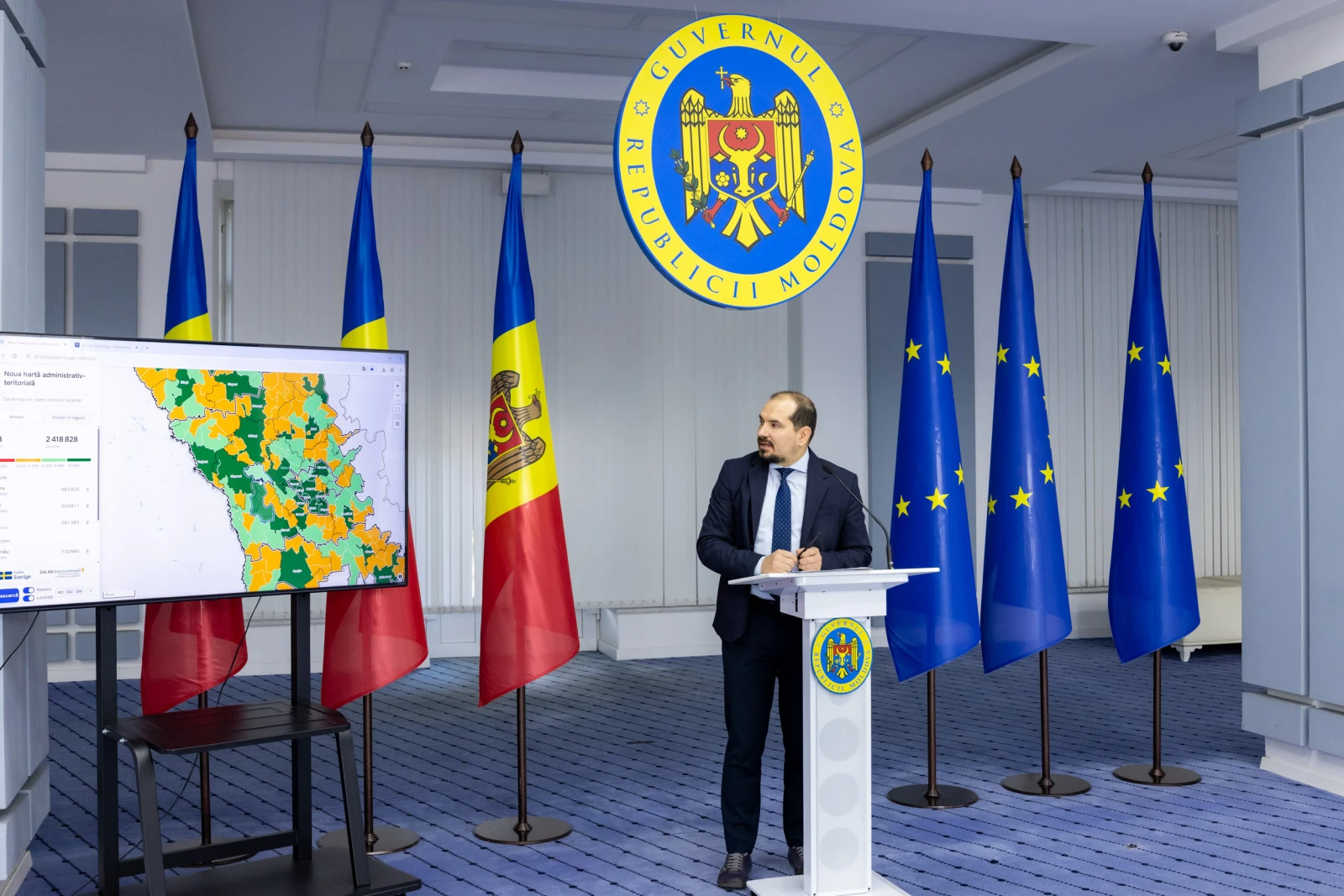
As Government Secretary-General Alexei Buzu reported at a press conference on Thursday, Chișinău and Bălți will retain their status as municipalities, Taraclia will become a second-tier municipality, and Gagauzia will retain its special status. The proposed structure was developed following a process of merging settlements and consultations with local authorities and citizens. The goal of the reform is to consolidate municipalities, expand their financial and personnel capacities, improve the quality of public services, and prepare for the utilization of European funding. Following the reorganization, the average population of a single municipality—excluding Chișinău, Bălți, and Găgăuzia—will increase from 1,916 to 6,758 people. For example, the population of the new Cantemir commune will grow from 2,680 to more than 17,000 people, and that of Leușeni—from approximately 1,200 to 7,700. The population of Ungheni will exceed 42,000 people, that of Orhei—28,000, and those of Călărași and Năsăud will each be around 27,000 people. Several rural communes will have more than 10,000 residents. It is expected that larger administrative units will be able to attract investment and implement infrastructure projects more effectively. According to Alexei Buzu, as part of the financial incentives for the merger, Ungheni could receive about 150 million lei, Călărași—110 million, Orhei—79 million, Rezina—78 million, and Rîșcani—66 million lei. The total cost of the projects planned to be funded through these incentives exceeds 4.2 billion lei. The government has also launched an interactive map at primariiputernice.gov.md/harta, where users can check which municipality and region each settlement is proposed to be included in. When presenting the draft of the new administrative map, Buzu noted that more than 1,200 meetings were held during the preparation of the reform, attended by approximately 115,000 people. The next step will be to submit the first package of necessary bills for public consultation, after which it will be reviewed by the government and parliament. At the same time, preparations will begin for the transition from districts to regions, and the operating procedures for the enlarged municipalities will be defined. The main part of the administrative reform is scheduled to be completed by the 2027 local elections. // 08.10.2026 — InfoMarket.
The Moldovan government has proposed a new administrative structure consisting of three regions and 273 municipalities
The government has presented a draft of Moldova's new administrative-territorial structure, which calls for the creation of 273 municipalities and three regions—North, Central, and South