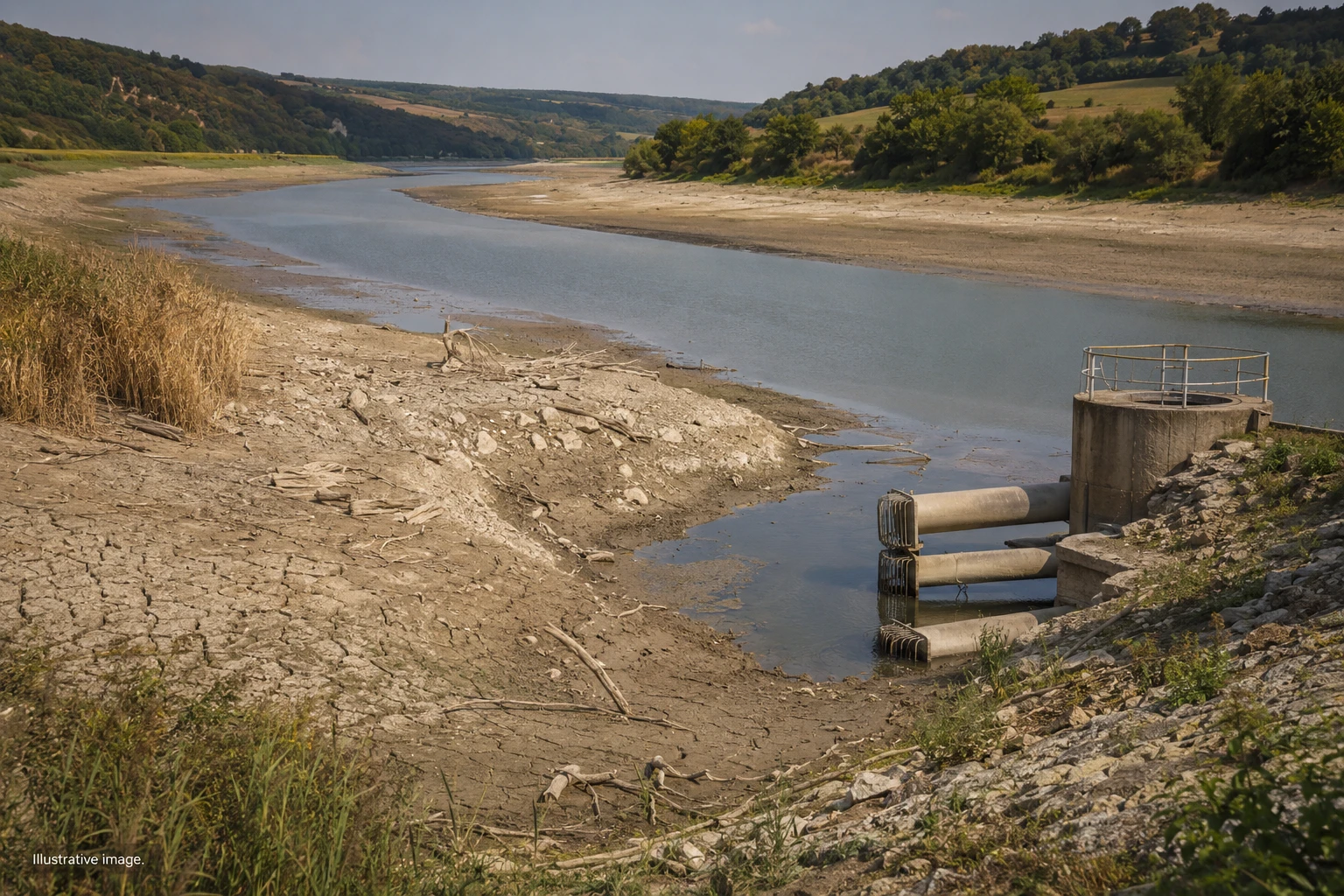
This Cabinet of Ministers decision is intended to help prepare for potential hydrological risks. As the government notes, a 30-day hydrological alert was declared due to a significant reduction in water resources in the Dniester River basin. On July 27, the water level in the Dniester Reservoir stood at 113.24 meters, compared to the normal level of 121 meters. At the same time, there is a risk that the water discharge from the Novodnestrovsk Reservoir will fall below the safe threshold of 100 cubic meters per second, which could affect the operation of water intake stations and the water supply. Hydrological forecasts at both the national and regional levels, as well as an analysis of various scenarios, indicate that the water level in the Dniester may decline. There are numerous reasons for this: low precipitation in the Carpathians this spring, resulting in less water being stored in the Novodnestrovsk Reservoir. The low water level in this reservoir poses operational risks for the Ukrainian side (risk of technical failures) and, consequently, results in a reduced volume of water released into the Dniester, which is the capital’s main source of water supply. Prime Minister Vasile Tofan said that Moldova is actively negotiating with the Ukrainian side to find a balance. “They want to avoid technical risks; on the other hand, we want to ensure that the Ukrainian side continues to release a sufficient amount of water so that we have a normal water level in the Dniester. It is very important here to set political conflicts aside; we need constructive cooperation with both the Chisinau City Hall and Apă Canal. If we face a water crisis at the tap, people won’t care who ends up being to blame. “That is why it is very important to take the initiative and find good solutions, to stay one step ahead,” the prime minister emphasized. It is expected that during the period of hydrological readiness, the authorities will assess alternative water sources, conduct an inventory of water intake points on the Dniester and its tributaries, and prepare backup water intake wells. At the same time, operators will update their plans to ensure uninterrupted water supply. It should be noted that Moldova has a water intake station on the Dniester, built in the 1960s and 1970s, which has never been modernized. It is managed by Apă Canal and the municipality of Chișinău. If the water level in the Dniester drops below the level of the intake pipe, there is a risk that the station will become inoperable. This could result in disruptions to the water supply in the municipality of Chișinău. The authorities intend to do everything possible to ensure that the water level in the Dniester River near the water intake station does not fall below the level of the intake pipe. // July 28, 2026 — InfoMarket.
Moldova has declared a 30-day state of hydrological alert
The Moldovan government has declared a 30-day state of hydrological alert