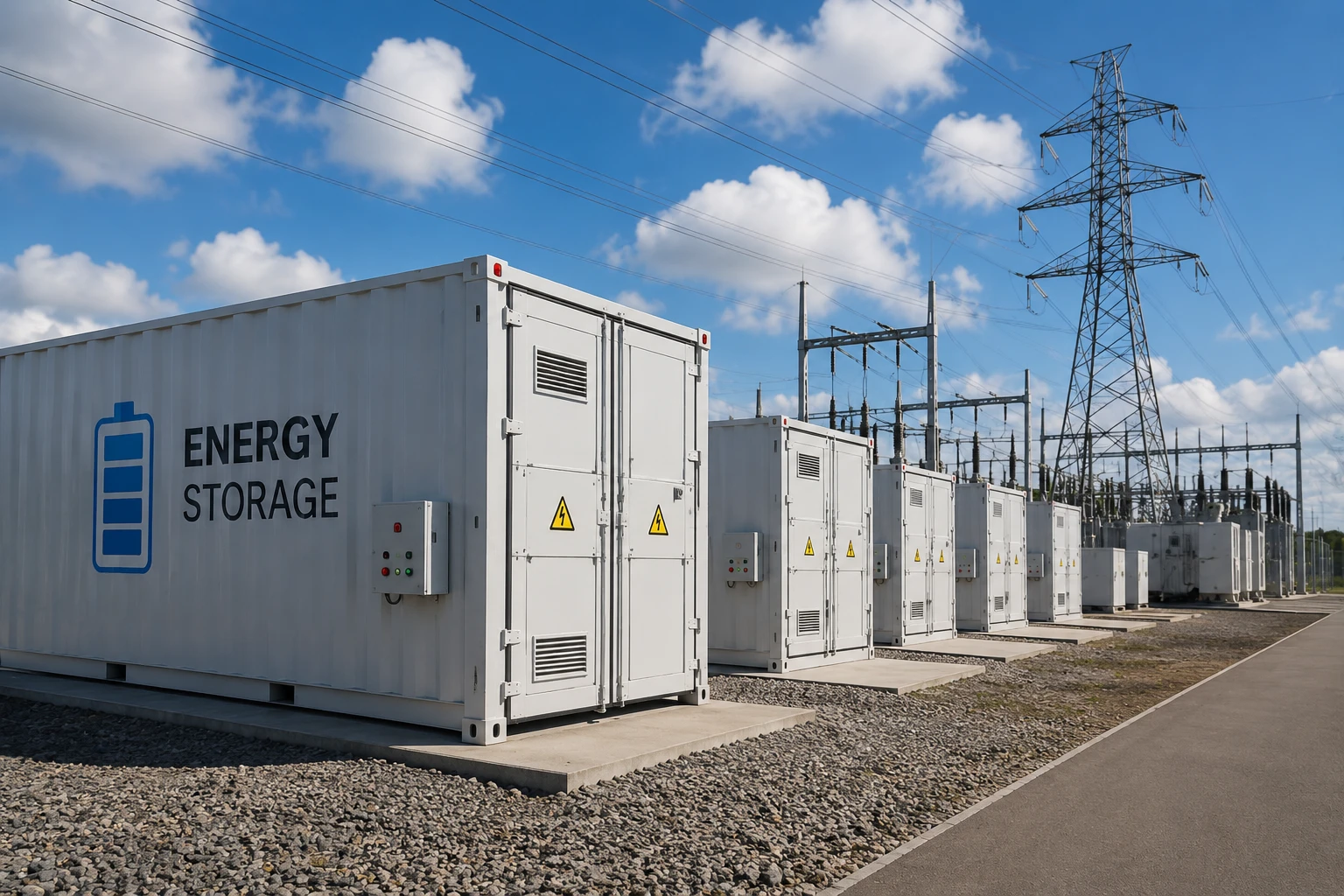
This was reported by the Ministry of Energy and the National Center for Sustainable Energy, which noted that the feed-in capacity—the maximum power at which storage facilities can transmit electricity to the grid—is 252.54 MW, while the draw capacity—the maximum power at which they can draw electricity from the grid for charging—is 124.77 MW. Battery energy storage systems (BESS) allow for the storage of excess energy generated during periods of peak generation—when consumption is often low—and its transfer to the grid during peak hours when demand is high. Thus, these storage systems help reduce electricity imports during peak hours, minimize imbalances in the power system, and, indirectly, strengthen Moldova's energy security. // 16.11.2026 — InfoMarket.
In Moldova, 22 energy storage facilities have been connected to the power grid
Moldova is actively developing its energy storage infrastructure; as of the end of September, 22 energy storage facilities with a total storage capacity of 391.5 MW were connected to the power grid