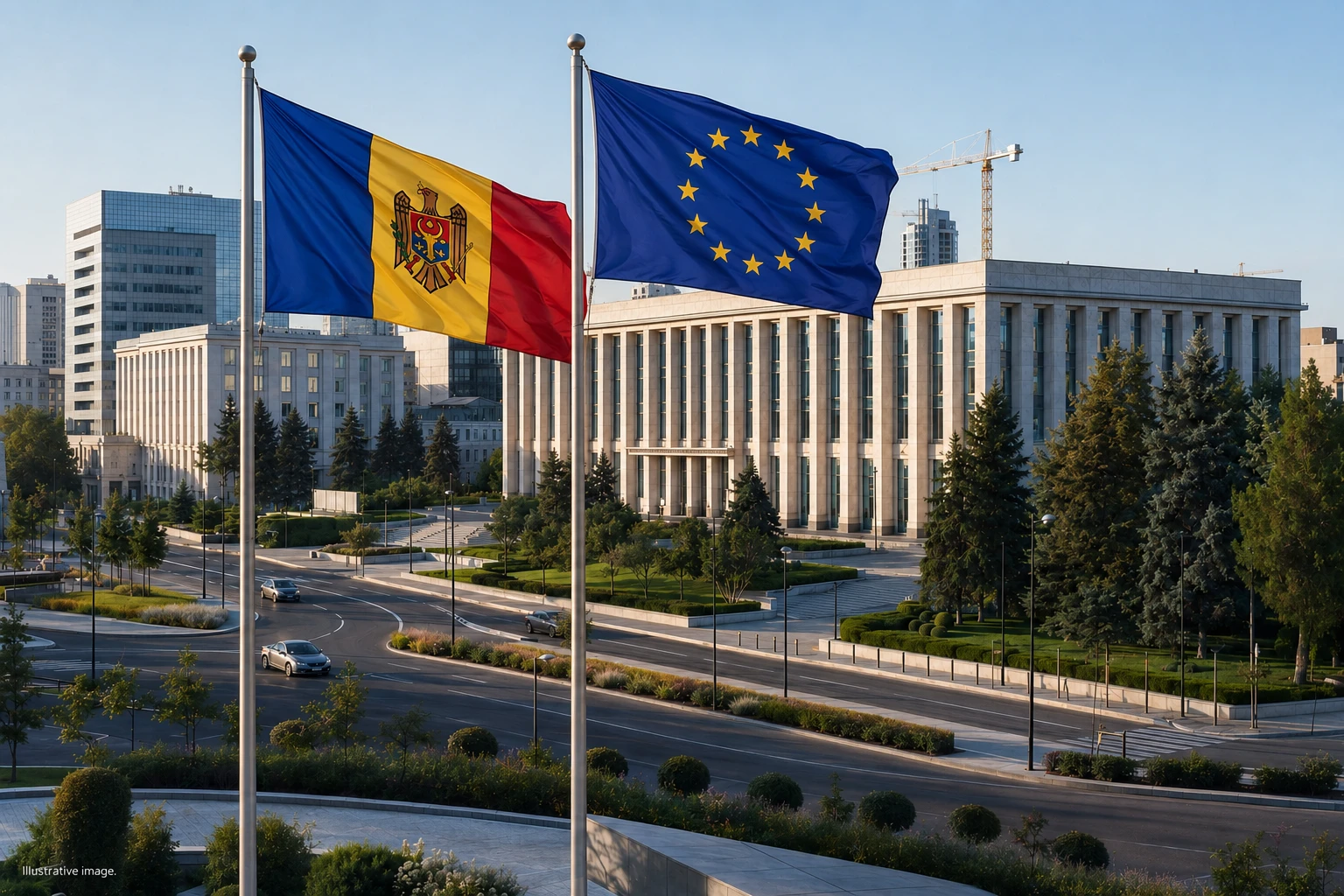
Prime Minister Vasile Tofan made this statement during a meeting of the National Commission on European Integration, emphasizing that European integration is a strategic priority for the current government and the main foundation for Moldova’s modernization in the coming years. It was noted that every reform, every investment, and every major public policy initiative will contribute to preparing the country for EU accession and improving the lives of its citizens. As part of the EU accession process, the government will strengthen the rule of law, modernize state institutions, accelerate economic development, improve public services, enhance national resilience, and create new opportunities for citizens and businesses. Guided by the goal of preparing Moldova for EU accession by 2030, the government will advance an ambitious reform agenda based on accountability, partnership, and measurable results. Ten priorities were identified that will guide Moldova’s efforts in the process of European integration during the current government’s term. In particular, the first priority is to prepare Moldova for accession to the European Union by 2030. It was agreed that the government will implement the reforms resulting from the EU accession negotiation process so that Moldova is ready to sign the Accession Treaty in 2028 and join the EU by 2030. The goal is for Moldova to be fully prepared to assume all the rights and obligations arising from its membership—from legal, institutional, economic, and administrative perspectives. The second priority concerns leveraging the benefits of European integration to modernize Moldova’s economy. It has been agreed that European integration will be the main driving force behind economic modernization and sustainable growth. The government will implement reforms aimed at enhancing the economy’s competitiveness, improving the business environment, attracting investment, stimulating innovation, and gradually integrating Moldova into the single European market. The timely implementation of the Reform Program and investments carried out under the EU Growth Plan will accelerate economic convergence with the EU and create more opportunities for citizens and businesses. The third priority involves strengthening the rule of law as the foundation for accession to the European Union. It is emphasized that a strong rule of law remains the cornerstone of Moldova’s European future. The government will continue to reform the judicial system, strengthen the independence of the judiciary, combat corruption, protect fundamental rights, and strengthen democratic institutions. These reforms will facilitate progress across all negotiation chapters and strengthen citizens’ trust in state institutions. The fourth priority concerns the creation of institutions capable of functioning as those of an EU member state. It is noted that successful accession requires strong state institutions. The government will modernize central and local public administration, strengthen the civil service, and implement European standards for governance and policy-making; develop expertise in the field of negotiations and the implementation of EU legislation, and strengthen the institutional capacity necessary for the effective management and absorption of European funding. The fifth priority aims to bring Europe closer to its citizens through gradual integration. The government will accelerate Moldova’s integration into European policies, programs, agencies, and infrastructure that offer tangible benefits to citizens even before EU accession. This process includes continuing integration into initiatives such as SEPA, Roam Like at Home, the Digital Single Market, and the European Energy Market; expanding participation in European programs in the fields of research, education, innovation, youth, culture, and digitalization, as well as the implementation of strategic infrastructure projects connecting Moldova’s energy, road, and rail transport networks with those of the European Union. Gradual integration will complement and accelerate Moldova’s accession process to the EU, and full membership in the European Union, with all the rights and obligations of a member state, remains the government’s strategic goal. The sixth priority outlines the implementation of reforms related to EU accession through the National Accession Program. It is emphasized that the National Program for EU Accession for 2025–2029 will remain the government’s primary tool for transposing and implementing EU legislation and preparing institutions for accession. Its implementation will ensure coordinated planning, legislative harmonization, institutional reform, and alignment between public policy priorities, budgetary resources, and commitments made during the accession process. The seventh priority involves strengthening government coordination and leadership of the accession process. It is planned that the government will strengthen the national coordination framework for European integration by enhancing the role of the Bureau for European Integration, the National Commission for European Integration, and inter-agency coordination mechanisms. Clear accountability, effective cooperation between institutions, continuous monitoring, and timely decision-making will ensure that the accession process moves forward according to schedule and that reforms are effectively implemented throughout the public administration system. The eighth priority is strengthening partnerships with the European Union and its member states. The government will continue to strengthen political dialogue with the European Union and its member states, deepen bilateral cooperation, expand technical partnerships, and draw on European experience to support reforms. It is anticipated that active and consistent diplomacy will strengthen confidence in Moldova’s readiness for accession and help secure the unanimous support of member states throughout the entire accession process. The ninth priority is to engage the entire society in Moldova’s European future. As noted, European integration is a national project in which the entire society is involved. The government will promote transparent communication, public participation, and ongoing dialogue with citizens, the business community, local authorities, civil society, the academic community, youth, and the diaspora. A better public understanding of the reforms and their benefits will strengthen Moldova’s confidence in its European future. The tenth priority is to promote Moldova as a future member of the European Union. The government will continue to promote Moldova on the international stage as a stable, democratic, trustworthy, and reform-oriented European partner. Through active diplomacy and effective strategic communication, Moldova will strengthen its contribution to peace, security, prosperity, and sustainability in Europe, while simultaneously bolstering political support for EU accession. It is emphasized that European integration is also the most reliable guarantee of Moldova’s long-term security, stability, and democratic development. // 28.07.2026 — InfoMarket.
European integration will be the main driver of Moldova's economic modernization
European integration will be the main driver of Moldova’s economic modernization and sustainable growth, and the government will implement reforms that will boost the economy’s competitiveness, improve the business environment, and attract investment