

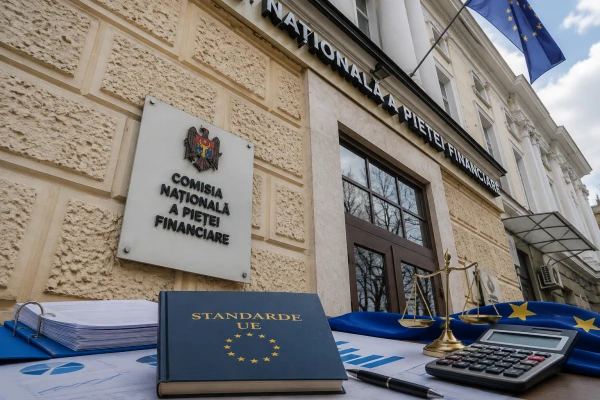
The National Commission for the Financial Market (NCFM) will amend a number of documents governing Moldova's capital market
The National Commission for the Financial Market (NCFM) will amend a number of regulations governing Moldova's capital market
The National Commission for the Financial Market (NCFM) will amend a number of regulations governing Moldova's capital market

Investments by Moldovan households in government securities through direct placements reached 1.07 billion lei in the third quarter of 2026

Moldova Plans to Develop a Digital Transformation Program for the Capital Market in 2027 — CNPF

The European Investment Bank reaffirmed its commitment to continue supporting development projects in Moldova, particularly in the areas of infrastructure and economic modernization. At a meeting in Chișinău, the parties discussed accelerating the implementation of ongoing initiatives and strengthening coordination, which could impact the pace of progress on key projects.

Moldova will expand its cooperation with countries in the region in the area of the digital transformation of financial markets and the challenges associated with it

Moldova's National Commission for the Financial Market considers covered bonds to be one of the key instruments for the banking sector and mortgage lending, as well as for the development of the capital market. This topic was discussed at an international conference in Chișinău, where participants addressed the necessary reforms, infrastructure development, and market readiness for the launch of this new instrument.

The Public Property Agency is preparing to participate in a capital increase for the International Stock Exchange of Moldova and has already initiated the drafting of a government resolution to allocate funds for the purchase of shares as part of a secondary offering. Discussions on the terms of the transaction and regulatory changes that could affect the further development of the country's stock exchange infrastructure are expected in the near future.

The National Securities and Stock Market Commission (CNPF) and the European Bank for Reconstruction and Development (EBRD) continue to collaborate to bring the capital market into line with European Union standards

Moldova intends to accelerate the alignment of its regulations in the areas of payment services, foreign exchange transactions, and financial supervision with European standards as part of its EU accession negotiations. Authorities have already noted a number of changes that have been implemented, but key steps still lie ahead that could significantly impact the operations of banks, businesses, and the capital market.
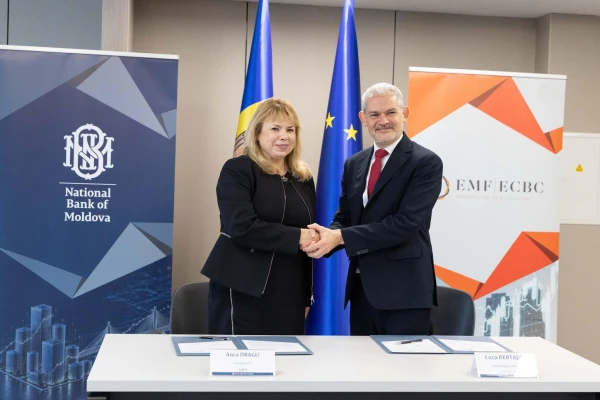
The National Bank of Moldova and a European organization specializing in this field have agreed to expand their cooperation in the areas of mortgage lending, real estate financing, and financial stability. The agreement paves the way for the exchange of expertise, joint initiatives, and discussions on approaches that could influence the development of long-term housing finance and the capital market in the country.

In Moldova, bank lending continues to grow faster than the economy, but the National Bank assesses the risk of overheating as moderate. At the meeting on financial stability, participants also reviewed the state of the banking, non-banking, insurance, and securities sectors, which remain generally stable, although changes in portfolio quality and risk dynamics were noted in certain areas.

The National Bank of Moldova will host an international conference in Chisinau dedicated to the development of the secured bond market and long-term mortgage financing. The event will feature discussions on European experience, regulatory approaches, and practical solutions that could change the conditions under which banks raise funds and expand housing financing opportunities in the country.


Against the backdrop of accelerating European integration and reforms in the financial sector, Moldova is strengthening its position as a destination for investors. Authorities note significant changes in the payment infrastructure, access to capital, and assessments by international rating agencies, as well as new business opportunities at the intersection of regional markets.

Moldova's economy showed a mixed picture in the latest data, with retail and industrial activity moving higher while some external trade and investment indicators weakened. At the same time, the authorities are advancing a new round of regulatory changes, market reforms and privatization plans that could reshape conditions for businesses in several sectors.
Loading…