Moldova's agreement on a new program with the IMF may be reached by the end of 2026
InfoMarket - in Detail
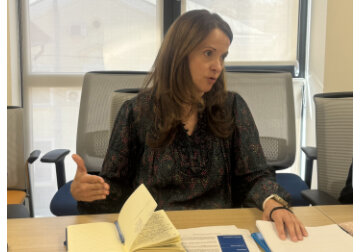
Is reaching an agreement on a new cooperation program between Moldova and the International Monetary Fund (IMF) realistic, and what role could it play in the country's reforms and European integration? Svetlana Cerović, the IMF's Resident Representative in Moldova, answered these and other questions from journalists at a meeting of the Economic Press Club on March 11.
Svetlana Cerović noted that the Moldovan government has already officially approached the International Monetary Fund with a request to start work on a new program, which could be designed for a period of three years. This does not entail technical continuation of cooperation with the Fund, but the creation of a new economic policy framework that could become an important institutional “anchor” for reforms in the coming years.
The head of the IMF office noted that discussions are already underway within the Fund on how best to shape the future program and how it could support the country's economic policy. But the process has only just begun and will take time, as it involves developing a new format for cooperation and agreeing on the parameters of the future economic course.
Concluding a new program, agreeing on a memorandum between the Moldovan government and the IMF, is a multi-stage process. First, negotiations are held between the authorities and the Fund's mission team. At this stage, the parties must reach a so-called staff-level agreement on the key parameters of economic policy and reforms that will be included in the program. After that, the terms of the agreement are submitted to the IMF Executive Board for consideration, which subsequently makes the final decision on its approval.
“Reaching an agreement on a new program within a year is a realistic goal,” said Svetlana Cerović, noting that a distinctive feature of the program under discussion is its format.
In particular, consideration is being given to the Policy Coordination Instrument (PCI), which does not involve direct financing. This means that Moldova is not requesting urgent financial assistance from the IMF, but is primarily interested in an institutional framework that will allow it to coordinate economic policy and consolidate reforms.
“Despite the lack of direct financing, the requirements for such a program are the same as for the Fund-supprted programs with financing. The document will provide for clearly defined reforms, economic policy commitments, and regular monitoring of their implementation. This format of cooperation can play an important role in increasing confidence in Moldova and the country's economic policy,” explained the Fund's official.
Another feature of the PCI is that its existence creates a basis for a faster transition to a full-fledged financing program if necessary. If the economic situation changes and Moldova needs financial support, the economic policy framework already agreed with the Fund would allow for faster transition to a program with financing.
In other words, the program to be discussed by the government and the IMF creates a kind of “anchor” for economic policy. In international practice, PCI is used by countries that do not have an acute need for borrowed funds but are interested in strengthening confidence in their reforms and institutional support for economic policy.
The context in which the new program is being considered is significantly different from that of Moldova's previous agreement with the IMF. According to the Fund’s officials, this is due to significant changes that have taken place both internationally and domestically. In particular, the region has experienced an energy crisis and the consequences of the war in Ukraine, which has changed the economic environment and created new challenges for countries in the region.
The energy factor remains one of the key elements of the country's macroeconomic stability. As noted at the meeting, the Moldovan authorities have taken a number of steps in recent years to improve the sustainability of the energy system. In particular, support from European partners and budget resources were actively used to ensure the continuity of energy supplies, which allowed the country to get through the winter without any interruptions in energy supply.
At the same time, the energy system remains vulnerable to external shocks and price fluctuations. The situation in Ukraine has a direct impact on the region's energy infrastructure, and these risks continue to be transmitted to Moldova's economy. That is why, according to international partners, further efforts to strengthen energy resilience remain an important area of economic policy.
The IMFofficials emphasize that the priorities for the new program have not yet been finalized. Internal discussions and consultations have only just begun within the IMF, including in Washington, and therefore it is premature to talk about the specific parameters of the future program.
Thus, although discussions on the new program between Moldova and the IMF are at an early stage, it is already clear that this will involve a broader format of cooperation than mere financial support. The new instrument may set a new framework for coordinating the country's economic policy, strengthening the confidence of international partners, and supporting the reforms that Moldova will have to implement in the context of its integration into the European Union. The implementation of reforms and the effective use of international financial support will open up access to new financial resources and additional support from development partners, but more importantly, it will attract foreign investment into Moldova's economy.
Let us remind you that Moldova's previous cooperation program with the International Monetary Fund was approved by the IMF Executive Board in December 2021. It was implemented within the framework of two IMF instruments, the Extended Credit Facility (ECF) and the Extended Fund Facility (EFF), and was designed to last 40 months, until 2025.
Initially, the program amounted to about $400 million, but after the start of the war in Ukraine and the energy crisis in the region, the program was augmented. In December 2022, the IMF approved the augmentation, and the total amount of financing available to Moldova reached 594.26 million Special Drawing Rights (SDRs), equivalent to about $800 million.
The program provided for support for macroeconomic stability, strengthening of fiscal policy, reforms in the field of public administration, increasing the transparency of state-owned enterprises, developing the financial sector, and strengthening the independence of the National Bank. Particular attention was paid to increasing the economy's resilience to external shocks, especially in the energy sector.
Another program worth SDR 129.375 million, approximately $172 million, was approved on December 7, 2023 under the Resilience and Sustainability Facility (RSF). The RSF program was aimed at supporting Moldova's efforts to increase resilience to climate shocks, reform the energy sector, improve the financial sector's preparedness for the effects of climate change, and mobilize sustainable financing.
However, both programs expired in October 2025, and Moldova did not receive the full amount of funding provided for. As a result of the implementation of the arrangements, the country received about SDR 604 million, while the total amount available was almost SDR 724 million. This left approximately SDR 120 million undrawn, equivalent to about $165 million.
However, the programs played an important role in maintaining the country's macroeconomic stability during a period of serious external shocks. The existence of an agreement with the IMF is traditionally viewed by international partners as a sign of confidence in the state's economic policy and helps to attract additional financial support from other international financial organizations and donors. //12.03.2026 – InfoMarket.