

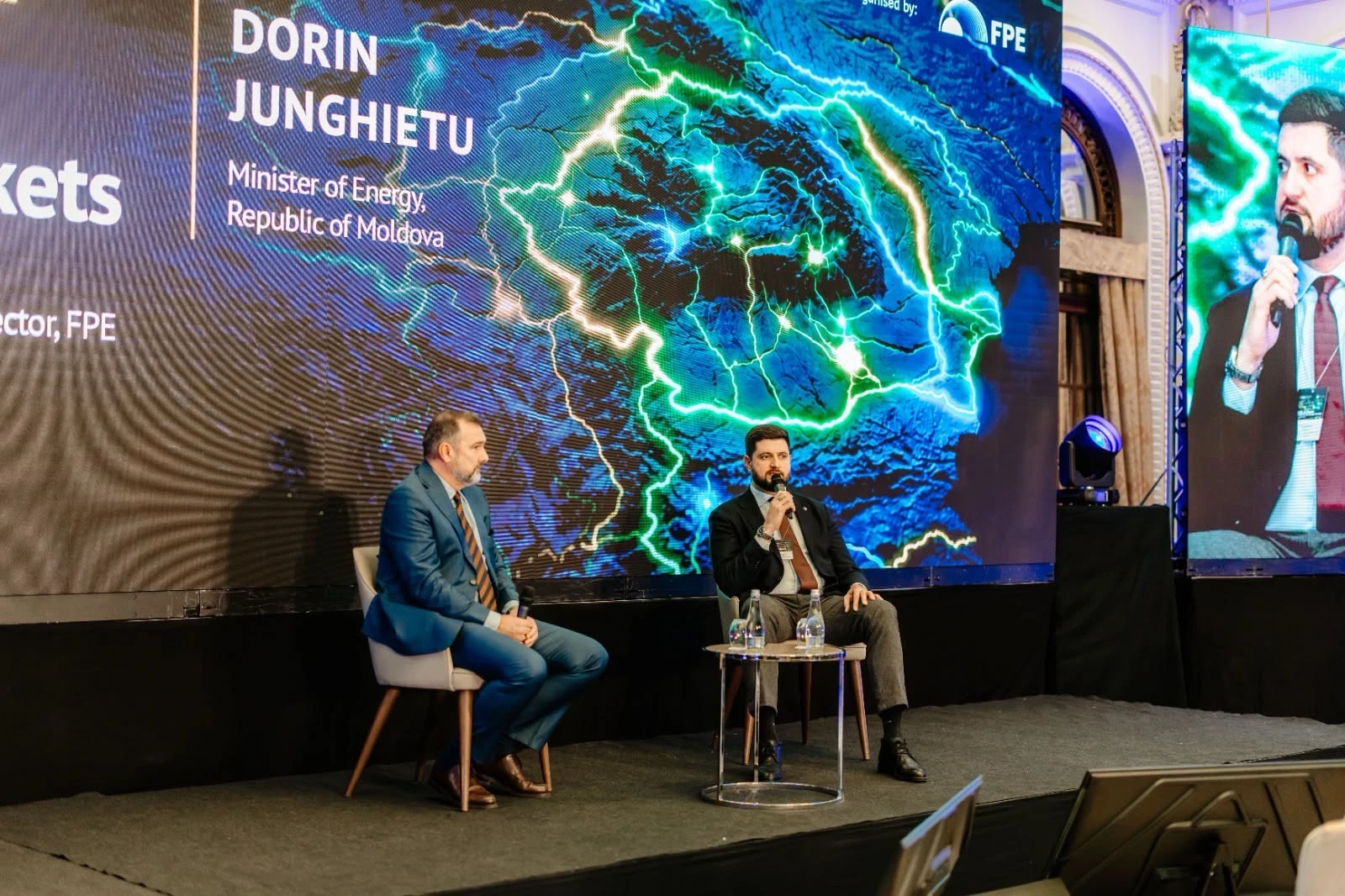
Moldova's Minister of Energy, Dorin Junghietu, made this statement while speaking at the 8th International Energy Conference in Romania, organized in Bucharest by the Federation of Energy Sector Employers in partnership with the Romanian Ministry of Energy. During a session dedicated to the future of energy markets, Dorin Junghietu spoke about the relationship between Moldova and Romania, security of supply, market liberalization, and the vital role of regional cooperation in a complex geopolitical context. He began his remarks by highlighting a milestone of paramount importance for Moldova's energy sector: the commissioning of the new 400-kV Vulcănești–Chișinău power line, a project that has been awaited for decades and that will reduce dependence on old supply routes and ensure a more reliable connection to the European energy system. "This is a historic moment for Moldova after decades of insufficient investment in power transmission infrastructure. This line means more than just an investment in the grid. It means greater freedom in choosing energy suppliers and less vulnerability to external pressure. And Romania is a partner without whom our access to the European energy market would be impossible," stated Moldova's Minister of Energy. Dorin Junghietu also spoke about two other projects to connect Moldova's power grids with Romania's, which will strengthen our country's access to the European energy market. As noted, the contract for the construction of the Bălți–Suceava power line has been signed, and work on the Moldovan side is scheduled to begin in the first quarter of 2027. The Strășeni–Gutinas power line is being financed by a $130 million U.S. grant. Together, these three interconnections will increase the volume of electricity imports and exports and strengthen Moldova's position in the regional energy system. Another topic of discussion was future natural gas production at the Neptun Deep field in the Black Sea, which is scheduled to begin in the first half of 2027. For Moldova, this could mean an additional source of supply from the region, and for Romanian companies, new opportunities to develop trade relations. During the discussion on the future of energy markets, Moldova's Minister of Energy emphasized the need for genuine competition, rules compatible with European standards, and investments in infrastructure. Following the liberalization of the gas market for large consumers, more than half of Moldova's final natural gas consumption is supplied by independent providers at prices negotiated directly with consumers. Starting in April 2027, medium-sized gas consumers will enter the free market, and starting in July 2027, entry into the free market will become mandatory for large electricity consumers. The Minister of Energy emphasized that the integration of Moldova's and Romania's energy markets should bring economic benefits to both countries: increased competition, investment attraction, new partnerships between companies, and improved conditions for consumers. The international energy conference in Romania was held under the motto "Fields of Power. New Energy Frontiers" (Câmpuri de putere. Noile frontiere energetice) and brought together government officials, industry leaders, and experts to discuss the future of energy markets, security of supply, and the impact of geopolitical changes on the European energy sector. // 10.11.2026 — InfoMarket.