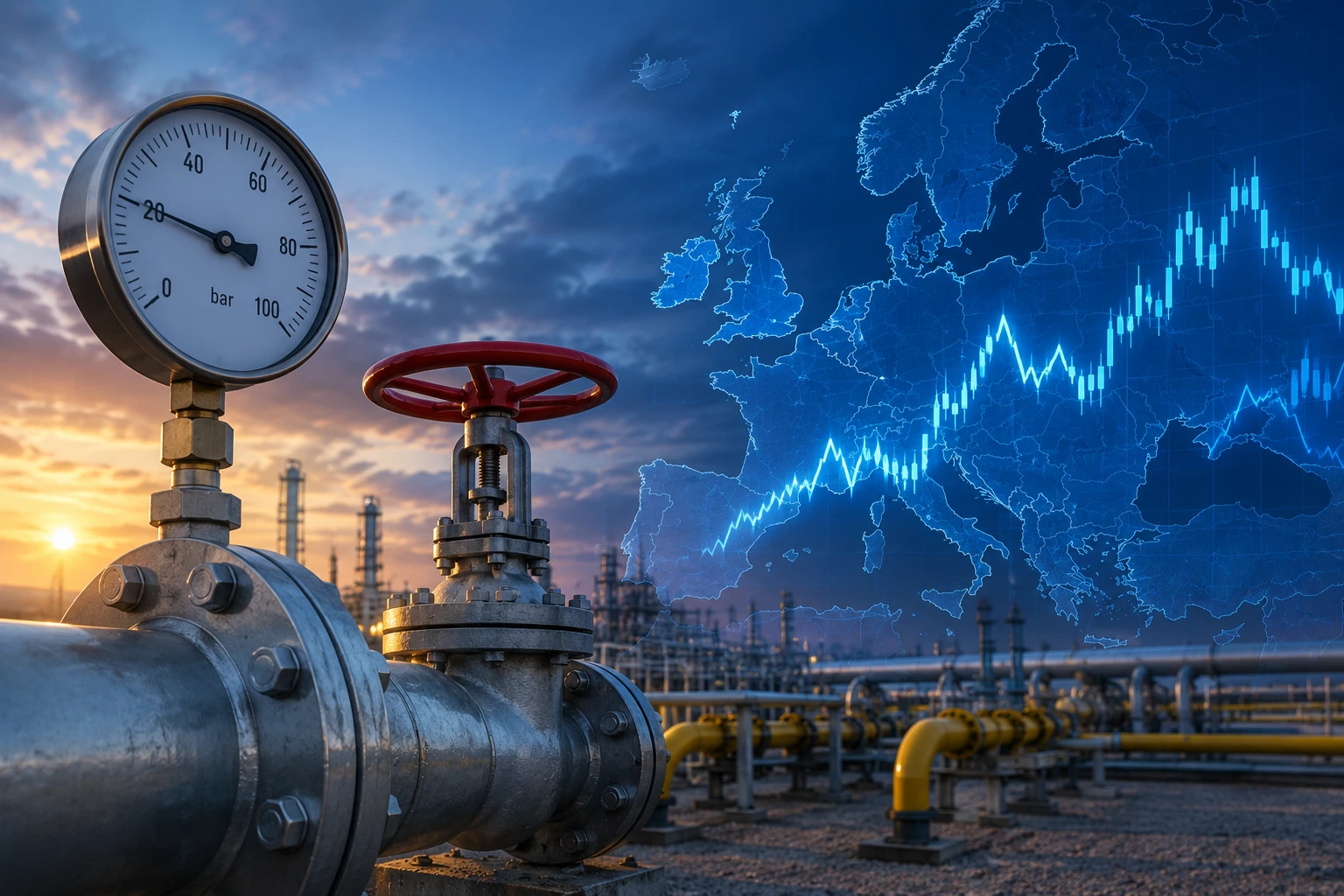
As the state-owned company noted, for example, on August 24, the TTF (Title Transfer Facility) price was 68.32 euros/MWh, and on August 31, it was 69.81 euros/MWh. This trend is driven by escalating geopolitical tensions in the Middle East and risks associated with the transportation of energy resources through the Strait of Hormuz. Reduced liquefied natural gas (LNG) shipments from the Persian Gulf and uncertainty regarding their resumption are keeping pressure on supply in the global market. This pressure is further exacerbated by low inventory levels. European natural gas storage facilities are approximately 65% full, which is 16–17% below the five-year average. Despite an increase in the rate of injection, the deficit that built up before the start of the cold season continues to support market demand. Another important factor is the competition between Europe and Asia for LNG. High demand in Asia and reduced shipments from Qatar are limiting the availability of cargoes for the European market. At the same time, the extension of force majeure conditions in Qatar has led to the cancellation of 29 LNG shipments, equivalent to approximately 3.8 billion cubic meters. Prices for the coming months also remain high. For deliveries between October 2026 and March 2027, prices currently range from 67.9 to 74.4 euros/MWh, with the highest levels recorded in the first months of the cold season. Energocom monitors developments in European markets daily, as well as factors that may affect the cost of natural gas procurement. The company will continue to publish weekly updates on price trends on European exchanges. // 03.09.2026 — InfoMarket.
Gas prices in Europe continued to rise, reaching 74.35 euros per MWh
The price of natural gas on the European exchange reached 74.35 euros per MWh on September 2, continuing the upward trend of recent days — Energocom