European integration and prudent monetary policy are the pillars of Moldova’s macroeconomic stability – the NBM
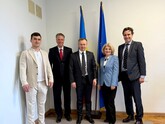
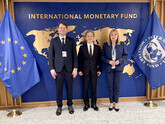
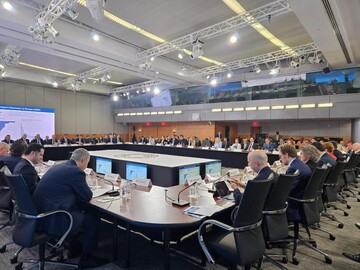
Anca Dragu, Governor of the National Bank of Moldova (NBM), stated this during her remarks at the presentation of the IMF European Department’s Regional Economic Outlook report, held in Washington as part of the IMF and World Bank Spring Meetings. The event brought together central bank governors and finance ministers to discuss economic challenges in Central, Eastern, and Southeastern Europe within a global context marked by uncertainty. According to the NBM, in her remarks, Anca Dragu noted that in an international economic environment characterized by uncertainty and prone to serious shocks, the National Bank of Moldova is addressing current challenges with the utmost responsibility. “In these difficult conditions, monetary policy remains firmly focused on making decisions based on factual data. We recently decided to keep the monetary policy rate at 5.00%. This reflects a carefully calibrated balance between supporting economic activity and ensuring price stability,” stated the NBM Governor. At the same time, Anca Dragu emphasized that Moldova’s banking system is stable, well-capitalized, and effectively managed, and recent stress tests confirm that even under adverse scenarios, banks demonstrate resilience, maintaining capital levels above regulatory thresholds. The head of the National Bank noted recent successes in the process of harmonization with EU standards and the implementation of reforms. According to her, Moldova’s accession to the Single Euro Payments Area (SEPA) is a historic achievement, demonstrating that Moldova is building the financial architecture of a modern economy integrated into the EU. At the same time, Moldova’s Growth Plan for 2025–2027, valued at approximately €1.9 billion, will promote investment and sustainable economic growth. The April issue of the Regional Economic Outlook report notes that Europe is feeling the effects of the energy crisis linked to the war in the Middle East, which is slowing economic growth, driving up inflation, and requiring sensible policy measures that combine targeted support with structural reforms. The Regional Economic Outlook is a report published periodically by the IMF that analyzes the economic situation and the short- and medium-term outlook for various regions of the world. The presentation of this report’s findings by the IMF’s European Department during the IMF and World Bank Spring and Annual Meetings provides a basis for dialogue among central bank governors and finance ministers from Central, Eastern, and Southeastern Europe on regional macroeconomic outlooks, monetary and fiscal policy challenges, as well as best practices in strengthening financial stability and regional cooperation. // 21.04.2026 — InfoMarket.