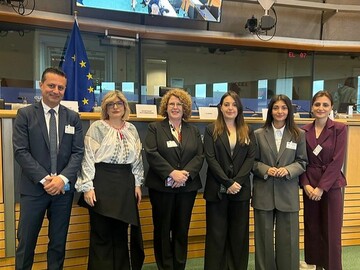
Moldova has reaffirmed its commitment to integrating into the European energy market and is counting on the support of its European partners to accelerate this process
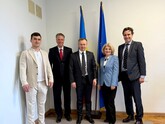
The Moldovan parliamentary delegation, consisting of MPs Veronica Briceag and Olga Ursu, stated this while attending the plenary session of the Energy Community held on April 16 in Brussels. Discussions during the session took place within the framework of two panels: one focused on the accelerated integration of the Energy Community into the EU’s electricity and gas markets through alignment with European legislation, strengthening interconnections, and ensuring a sustainable energy transition, while the other addressed the gradual phasing out of gas and oil supplies from Russia. During both panels, Veronica Briceag delivered a presentation on the progress Moldova has made in integrating into the European energy market. Notable achievements included a reduction in dependence on fossil fuels, an increase in the share of energy from renewable sources, the launch of organized electricity markets, progress toward natural gas market liberalization, and the completion of the implementation of the Third Energy Package. At the same time, issues regarding compliance with EU legislation and strategic investments in energy infrastructure and interconnections aimed at strengthening energy security, increasing competitiveness, and promoting full integration into the European energy system were mentioned. “Moldova remains firmly committed to the process of integration into the European energy market and counts on the support of European partners to accelerate this process, including by facilitating market coupling, expanding interconnector capacity, and institutional consolidation,” Veronica Briceag emphasized. The second panel discussion focused on the phased cessation of gas and oil imports from Russia in accordance with the REPowerEU roadmap, the impact on energy security, the accessibility and stability of the regional market, as well as the need to diversify supply sources. In this context, Veronica Briceag emphasized that, despite the challenges caused by the war in Ukraine, Moldova has managed to significantly reduce its dependence on Russian energy resources, diversify supplies through European markets, and strengthen regional interconnections. “The gradual elimination of dependence on natural gas and petroleum products from the Russian Federation represents one of the most important strategic transformations of the European energy sector in recent decades. For Moldova, this process was not optional but an urgent necessity, driven by geopolitical realities and the historical vulnerability of our energy system,” stated Veronica Briceag. The Energy Community was established by the Treaty of Athens in 2005 and entered into force in 2006 with the aim of extending the rules of the European Union’s internal energy market to Southeast Europe and the Black Sea region and beyond, based on a binding legal framework. The Energy Community comprises 10 members: the European Union and nine contracting parties—Albania, Bosnia and Herzegovina, Georgia, Kosovo, North Macedonia, Moldova, Montenegro, Serbia, and Ukraine. Armenia, Norway, and Turkey participate as observers. // 17.04.2026 — InfoMarket.