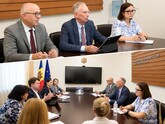
The Ministry of Finance presented a draft of new regulations for service providers in the public procurement sector and measures to promote sustainable public procurement
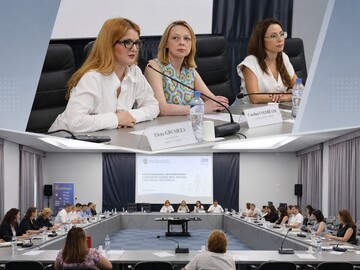
These and other issues were discussed at a meeting of the National Platform on Public Procurement, attended by representatives of government agencies, civil society, and relevant institutions. Opening the meeting, Elena Grumeza, State Secretary of the Ministry of Finance, emphasized that public procurement should become one of the main tools for supporting the “green” economy. According to her, applying sustainable development criteria in procurement will stimulate demand for eco-friendly goods and services and increase business confidence in government contracts. During the meeting, the Ministry of Finance presented a draft Regulation on the Activities of Service Providers in the Field of Public Procurement, which defines the institutional and functional framework for their work. The document establishes regulatory objectives, authorization criteria, conditions for conducting business, and the role of such providers in improving the efficiency of procurement procedures. Representatives of the Ministry of Finance also discussed the development of the regulatory framework for sustainable public procurement and the innovations provided for by the sector-specific law. In particular, the Public Procurement Law allows for the inclusion of environmental, social, and other sustainable development criteria in procurement procedures alongside price indicators. Special attention was given to an analytical note prepared by experts from IDIS Viitorul. The document examines sustainability assessment criteria, monitoring mechanisms, the adaptation of model procurement documentation, and best practices from European Union countries. The authors also identified the main challenges in implementing new approaches and offered recommendations for further improving the national public procurement system. In addition, the Ministry of Finance presented a plan at the meeting for implementing the new legislative provisions—including the development of methodological recommendations and practical guidelines, the preparation of model technical specifications incorporating sustainable development criteria, the identification of priority categories of goods, services, and works, the conduct of training programs for contracting authorities, and the launch of pilot projects. // 03.07.2026 – InfoMarket.