Moldova’s Ministry of Energy is preparing incentives to accelerate investment in energy storage systems and renewable energy projects
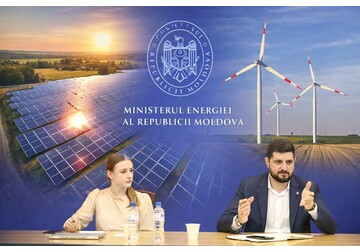
The Ministry announced this, noting that it has initiated a structured dialogue with renewable energy producers, the banking community, financial institutions, and relevant government agencies regarding the prospects for the development of the renewable energy market in Moldova, the need for investment in storage capacity, and the support mechanisms required for more effective use of “green” energy in the national energy system and future integration into the European energy market. At the meeting convened by the Ministry of Energy, participants discussed the main challenges faced by investors and project developers in the renewable energy sector, including access to financing, high costs of investment in storage systems, bureaucratic procedures, necessary permits and approvals, as well as issues related to equipment imports and the integration of new capacity into the grid. As noted, Moldova currently has installed renewable energy capacity of approximately 1,023 MW, of which about 72% consists of photovoltaic installations. However, the rapid growth of this capacity leads to a significant surplus of electricity during the day, which, in the absence of storage solutions, is not utilized efficiently. The Ministry of Energy estimates that to ensure the ability to transmit electricity generated during the day to peak consumption hours in the evening—thereby reducing imports and enhancing the country’s energy security—the energy system requires at least 600 MWh of storage capacity. In this context, meeting participants were informed about the recent launch of the largest energy storage system with a capacity of 60 MWh, which, together with other energy storage systems, covers up to 7% of consumption during peak hours. Other energy storage systems will be launched in the near future. Energy Minister Dorin Junghietu emphasized that the development of storage capacity is a strategic priority for Moldova. “We have investors who have built photovoltaic capacity, and we already have a surplus of energy at certain times of the day. The solution lies in storing and using this energy during peak hours. In this way, we help investors increase the profitability of their projects, while Moldova reduces its dependence on imports and its exposure to the volatility of the regional market,” said the head of the Ministry of Energy. During the discussions, developments in the regional energy market were also analyzed, confirming the need to accelerate investments in flexible capacity and storage facilities. Participants noted that in Romania, approximately 30% of electricity is still generated from natural gas, and the price outlook for the near future remains uncertain. At the same time, the Neptun Deep project is not expected to come online until the third quarter of 2027, and gas storage levels in the European Union remain low. Scheduled maintenance at Romanian nuclear power plants was also mentioned, including the temporary shutdown of Unit 2 at the Cernavodă NPP and scheduled maintenance on Unit 1—factors affecting the regional energy balance and the volatility of energy prices. The Ministry of Energy announced the preparation of legislative amendments aimed at accelerating investments in energy storage systems and renewable energy projects. Among the measures under consideration are the creation of mechanisms for state support of investments in energy storage systems, as well as the possibility of deferring VAT payments on imports for up to 28 months, with the obligation to pay waived if the project is implemented within the established timeframe. Authorities are also considering the possibility of waiving the requirement for building permits and zoning plans for energy storage facilities and renewable energy parks, with the aim of reducing administrative delays and accelerating investment. The meeting also reviewed existing support instruments through the Organization for Entrepreneurship Development (ODA) and the National Center for Sustainable Energy, as well as their alignment with the current needs of the renewable energy sector. Participants agreed on the need to adapt financial instruments for different categories of investors and producers. The Ministry of Energy will continue consultations with the private sector, financial institutions, and development partners to identify the most effective solutions for supporting investments in renewable energy sources and energy storage systems in the context of the strategic goal of integrating Moldova into the European energy market and strengthening the country’s energy security. // 11.05.2026 — InfoMarket.