The state of emergency in Moldova’s energy sector will end on April 25
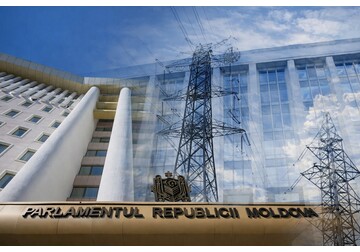
Parliament adopted the relevant decision at the government’s proposal. The state of emergency in the energy sector was declared on March 25 for a period of 60 days. This became necessary after the shutdown of Moldova’s main power transmission line—Vulcanesti-Isaccea—as a result of Russian attacks on Ukraine’s civilian energy infrastructure. Because of this, a power shortage of up to 400 MW was recorded during peak hours. During the same period, the petroleum products market suffered from temporary supply disruptions, particularly for diesel fuel, amid instability in the Middle East. During the state of emergency, authorities took measures to restore and rehabilitate the Vulcanesti-Isaccea line, as well as to ensure electricity supply to all consumers. In particular, the 330 kV Bălți-Dniester overhead power line was restored. Four 110 kV overhead power lines were also commissioned to connect with Romania. At the same time, priority was given to supplying electricity to critical consumers, exports were restricted during peak hours, and measures were taken to reduce and optimize consumption. The state-owned enterprise Moldelectrica was also granted the ability to make emergency purchases through direct negotiations. To maintain the functioning of the oil market during the crisis, the government took measures to support economic operators. As a result, the market was stabilized, volatility was reduced, and major disruptions were prevented. Following the lifting of the state of emergency, the government will introduce a 60-day state of high alert starting April 25. This will enable continuous monitoring and rapid response to ensure the security of electricity and petroleum product supplies depending on how risks develop. The introduction of the heightened readiness regime will allow government agencies to focus on carrying out a number of important tasks. Among them is the protection of purchasing power: instead of the previous 14-day mechanism, the mechanism for calculating diesel fuel prices based on a 7-day average—introduced in response to the instability caused by the crisis in the Middle East—will remain in place. This measure ensures that declines in international prices are reflected much more quickly at gas stations, guaranteeing predictability for consumers and the continuity of supplies. Additionally, to guarantee supplies and ensure fuel reserves, strict market monitoring will continue through daily inventory reports and 30-day import planning, updated weekly. To prevent any risk of shortages, a number of restrictions have been put in place. The Customs Service will authorize exports from the port of Giurgiulești only if stocks exceed 25,000 tons of diesel fuel and 2,500 tons of gasoline. In addition, the export or re-export of petroleum products already imported into the country and released for free circulation is blocked. “Green corridors” for priority customs clearance of imports are also maintained to ensure uninterrupted supplies at gas stations. Furthermore, to ensure domestic electricity consumption, the state-owned company Moldelectrica will reduce export capacity to zero between 5:00 p.m. and 9:00 p.m., guaranteeing that available energy will be directed primarily to residential consumers and government institutions. In addition, lists of critical consumers who will receive absolute priority in supply in the event of new unforeseen shortages in the system remain in place. A series of measures will also be adopted to improve the efficiency of government electricity consumption and prevent excessive spending. Solidarity measures are being implemented, requiring administrators of government buildings to reduce interior lighting by 30% during peak hours: from 6:00 a.m. to 9:00 a.m. and from 5:00 p.m. to 11:00 p.m. These are measures of collective responsibility that reduce the load on the public grid and prevent the use of emergency power, thereby avoiding massive budgetary expenditures and ensuring stable rates for citizens. // 24.04.2026 — InfoMarket.