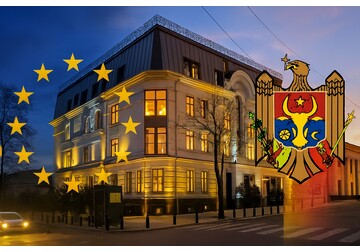
2025 was a pivotal year for Moldova's rapprochement with the EU, marked by concrete steps in the economic, financial, digital, and other spheres, with the adoption of the €1.9 billion Growth Plan for Moldova being a key moment
The European Union's representation in our country stated this, noting that, in particular, the necessary procedures and reforms for Moldova's accession to the EU were implemented this year. From March to December 2025, important decisions, ratifications, and agreements were made in EU-Moldova relations, affecting all areas of citizens' lives. A key moment was the adoption and signing in March 2025 of the EU Growth Plan for Moldova worth €1.9 billion. The Growth Plan is a strategic platform that combines reforms, investments, and financial support to accelerate Moldova's economic convergence with EU standards. The Growth Plan aims to create new businesses and jobs, double wages, provide subsidies for agriculture and energy, build hospitals, increase the number of places in kindergartens, modernize roads and bridges connecting Moldova with the EU, and connect the country to the European electricity grid. Energy compensation for citizens during the winter period of 2024–2025 was covered by the EU Growth Plan for Moldova. Another historic event was the first EU-Moldova Summit, which took place on July 4 in Chisinau. The event confirmed the European Union's support for Moldova's European path and brought together European leaders and high-ranking Moldovan officials. The summit marked an important milestone in EU-Moldova bilateral relations. In the financial sphere, Moldova officially joined SEPA (Single Euro Payments Area) on October 6, which allows for faster, cheaper, and more transparent payments in euros between Moldova and EU member states. According to the National Bank of Moldova, in the first month after joining, Moldovan citizens saved about €1.4 million on money transfers. Also, on July 25, the EU Council decided to include Moldova in the Roam Like at Home regime. The measure will take effect on January 1, 2026, when Moldovan citizens will be able to use mobile communications and the internet in the EU at national rates. As part of the accession process, Moldova completed the screening of its national legislation for EU accession negotiations in September 2025. The assessment of the compliance of national legislation with the body of EU law in all chapters paved the way for the start of official negotiations and the transition to the next stages of European integration. At the same time, the revision of the Deep and Comprehensive Free Trade Area (DCFTA) Agreement was completed in July, with its gradual implementation. This led to expanded access for Moldovan products to the EU market, including plums, table grapes, apples, and cherries, as well as the exemption of grape juice, tomatoes, and garlic from customs duties. These measures support exports, local producers, and Moldova's economic integration into the European market. Another significant achievement for the country's economy was the launch of registration for local and international private investment in Moldova. On September 17, the European Commission announced a €10 million call for proposals, inviting companies from the EU, the European Economic Area (EEA), and Moldova to participate. By December, 47 proposals for local and international projects in the fields of energy, transport and logistics, digitalization, healthcare and processing had been registered. “Everyone's voice is important for Moldova's European path: throughout the year, cooperation between the EU and Moldova was also supported through constant dialogue with state institutions, the business community, civil society, and young people. Overall, 2025 has been a year of concrete steps and strategic decisions that are gradually bringing Moldova closer to the European Union and strengthening a partnership based on shared values, solidarity, and long-term goals,” the EU delegation in Moldova emphasized. // 22.12.2025 – InfoMarket.